

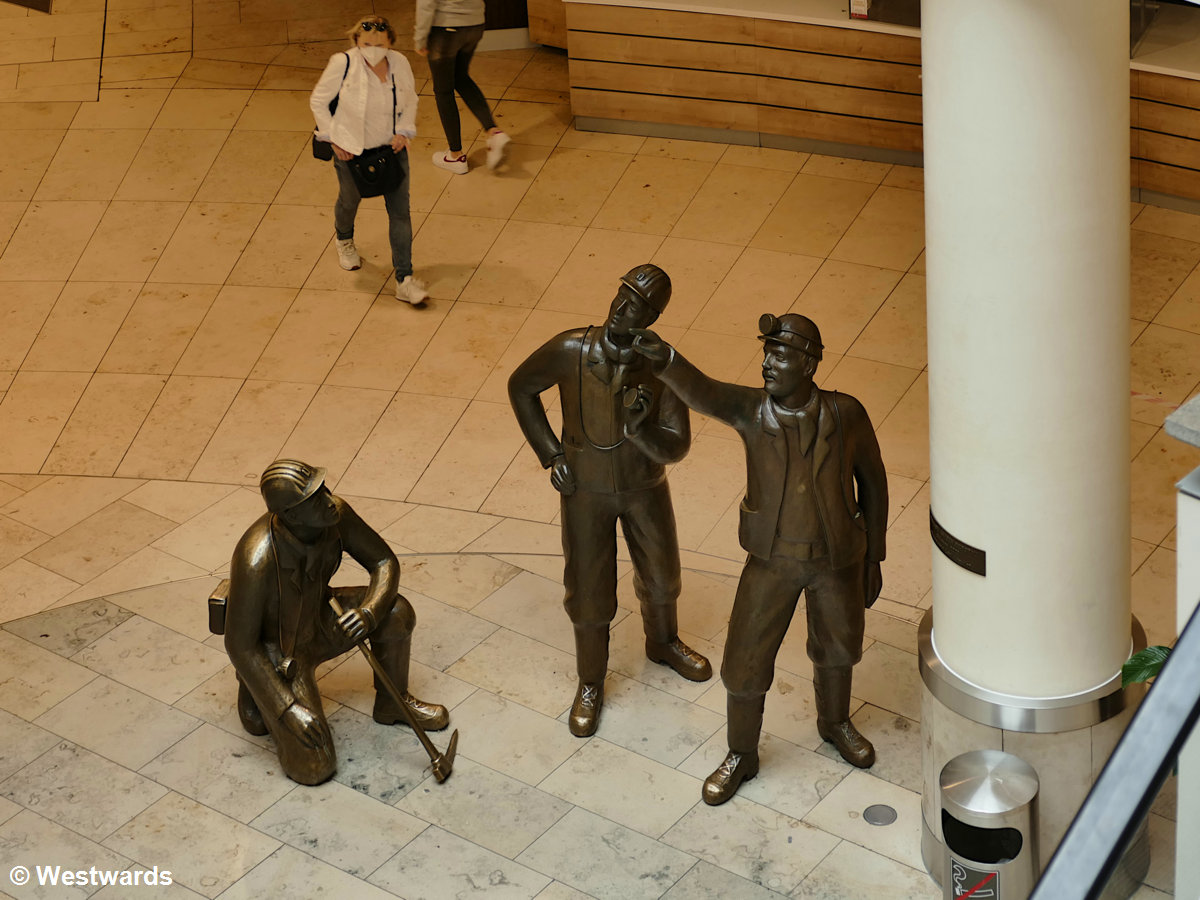
The Ruhr Area in the western part of Germany is a puzzling region. It is by far the most densely populated area in the country, and yet there are no big cities. The mostly flat landscape could easily have been farmland, if it were not for the coal mines that have shaped its history. Known as the “Ruhrpott” in German, this melting pot has attracted workers from all over Europe, making it quite cosmopolitan. But at the same time, it is surprisingly relaxed and provincial.
Despite its past of coal mines, ironworks, and industrial smelters, the Ruhr Area is full of green spaces and nature. That’s why the Industrial Heritage Route, a network of museums, exhibitions and heritage places, also has a cycling route version. It is perfect for exploring this unique mix of industrial heritage, modern art, beautiful architecture, and Currywurst stands on fast, flat bike paths. Like other industrial regions, the Ruhr has undergone huge transformations in recent decades, and today, the Industrial Heritage Route by bike is one of the best ways to experience its enigmatic charm.
The Ruhr Area Industrial Heritage Cycling Trail
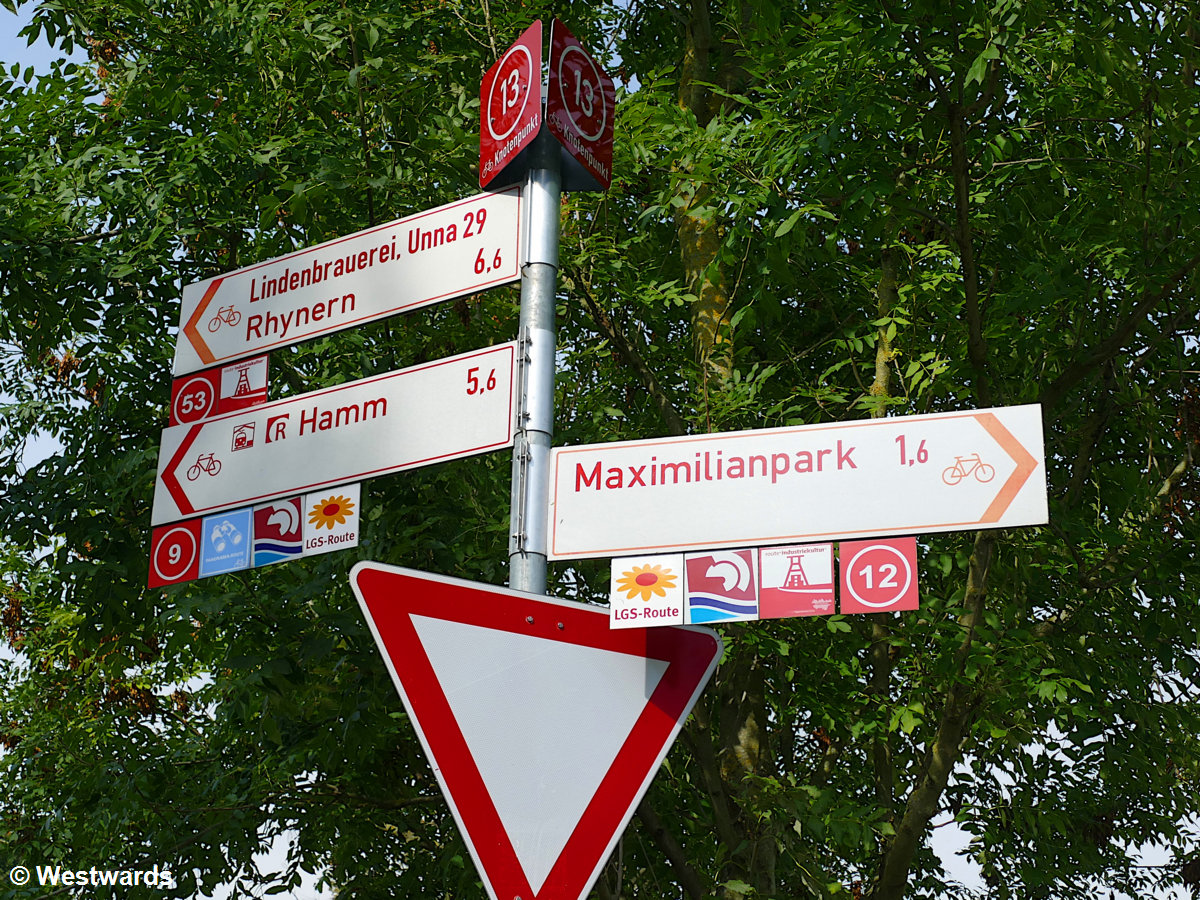
The so-called Ruhr Area Industrial Heritage Cycling Trail is actually a network of cycling routes. The main cycling trail forms a rough circle with a number of variations. Since it is a circular route without a specific chronological order, you can start at any point. Coming from Berlin in the Eastern part of Germany, we started cycling in Hamm and went westwards at first. Altogether, we cycled for six days and covered over 300 kilometers. This leisurely pace gave us plenty of time to explore some of the fascinating industrial heritage sites along the route.
In this blog post, you’ll read about what there is to see on the Ruhr Area Industrial Heritage Cycling Trail and how we experienced it.
Day 1: From Hamm to Unna, 45 km
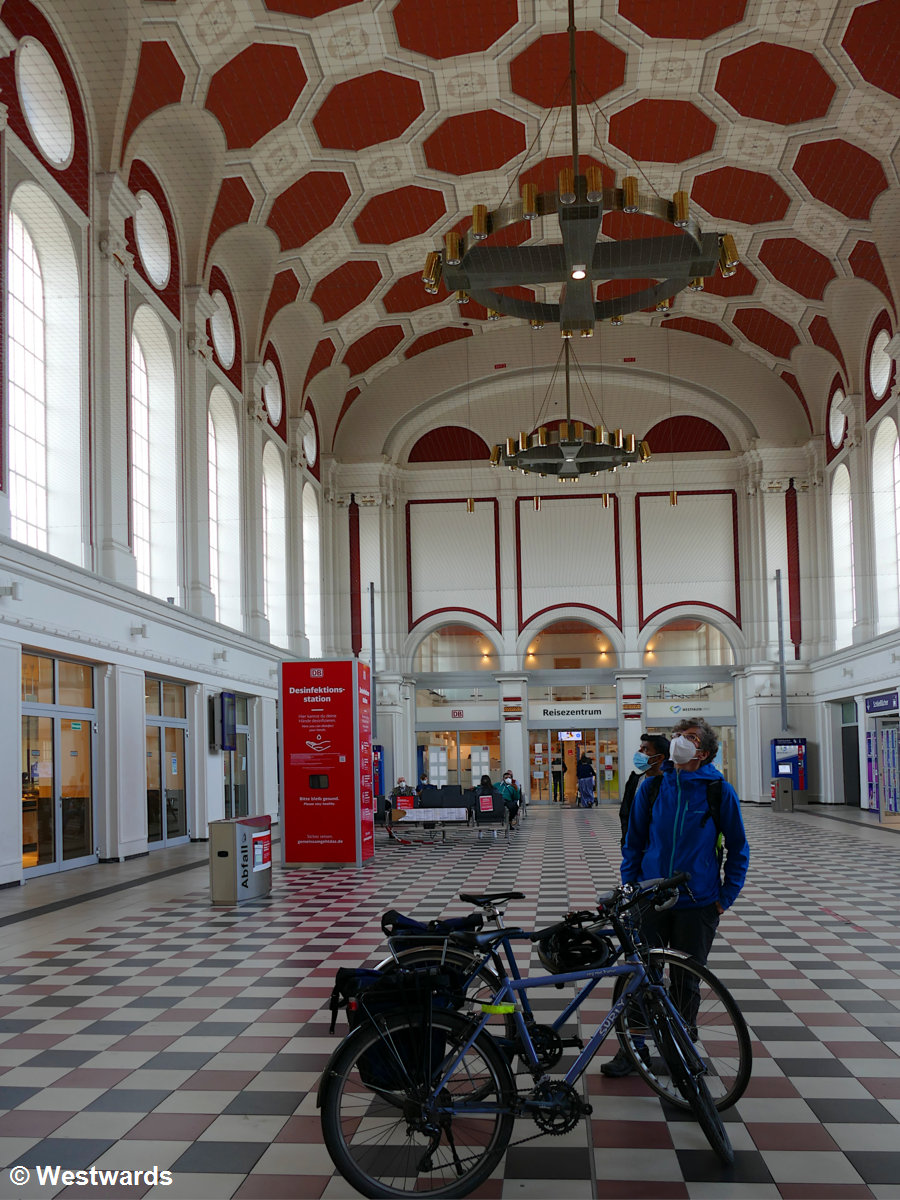
Getting off the train at the neo baroque train station in Hamm we overhear a conversation at the information desk: “So do you want to go to Minden, or to Menden?” (both small towns in the area), asks the staff. The foreign guest, lost in translation, repeats hesitantly: “Münn-dünn?”.
Eager to start our cycling tour, we leave them puzzling over place names and leave the station building.
Outside we are surprised by the lack of a city centre – even though Hamm is a major transport hub, it feels like a patchwork of suburbs. Nevertheless, we find a fast-food outlet aptly named Berlin Döner for a slow approach to the local speciality, currywurst sausage.
Soon we are off on the Industrial Heritage Route, following the signs marked with a pit head. The trail runs along the Datteln-Hamm Canal, mostly on a dedicated cycling lane. We get a bit nervous when we notice that most of the other cyclists are on e-bikes – does this mean the Ruhr area is hilly?
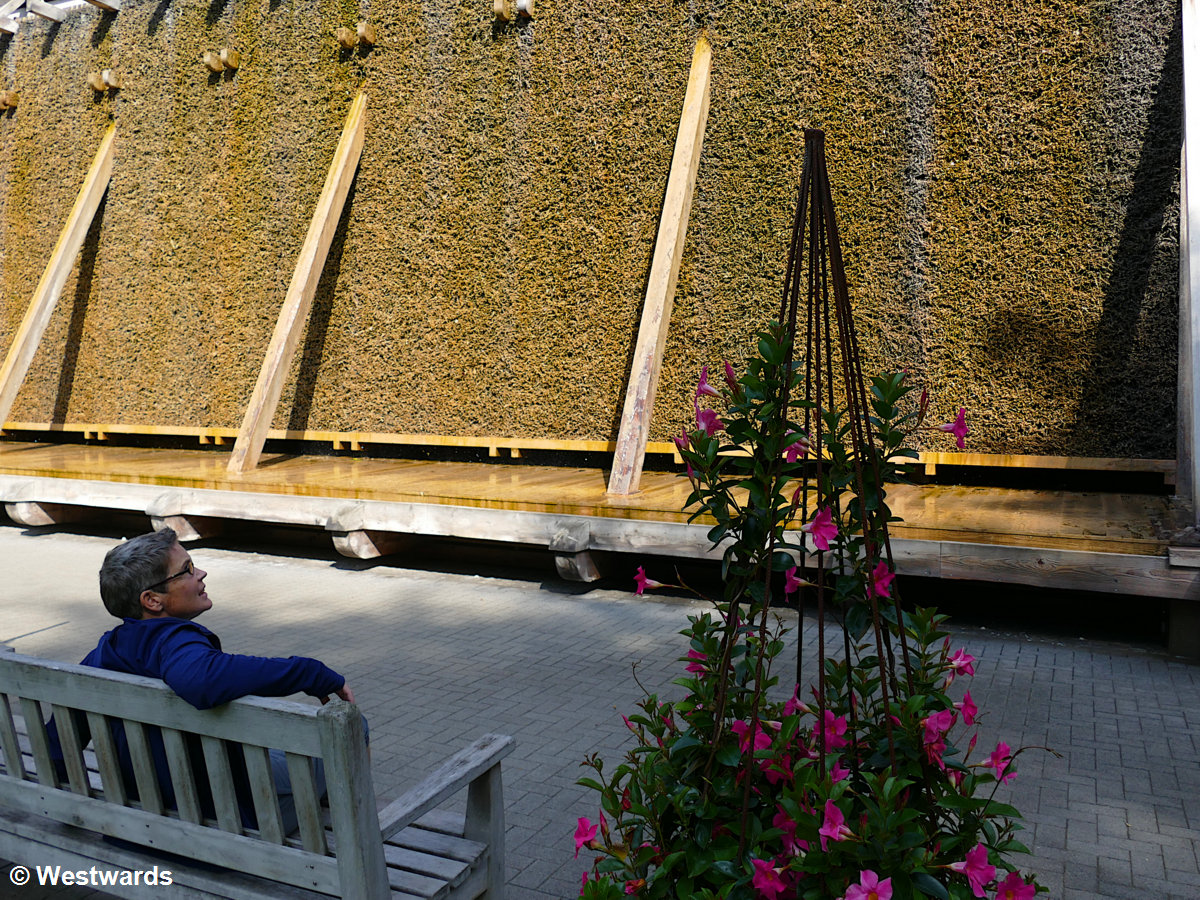
Arriving in Unna we are surprised to learn that this industrial town was once a spa town. A by-product of the salt production was a facility that produced a salty mist, considered beneficial for lung diseases. Therefore, Unna still has a Kurpark, a spa recreational park. We have timed our arrival early, as we have booked the James Turrell art installation at the Unna Light Museum. While the museum itself is closed, the light show in Turrell’s Sky Space begins at sunset and illuminates the darkening sky for about an hour.

Day 2: From Unna to Bochum, 60 km
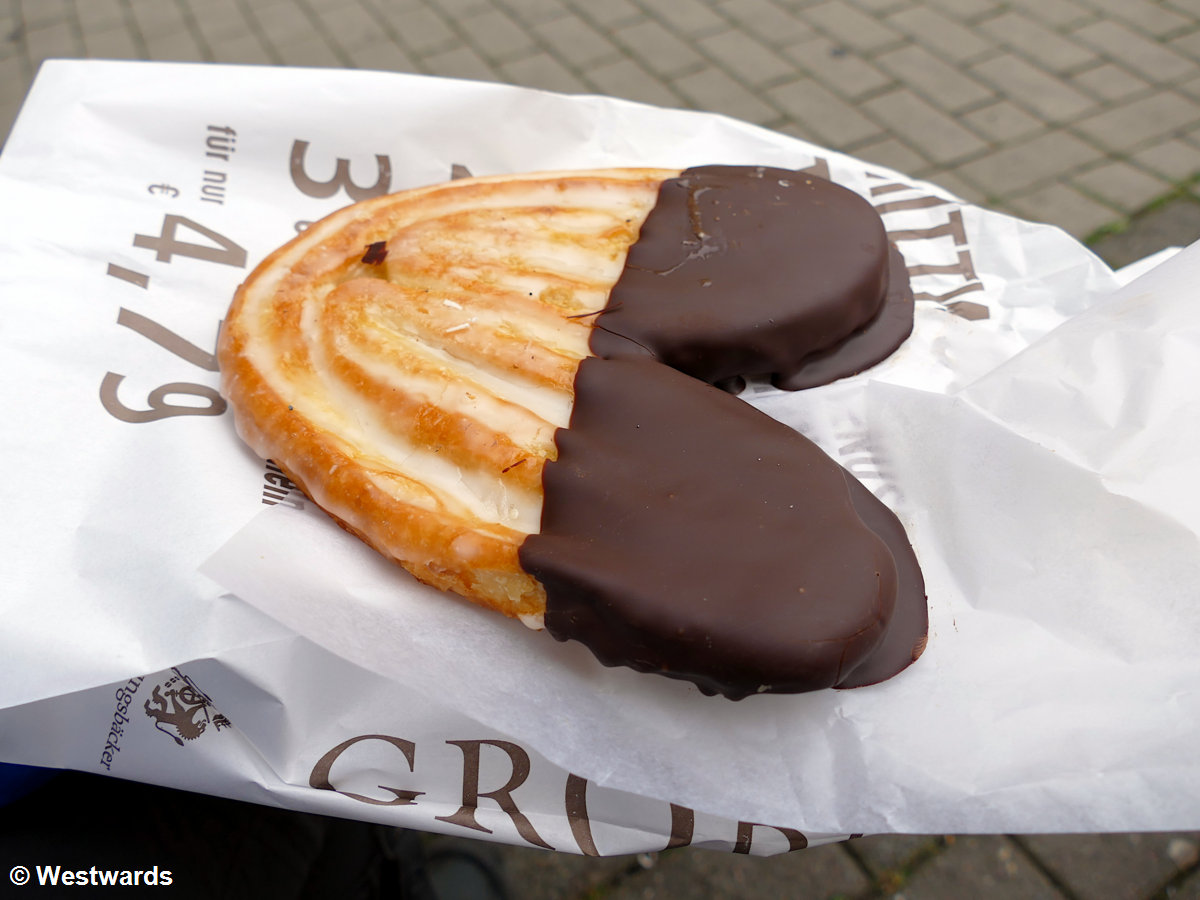
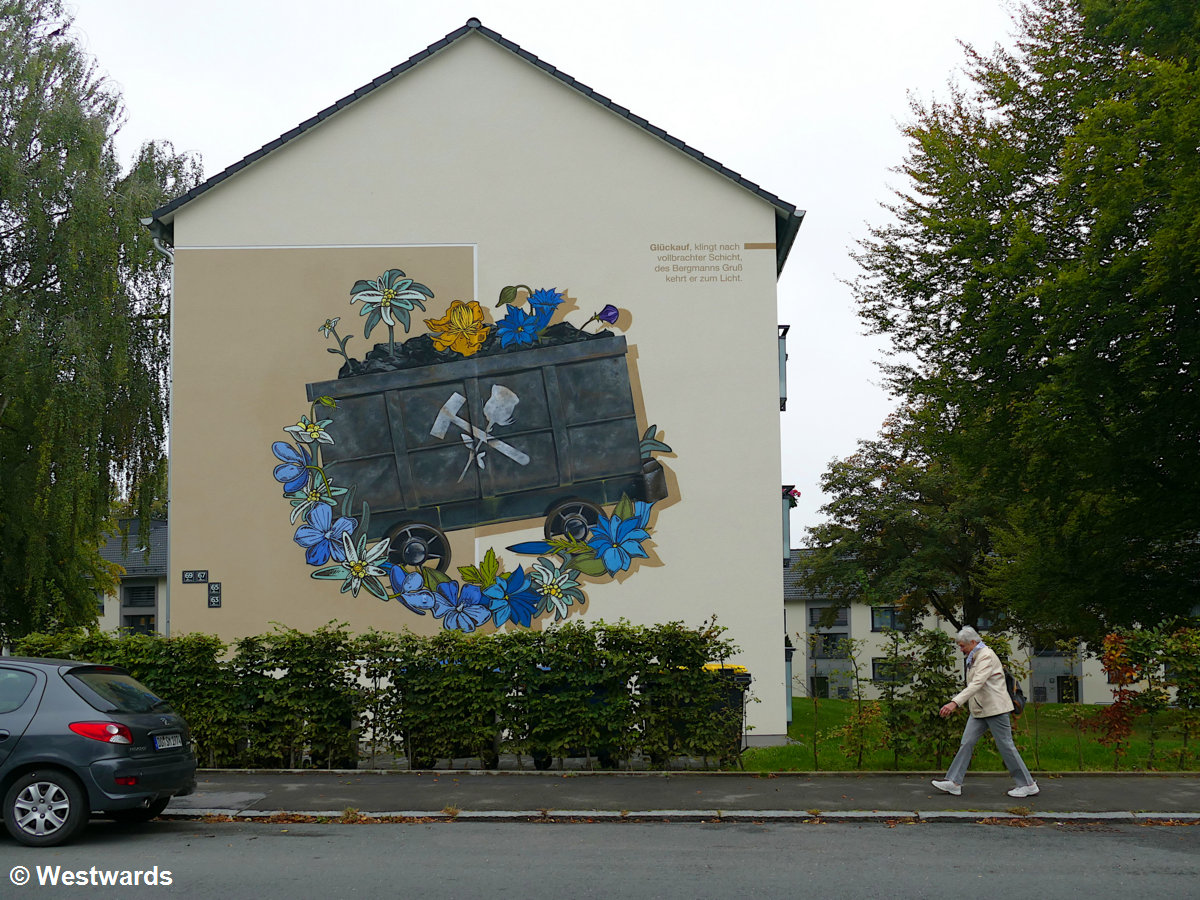
After leaving Unna, we cycle through a mostly rural landscape dotted with remnants of the region’s industrial past: A simple water tower once needed to boost water pressure, an old mine air shaft, and a disused pit head. We also pass the mediaeval St Margarethe’s Church in Methler with reportedly beautiful frescoes. Alas, the church is closed, and so is the local pub. A short detour to the mining town of Derne brings us to a large shopping centre, perfect for picking up a sweet Schweineohr (“pig’s ear” pastry). By now, the “Kohlenpott” (coal pot) feeling gets stronger with more industrial relics and murals of sturdy miners and workmen.
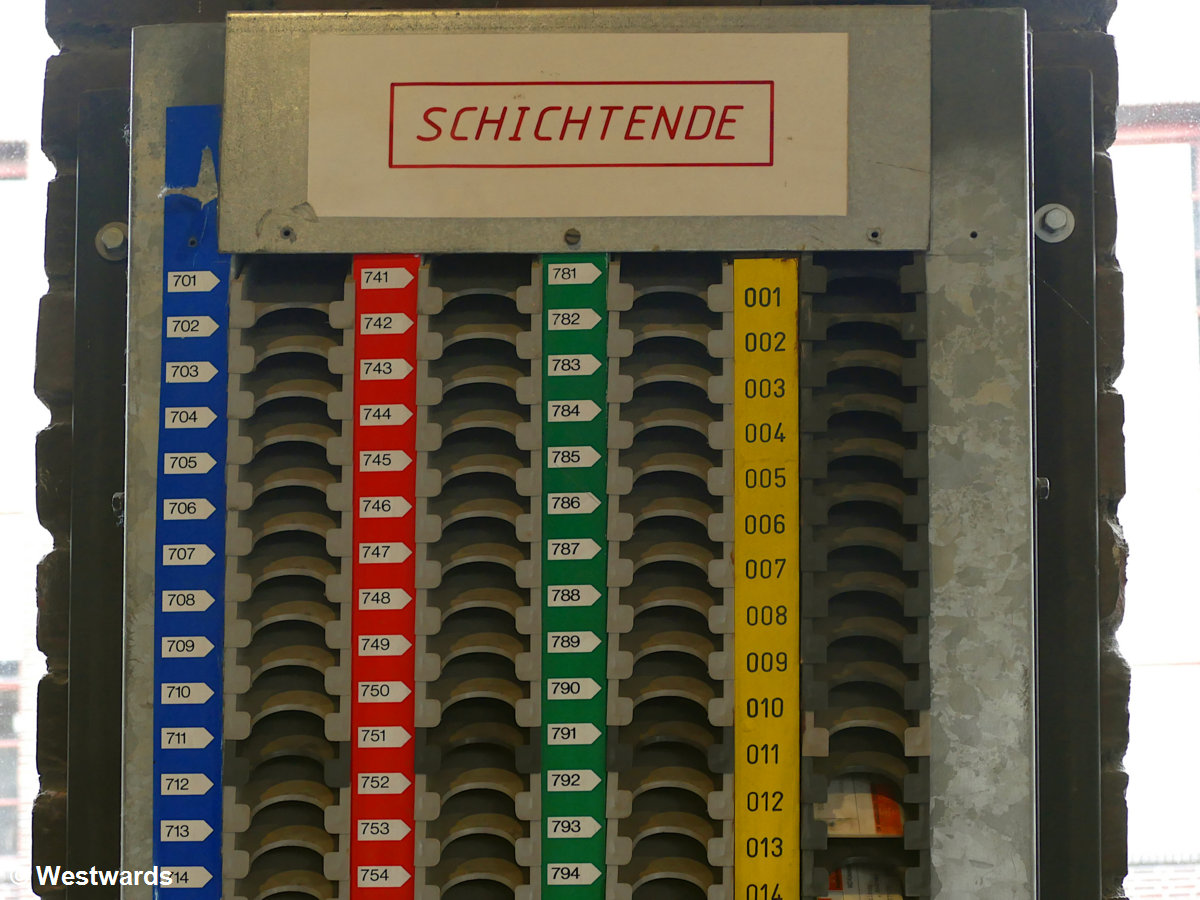
And soon we circle the outskirts of Dortmund. This is one of the largest towns in the Ruhr area, and there is a lot of old industrial infrastructure. We stop to visit Kokerei Hansa, a former coke plant closed since 1992. Rather than a traditional museum, it is preserved as an industrial heritage monument, with everything restored to look as if the workers had left yesterday. We see the time-punch clock with old name cards. The wash and changing rooms show how workers hoisted their dirty workwear in baskets to the high ceiling for overnight airing. The vast machine halls and weathered industrial buildings are strikingly photogenic.
The owner of a nearby kiosk is amazed too:
“Really, you are from Berlin?! And all the way by bicycle, cool!”
A long stretch of large roads, designated cycle trails, and motorway junctions leads us to Zeche Zollern. The large colliery near Dortmund is today a fantastic industrial museum. We spend nearly 2 hours exploring the pithead frame, machine halls, small trains, and exhibition on the Ruhr area’s mining history.
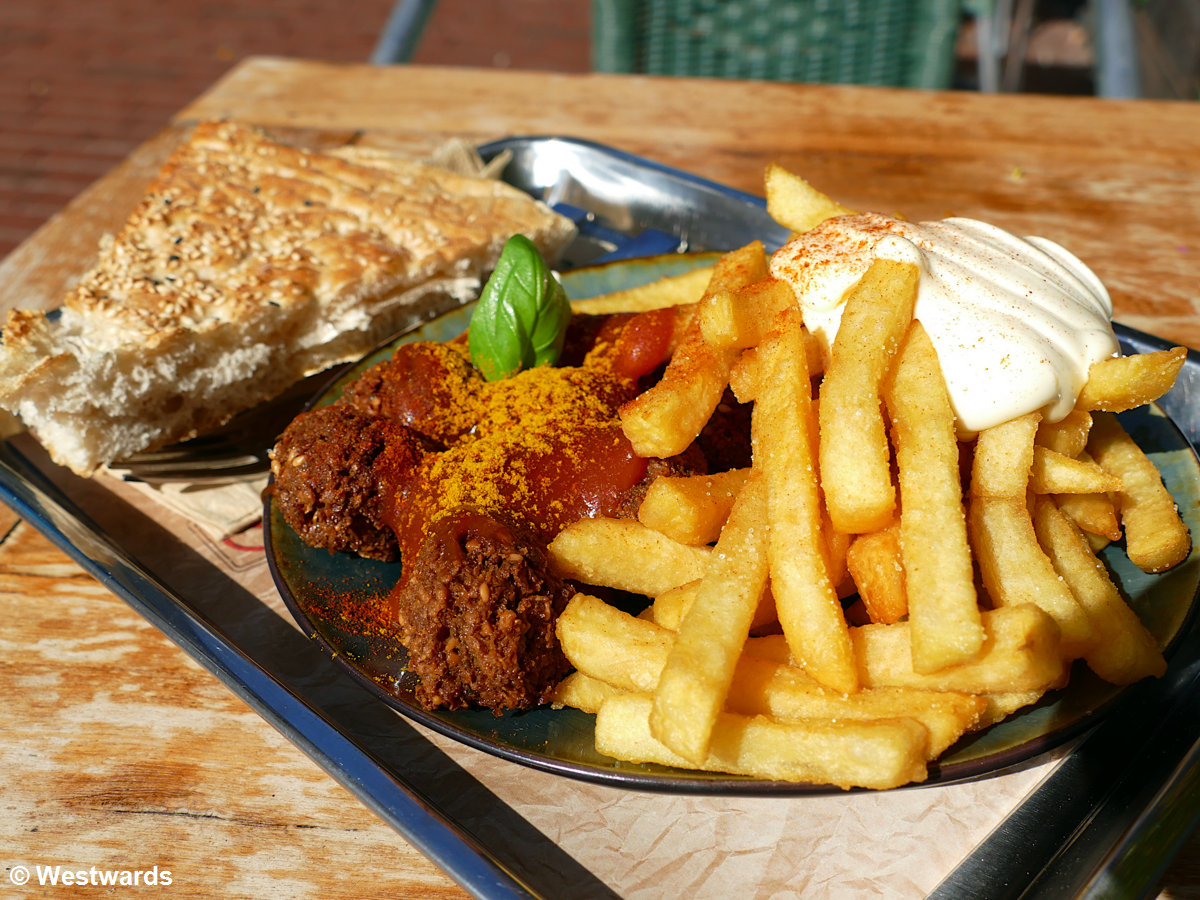
Finally, another long ride brings us to the outskirts of Bochum. In a vegan restaurant we try the plant-based version of the iconic Taxiteller – a dish combining all the Ruhr area essentials, such as curry sausage, gyros, tsatsiki, and french fries. Cycling the Industrial Heritage Route has already given us a deep sense of the region’s character — and it’s only day two!
Day 3: Bochum to Duisburg, 60 km
The first stretch of our cycling trip along the Industrial Heritage Route today proves tricky to find. We are somewhat taken aback since the signposting has been excellent so far. Our first point of interest is the Zeche Hannover, but since it only opens at 2 pm we settle for a quick peek over the fence.
Eventually we reach the so-called Erzbahntrasse, a cycle path along the old iron ore railway embankment. This is a relief, as the embankment reduces the ups and downs of numerous quite steep mining dumps. Also, the trail serves as a high-speed cycling connection towards Essen and the Zeche Zollverein. This is another of the region’s iconic collieries. Zeche Zollverein is a UNESCO World Heritage site showcasing the mining past through impressive exhibits and museums. Having visited before (read about our visit to the Zeche Zollverein), we continue quickly along more of these speedy cycle routes towards Mühlheim. There, our cycling path merges with the more relaxed and scenic Ruhr Valley Route. Amidst weekend excursionists, we ride leisurely towards Duisburg, where the Ruhr meets the River Rhine.
Day 4: Duisburg to Bottrop, 40 km
After a detour by train to Cologne to visit family, we picked up our cycling journey again from Duisburg main station.
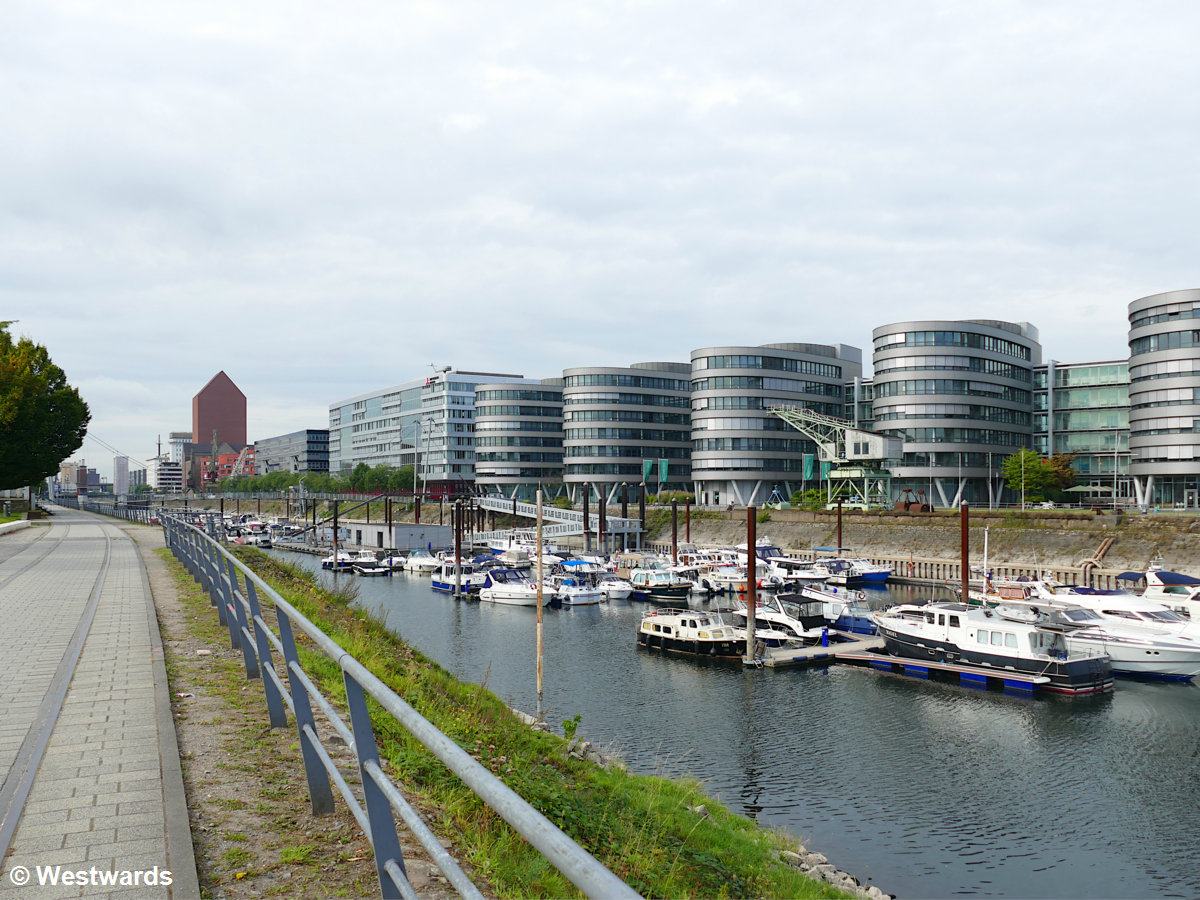
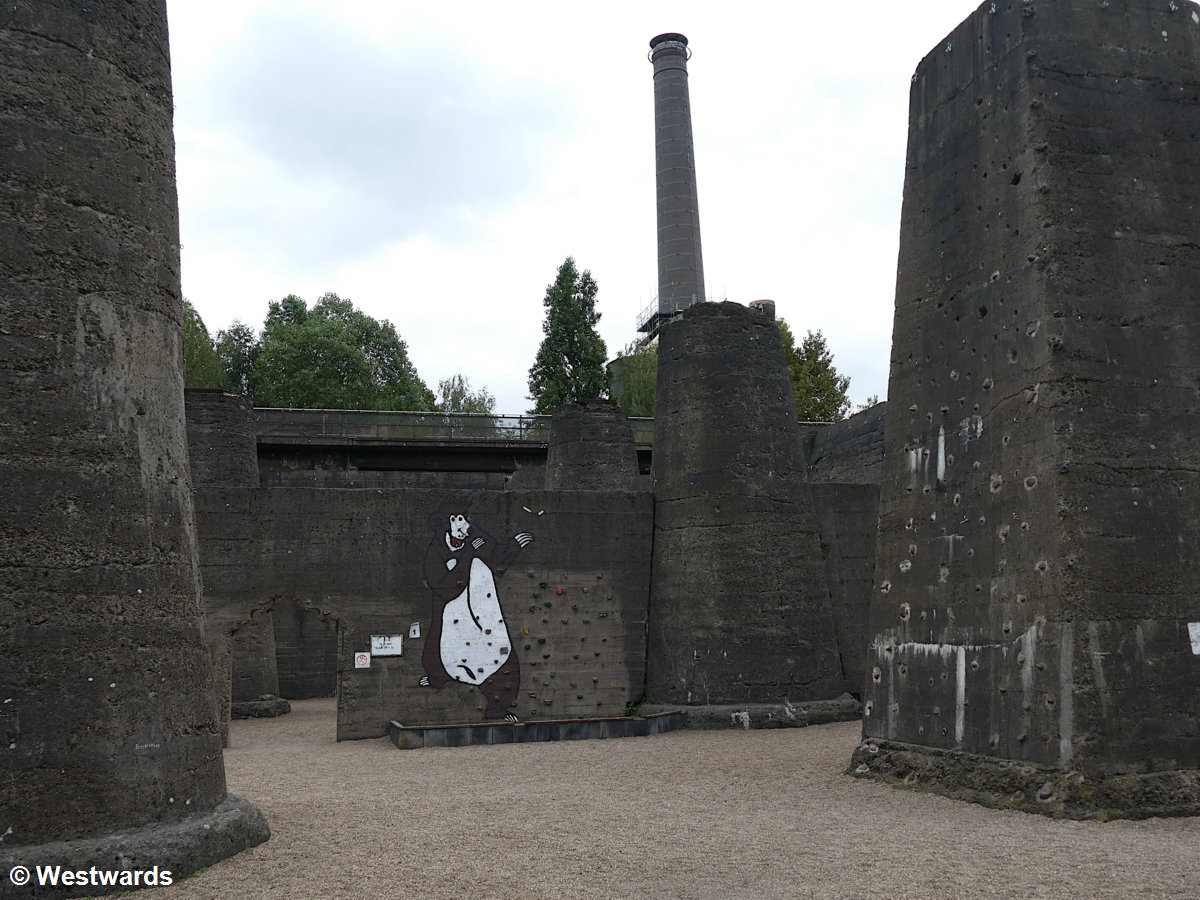
The cycling route takes us through the Duisburg harbour, now a hub of hipster redevelopments. From there we cycle towards the Rhine confluence. We enter the Landscape Park Duisburg-Nord from the back entrance, another vast conglomerate of former power plants, ironworks, and gasometers. The whole area is now a public park and event location, with a huge diving tank and an outdoor climbing gym.
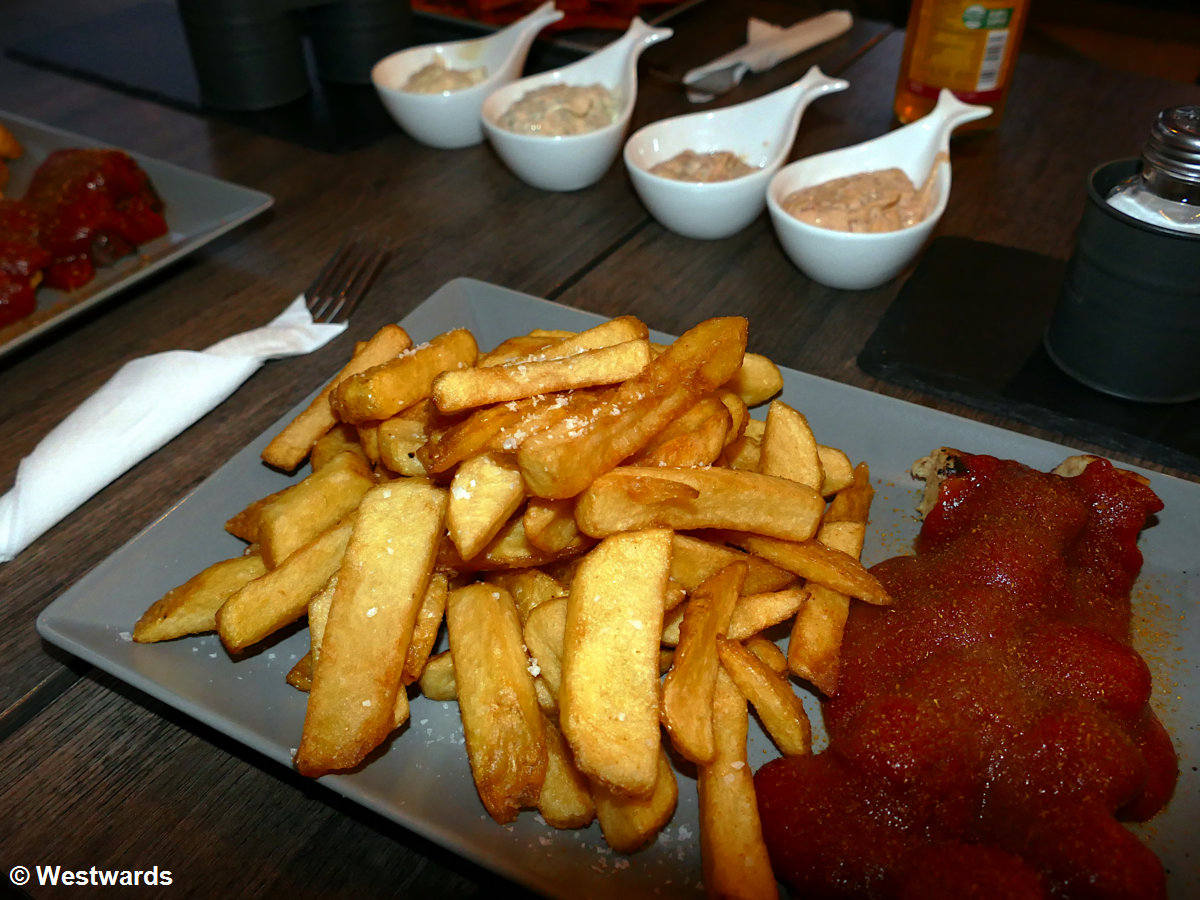
Our next goal is Oberhausen, an industrial town with an old palace, a gasometer-turned-exhibition hall, and Europe’s largest mall and recreation park. In a light drizzle we pass the small Vondern Castle and an Art Deco settlement. And then we reach Bottrop, where we stay in a bare-bones contractor accommodation. That evening a friend joins us for another vegan Currywurst sausage at Currywood. So far the best currywurst we have had on the industrial heritage route!
Day 5 Bottrop to Waltrop, 65 km
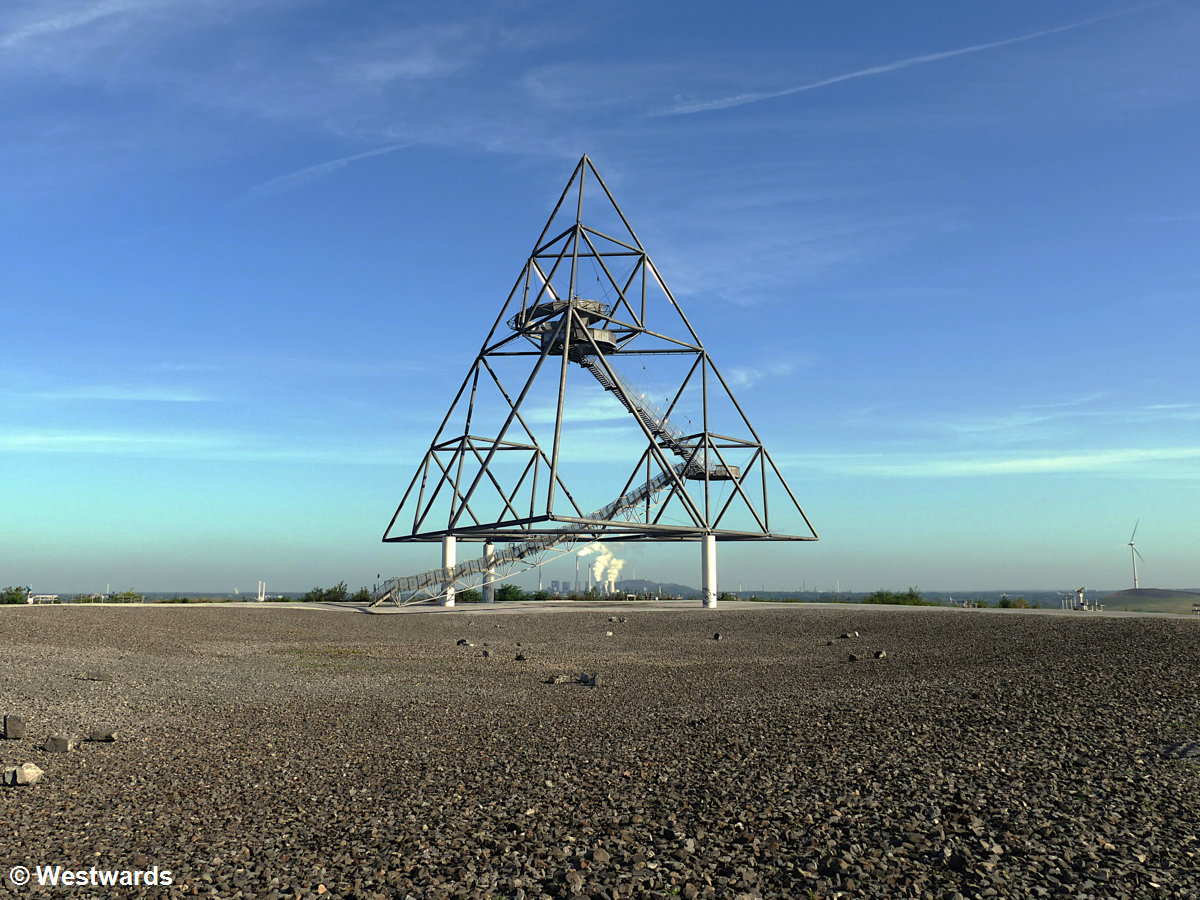
Like our beefy workmen neighbours, we are up early and pedalling through Bottrop towards the so-called tetrahedron. That’s a pyramid-like steel structure on top of a hill formed from an enormous mining dump. We leave the bicycles at the top of the hill – but the bottom of the steel staircase – to climb up and take in the sweeping view. An elderly local out for a walk tells us how he remembers the landscape before these hills existed. He had worked at Ruhrkohle’s coking plant until 1995 when the facility closed for good. Thousands of workers got laid off. These days he seems to prefer the green hills to the stinking industrial waste of the past.
Although we enjoy a brief downhill ride from the tetrahedron, the trail continues up and down for much of the day. Surprising, given the mostly flat surroundings along the Industrial Heritage Route… We often find ourselves cycling next to peaceful creeks and canals. For a while we even cycle on a longish island between the old (and rather depleted) river Emscher and the now much larger Rhein-Herne Canal. This canal is over 100 years old. It is part of the East-West canal system linking transport on the River Rhine with Eastern rivers such as Elbe.
More vegan curry sausage
Around noon we detour into the town centre of Wanne. We had read about the extra hot Currywurst (curry-sausage) at a snack bar near Wanne-Eickel station – and are both curious and apprehensive. After some debate we settle on medium pungency (whatever 5/7 is supposed to mean) and are perfectly satisfied. And the waitress offered vegan mayonnaise with our veggie sausage, as a matter of fact. A nice touch.
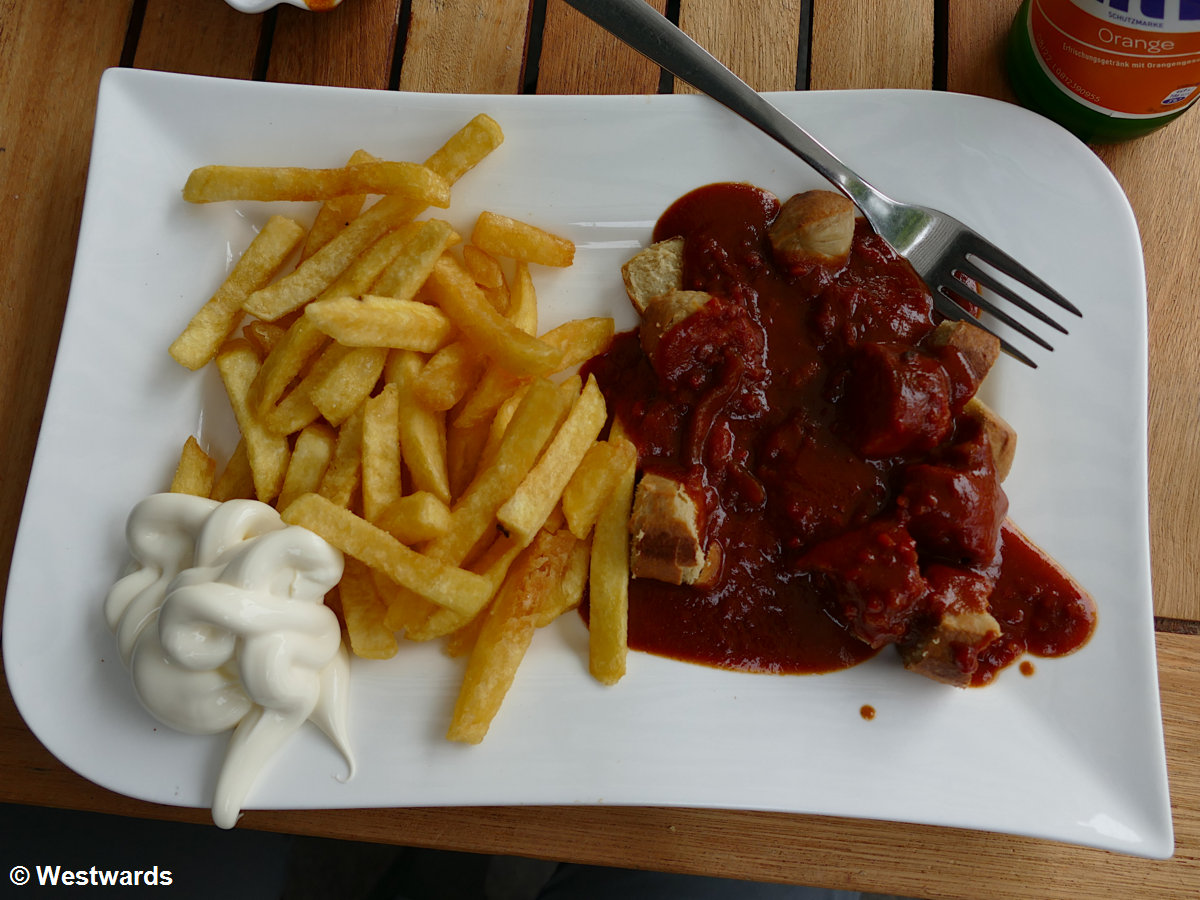
In the afternoon we circle another mining dump, the Halde Hoheward. Several detours prove a bit frustrating before we finally rejoin the Rhein-Herne and follow it into Waltrop.
Day 6 Waltrop to Hamm, 45 km
In the morning, we pass the disused Waltrop Colliery. The neogothic brick factory buildings have been beautifully refurbished and now house fancy shops and bicycle manufacturers.
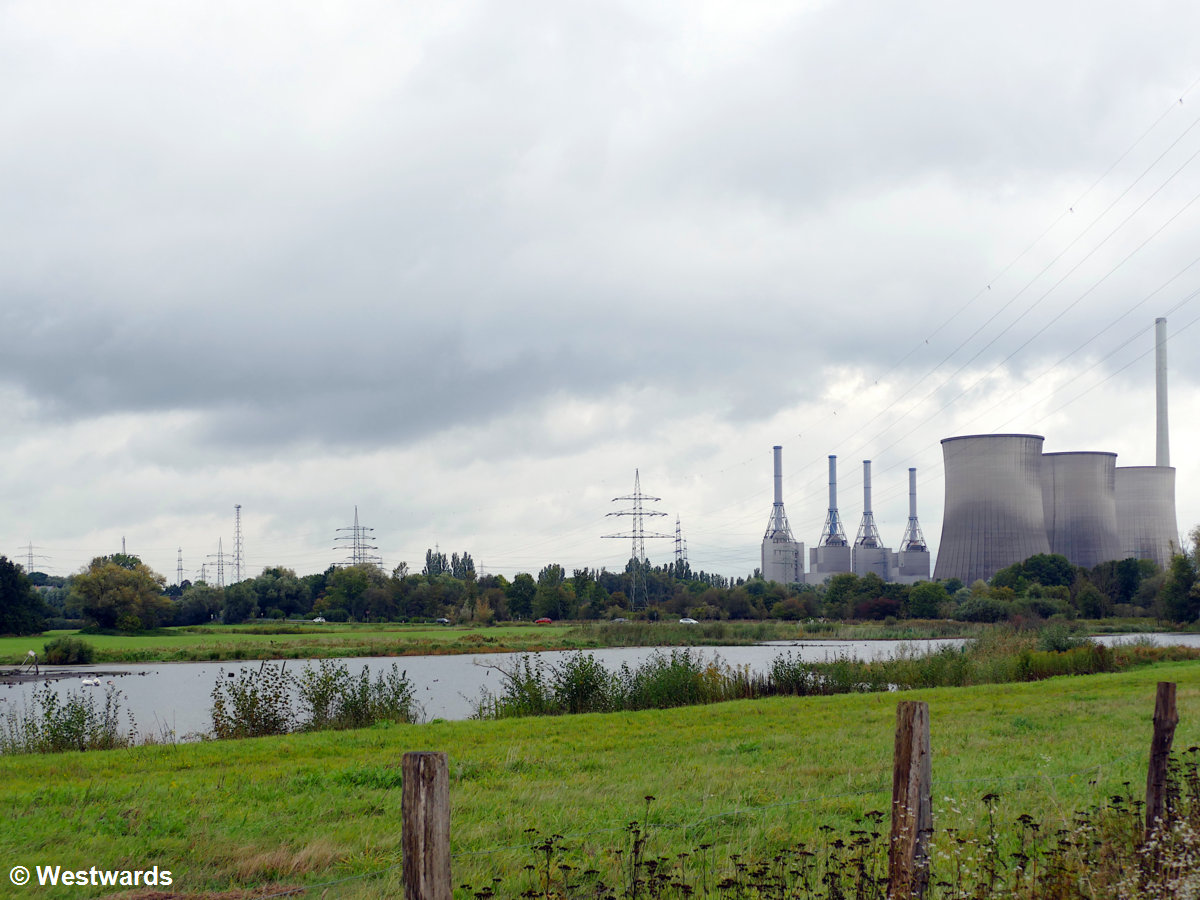
Our last day on the Industrial Heritage Route loosely follows the valley of the small River Lippe. Nevertheless, most of the time we cycle along the banks of the Datteln Ems Canal. This section feels less industrial to us than the areas where we have cycled the previous days. We pass some power stations and industrial harbours, but also a lot of agricultural areas and wind turbines.
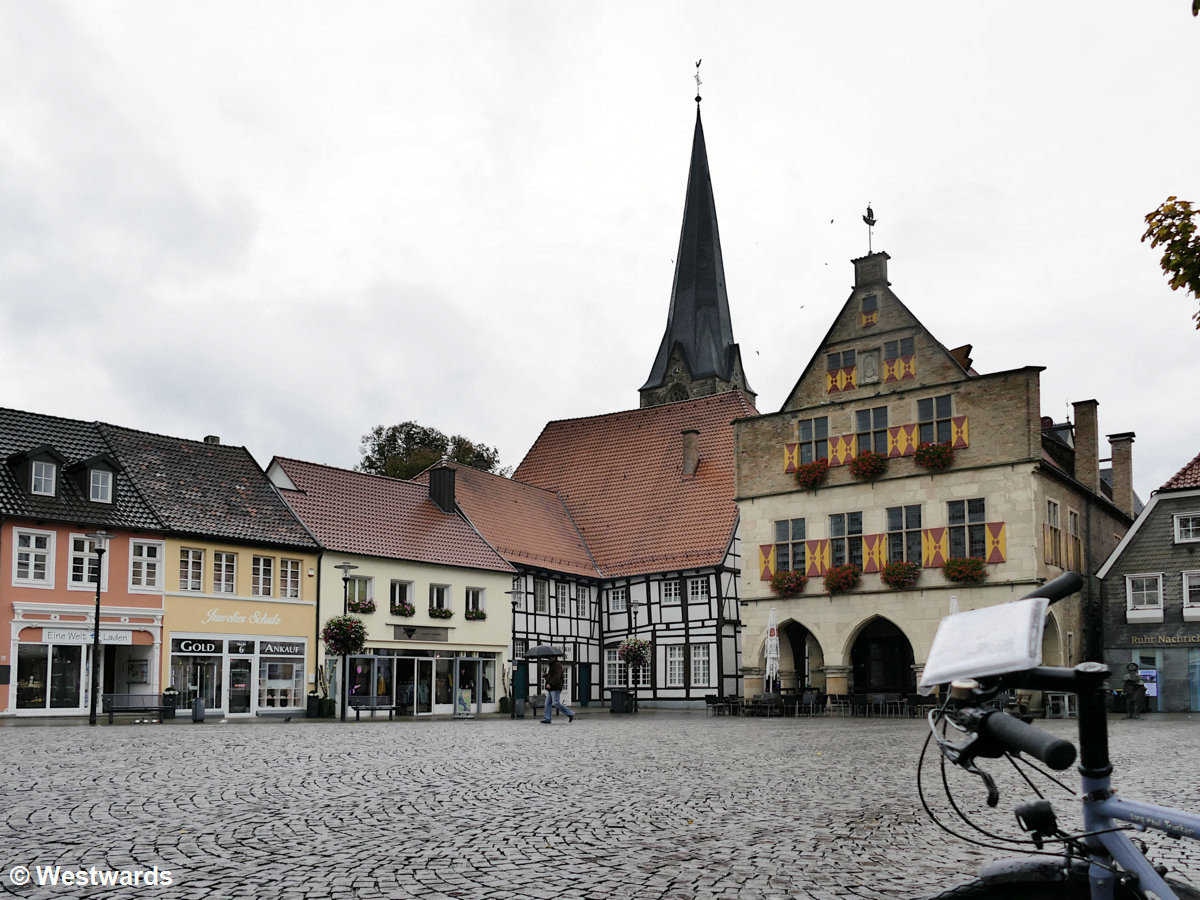
Despite construction work and detours, a local cyclist convinced us to go to Werne on the other bank of the river. He assured us that the only bridge over the river was passable. Moreover, that Werne is well worth the visit. We even find a friendly bakery to warm up in the rainy weather. But the shop is closing only 30 minutes later, so we set off again along the canal. More power stations and agriculture lead us back to Hamm, the city without a city centre. And after a quick stop at the supermarket, we catch the next train back to Berlin.
Infrastructure and facilities on the Ruhr Area Industrial Heritage Route
The densely populated Ruhr area offers a well-developed network of cycling routes. They are signposted by a system of major nodes, which usually works well, providing maps and information at each node. The only challenges arose when trails were closed, as alternative routes were often less clearly signposted.
The region is a patchwork of towns separated by green agricultural areas. The trail planners have deliberately routed cyclists through these quieter, greener spaces to avoid busy streets with lots of cars and traffic lights. While this makes for a more pleasant ride, it also means shops, restaurants, or bakeries are scarce along the trail. We often had to divert from the cycling route to buy some food.
Accommodation options vary from workers’ rooms with shared bathrooms to seminar hotels.
The local cuisine is hearty and originally heavy on meat but now increasingly featuring vegan substitutes, reflecting changing tastes. Try vegan Currywurst and vegan Taxi plate. Luckily, with all the cycling, there’s little need to worry too much about calories!
Why you should cycle along the Industrial Heritage Route in the Ruhr area
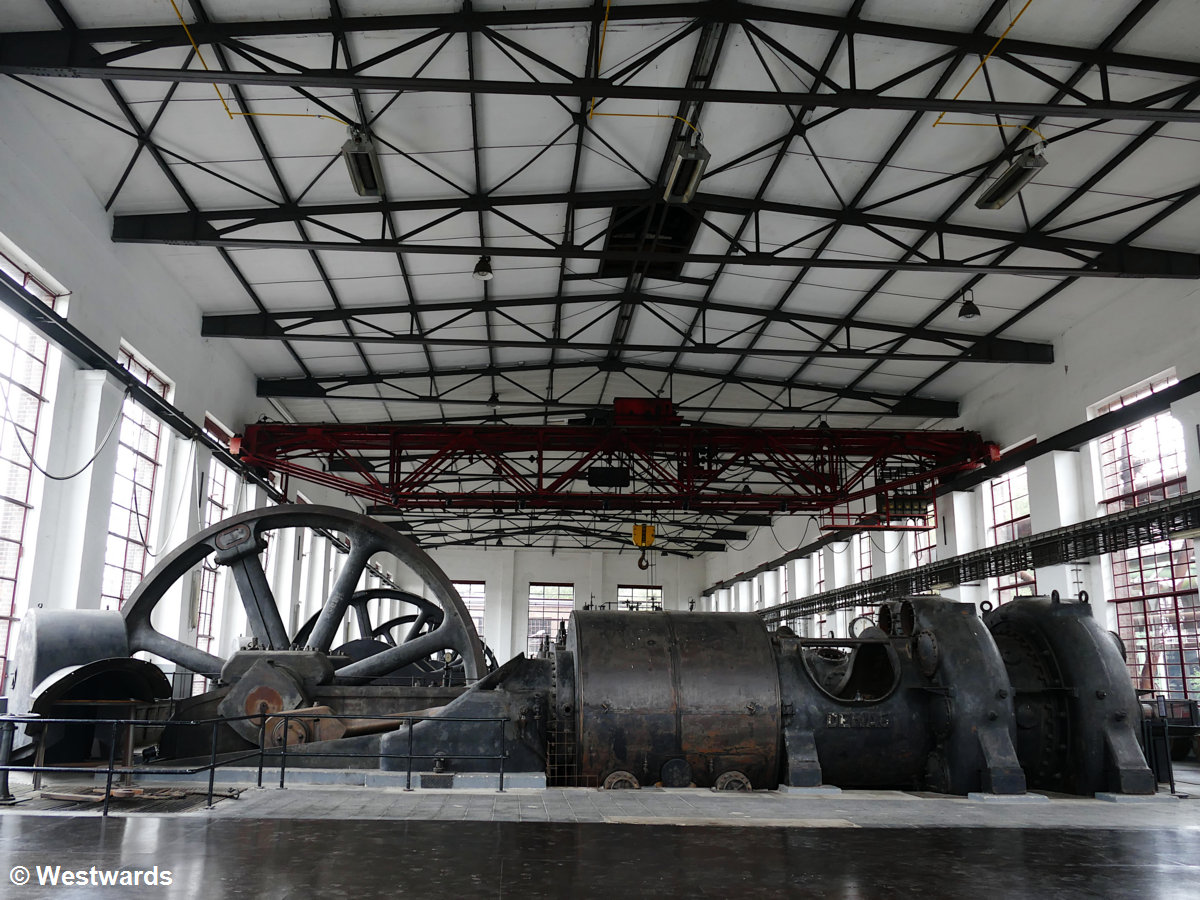
The Ruhr Area’s Industrial Heritage Route is a hidden gem in Germany – lesser known but rich in culture and history. It offers a unique window into an industrial past that isn’t so distant. In fact, many people in Germany still remember the coal mines and steelworks in action. Beyond the fascinating sights, the local people are very welcoming and friendly. Are you looking to explore history, culture, and great people all in one ride? Then the Industrial Heritage Route is well worth discovering.
NB: We had no sponsoring for our cycling trip on the Ruhr Area’s Industrial Heritage Route. We organised the trip ourselves and paid all expenses.
Never miss a new post! Get notifications about new posts straight into your inbox!
Use this image for Pinterest:
