

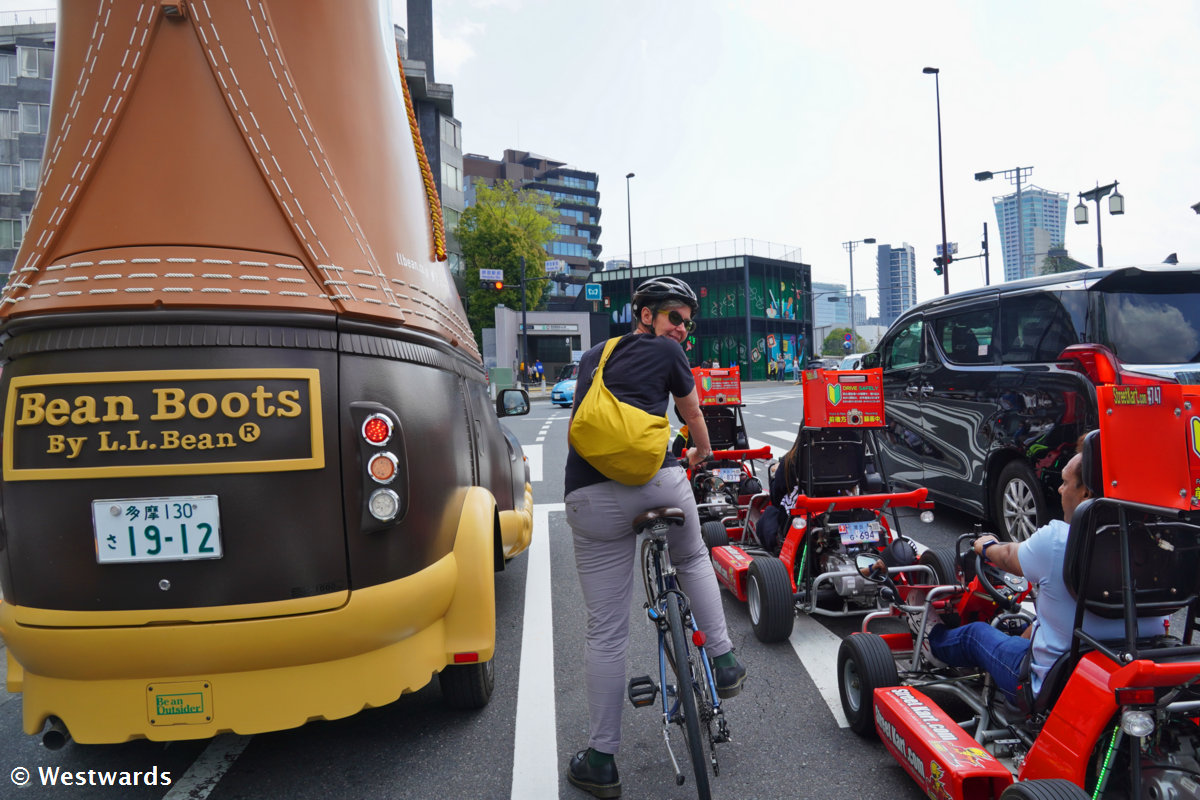
Over the years we have travelled the green loop of the Yamanote Line in Tokyo hundreds of times – commuting, meeting friends, exploring different neighbourhoods. We knew most of the stations and the characteristic jingles, but we never really understood how they fit together. On the train, the city feels vast. Each stop seems like its own destination, separated from the next by tunnels and tracks. Therefore, our mental map of the loop has always remained fragmented. Eventually we decided to find out how everything connects.
It’s easy to forget that the entire Yamanote Line is only about 35 kilometres long. Cycling it – or even walking it – in one day should be possible. So we set ourselves the challenge of cycling the Yamanote Line as close to the rails as we could.
Cycling the Yamanote Line turned out to be far more fun than we expected. Following the tracks from station to station gave us a clearer sense of how the city fits together and a new understanding of its scale. At the same time, passing familiar stations like Ueno, Okubo and Shinjuku brought back memories from our years in Tokyo.
Ride along with us as we cycle the Yamanote Line and reconnect the stations, neighbourhoods and memories along the way.
What is the Yamanote Line in Tokyo?
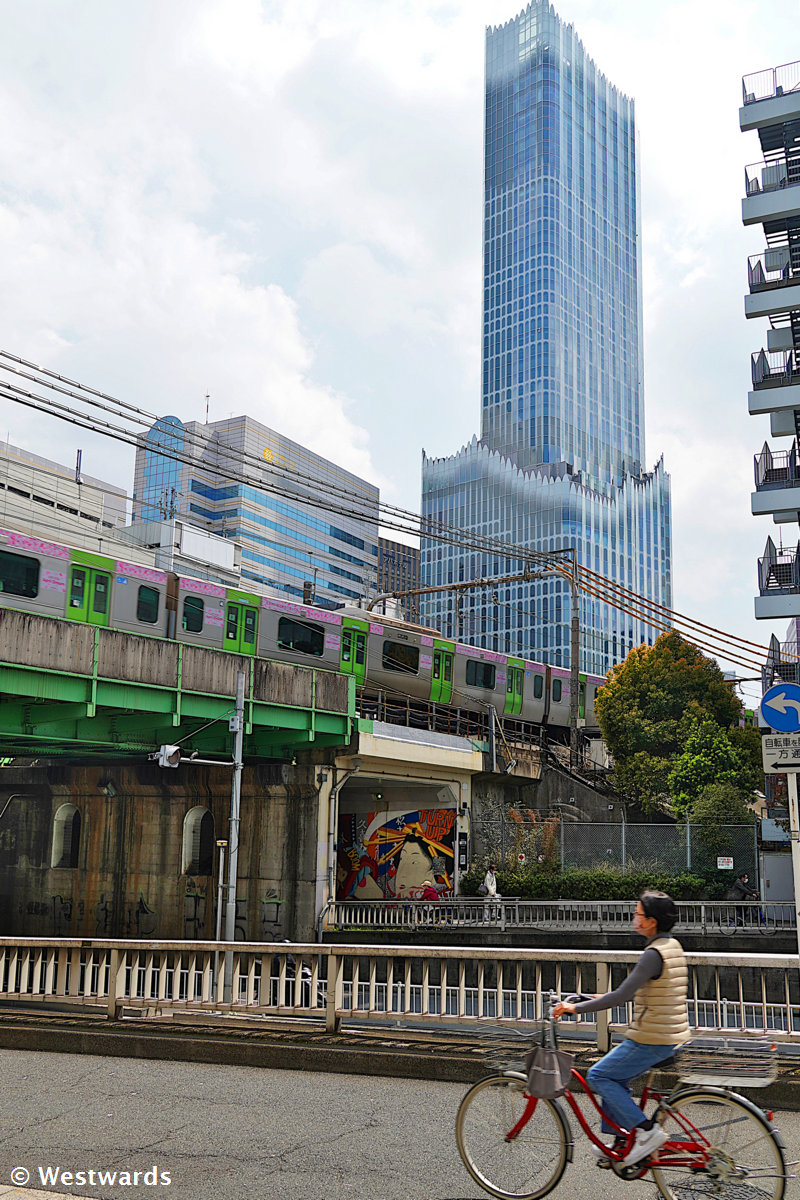
The Yamanote Line is a 35-kilometre railway loop around central Tokyo and one of the city’s main transport arteries. Opened in stages from 1885 onward, and completed as a full loop in 1925, it originally connected key freight and industrial areas before becoming a vital passenger line. With trains running every few minutes, it links key stations such as Shinjuku, Shibuya, Ueno and Tokyo. Its distinctive green colour and familiar departure melodies have made it a symbol of everyday life in Japan’s capital.
Bustling inner-city hotspots: Akihabara and Ueno
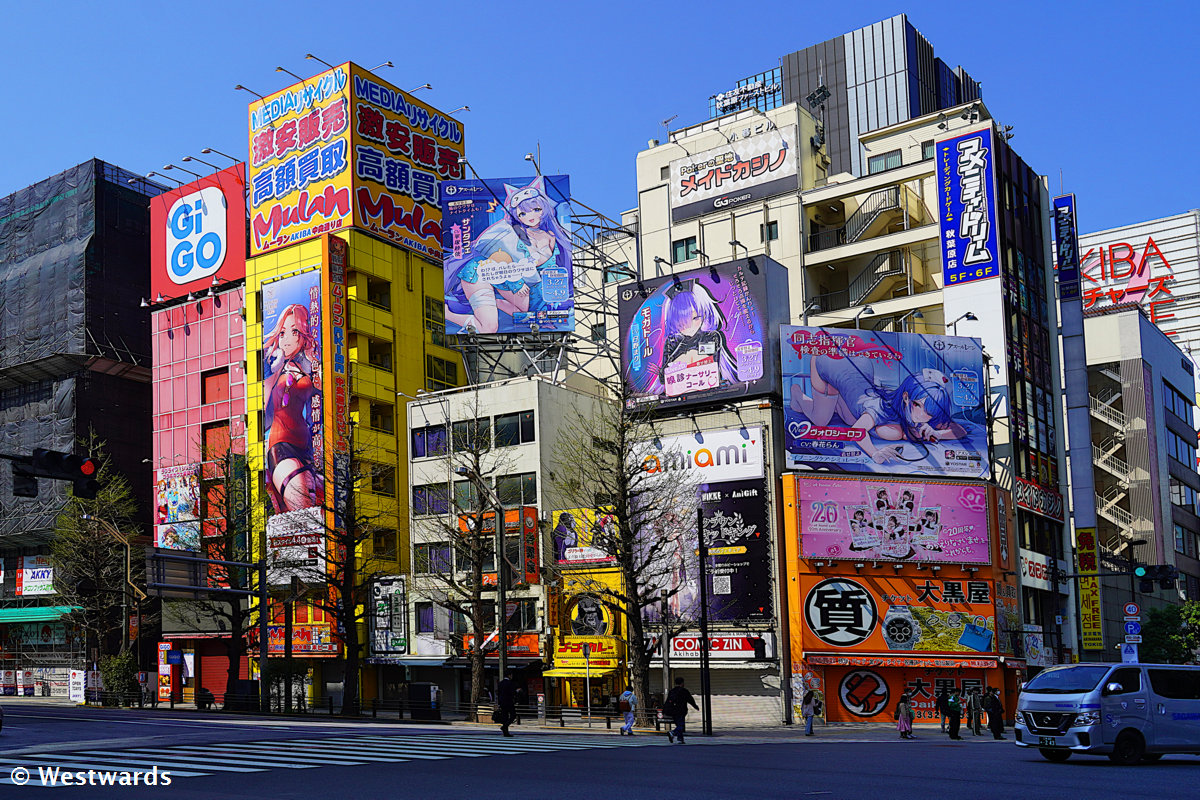
We had arranged to pick up the bicycles around 9 in Akihabara, Tokyo’s legendary electronics and otaku hub. Thanks to our online reservation we can soon start with decent city bikes equipped with a helmet. For one of the bikes, we also rented an additional smartphone holder. At that hour, the broad streets in Akihabara are still quiet. Most shops are still closed, and the billboards with oversized manga characters sporting giant boobs are looming above us.
A bit further on, we enter the Okachimachi area along the railway lines. But alas – trying to cycle close to the tracks turns out to be a mistake! Crowds of morning commuters and early bargain hunters make the street almost impassable. We have to dismount and walk until we can change to a main road nearby to continue our cycling along the Yamanote Line.
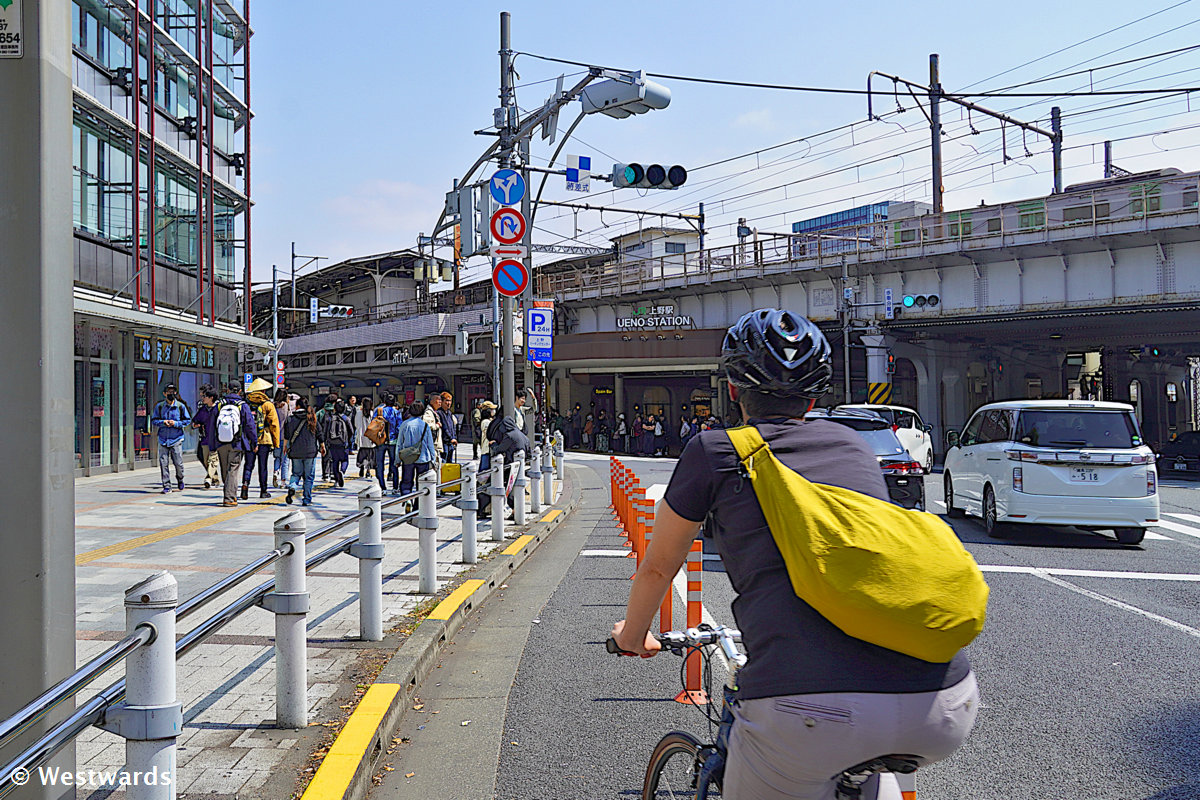
Next we reach Ueno, famous for its sprawling Ueno park and world class museums. We would have loved to cycle through Ueno Park to soak in the greenery. But cycling is forbidden inside the park. Instead, we stick to a small road near the railway and walk only briefly to navigate the station entrance area.
Cycling the quiet northern part
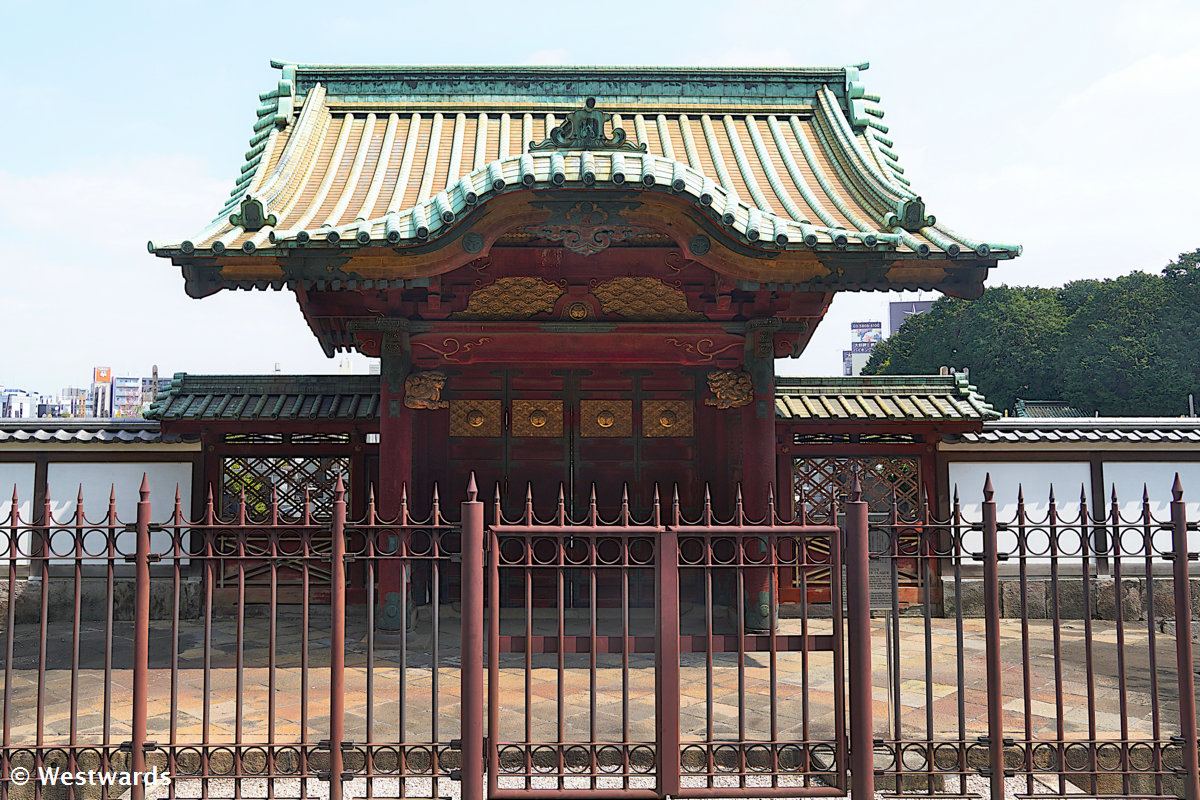
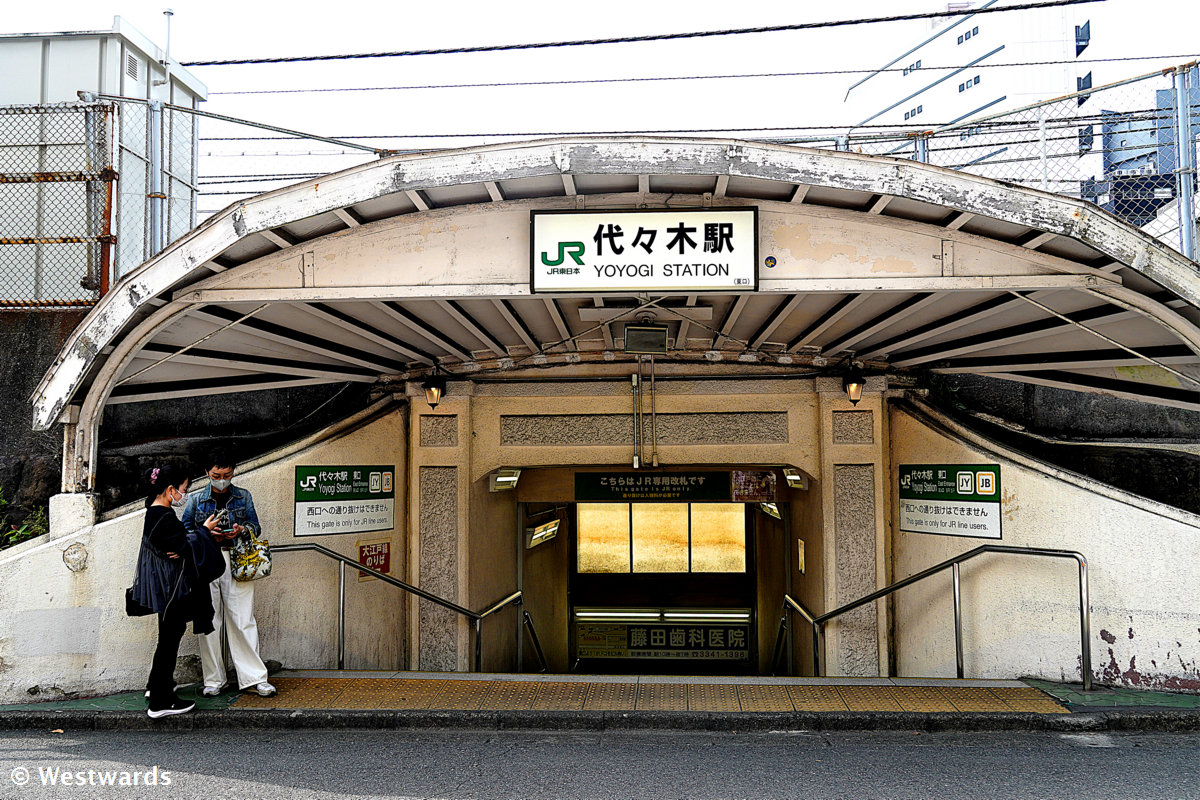
Beyond Ueno Park, we follow lazy back roads and soon reach a stretch of old cemeteries. Some notable historical figures have their tombs near Uguisudani Station, and we stop a couple of times to read the information boards. Before reaching Nippori station, we get lost in the maze of cemetery lanes – some of them forbid cycling. But here we have to cross to the outer part of the Yamanote Line anyway, as it is our goal take a photograph of each JR station entrance along the Yamanote Line!
That’s when we realise staying inside the Yamanote loop is definitely easier. On the outer side, numerous train lines branch off, and behind Nishi Nippori we find ourselves on a wondrous asphalt path squeezed between the massive rail lines of Yamanote Line, Keihin Tohoku Line, several Shinkansen tracks, Utsunomiya Line, Joban Line, and some storage tracks. Locals walk their dogs, and somehow there’s a strange emptiness around us that reminds us of a rocky high-alpine landscape.
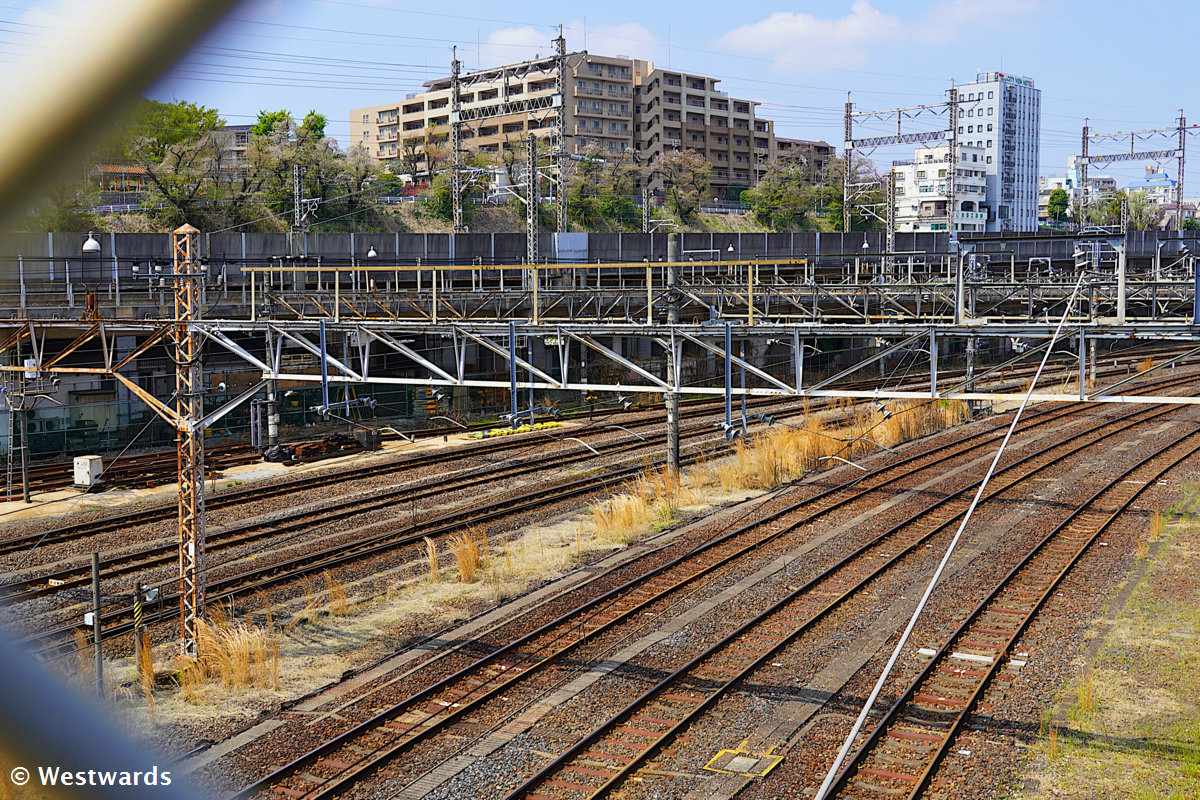
We wonder whether we’ve ever been to Komagome, and whether these quaint neighbourhoods have ever entered the 21st century? Eventually we recognize Otsuka Station and Ikebukuro with its towering Sunshine 60 skyscraper, its wide streets and shopping quarters. But again, the streets along the Yamanote Line become smaller and quiet when we pass Mejiro Station and Takadanobaba. We haven’t been in the area since Isa’s time at Waseda University and can’t resist stopping to take some pictures of the Atomboy murals around the station.
Shinjuku and Shibuya: Cycling the Yamanote Line in Tokyo’s busiest neighbourhoods
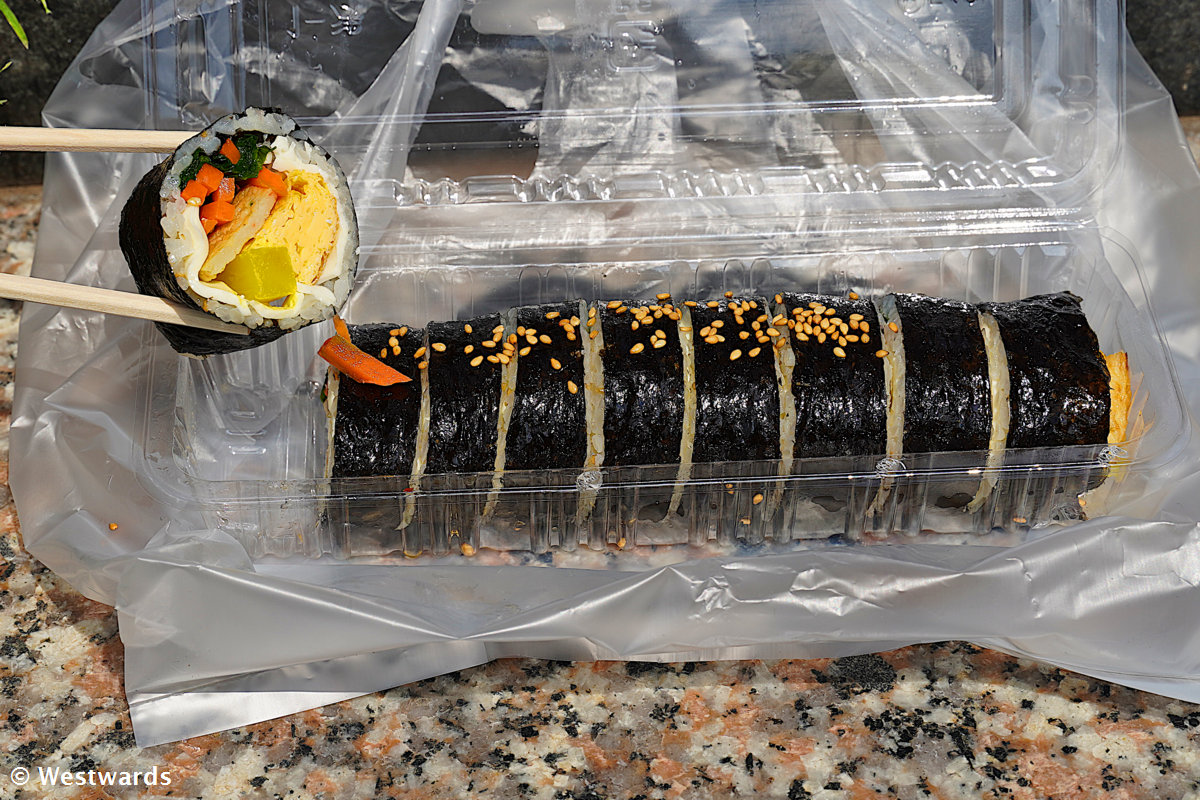
From there it is not so far along quiet neighbourhood roads either next to or near the Yamanote Line. After about 10 minutes, the calm disappears and the streets suddenly get very busy. We had been looking forward to Okubo aka Korean town. This has always been our go-to spot for authentic Korean food in Tokyo. And we had been daydreaming about Tteokbokki or Chijimi. Sure enough, our route is lined with all things Korean, including quite a few street food stalls. But in all the jostle we cannot find a place to sit and eat our vegetarian Kimbab roll! On the way to Shinjuku, we finally spot an empty bench in the Kabukicho pleasure quarter: busy, but less touristy.


Cycling past the enormous Shinjuku station – with its five million daily commuters – feels like home. Having lived nearby in Nakano, we often cycled through here. Still, with crossing railway lines and dead-end roads, we can’t always stay close to the Yamanote Line. Eventually, we zigzag through the lively Harajuku quarter, come out at Harajuku Station, and cycle on to Shibuya. And yes, the roads are wide and traffic-heavy, but it is still a thrill to cycle across the famous Shibuya Scramble Crossing!
Decisions to be made around Meguro
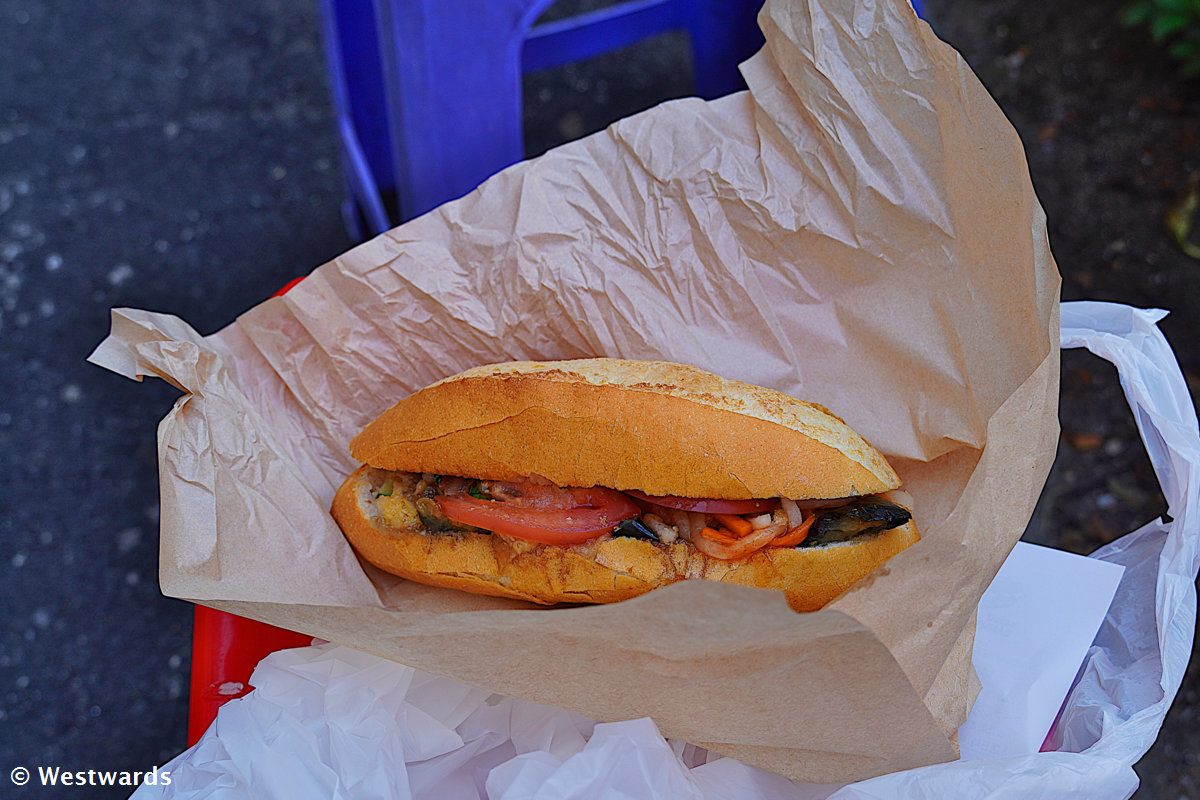
Meguro station marks a major milestone for us – not least because we know a fantastic Banh Mi shop here! Recently quite popular, Banh Mi are one of the great meat-free options for vegetarian travellers in Japan. Of course we stop and devour some truly wonderful Banh Mi before hopping back on our bikes.
If you need more ideas about what to eat as a vegetarian on your Japan trip – have a look at our detailed guide for vegetarian travellers!
While planning this cycling tour along the Yamanote Line, we had noticed that the Megurogawa – a small, canalised river famous for its cherry blossoms – is running parallel to the Yamanote Line for several kilometres. It is tempting to leave the railway tracks for a quieter, greener path along the river, away from the big roads.
But then our slightly obsessive quest to photograph every Yamanote Line station pulls us back. We hesitate, weighing the temptation against our goal. In the end, we stick to the Yamanote Line all the way along the south bend. We still catch a bit of the river’s charm on a short stretch between Gotanda Station and Ozaki Station, where the canal is actually crossing the railway tracks.
The drag in the Southeast: Yamanote Cycling at its worst
Heading north from Ozaki Station, we struggle to find the right path – and then hit a quite steep hill! Gotenyama was a famous cherry blossom spot in the Edo Period, we read on an information panel. And even today the residents of the posh high-rises enjoy spectacular views over Tokyo. Beyond a fancy landscape garden, we then reach a major road: National Route No. 15, or Daiichi Keihin, the main artery into Tokyo from the South.
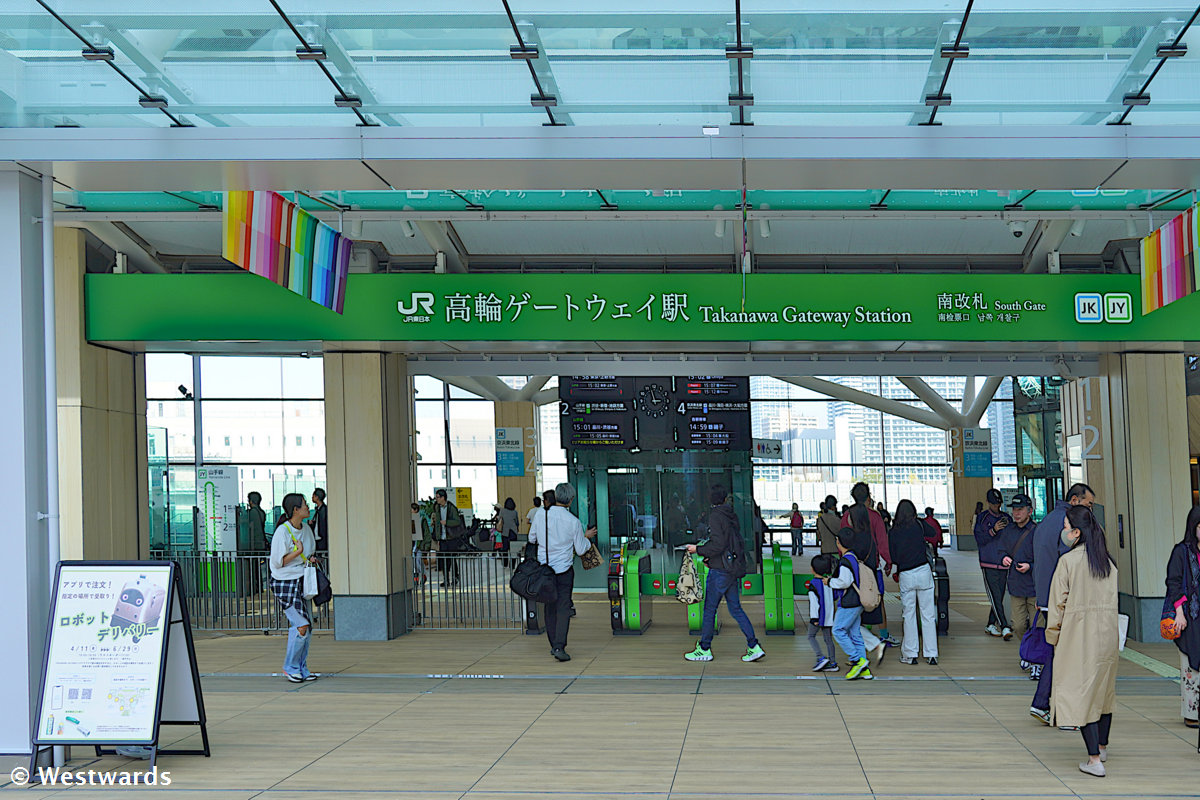
This stretch turns into the worst part of our ride. At first, a cycling lane keeps us safe, but soon we pedal amidst heavy traffic on the multilane road. As quickly as possible, we pass numerous construction sites around Shinagawa station. At the new Takanawa Gateway station, a shiny new building project just opened. We stumble into an open-air sake fair while searching for a good spot to take a photo of the station entrance.
The next two stations – Tamachi Station and Hamamatsucho Station – force us into detours to reach the passenger entrance. Next, we move with National Route No. 15 to the outer side of the railway tracks to catch the main entrance of Shinbashi Station. And now we are getting to the heart of the matter!
Glorious finals in Ginza and Tokyo Station
Just north of Shinbashi Station, we reach a cacophonous crossing with the hilarious name Shinsaiwaibashi (New Happiness Bridge) and spot a tiny passage. Barely wide enough for cycling or walking, the small road threads between the Yamanote Line and the Shinkansen tracks on one side and a highway and yet more railway tracks on the other. It spills us out at Yurakucho, just off Ginza.
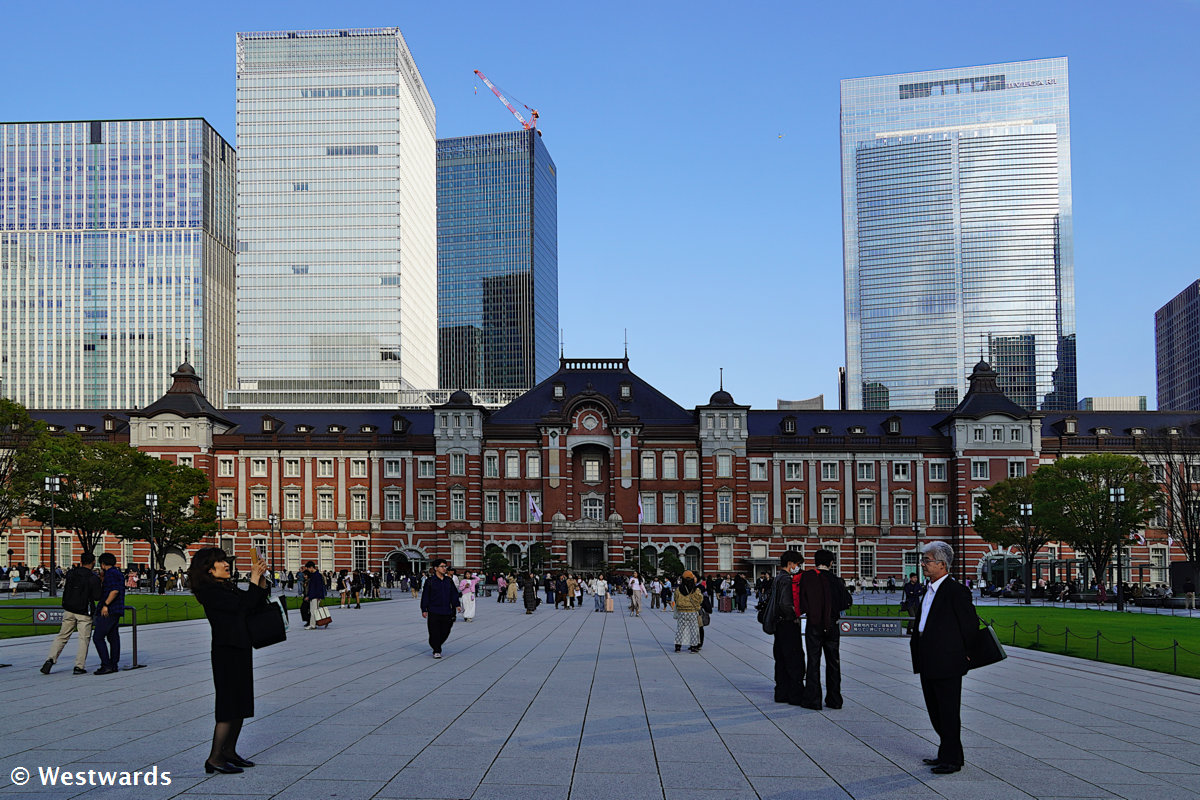
At the International Center, we pause for a last coffee break. And on we go, to take in the panorama sight of Tokyo Station. With its reconstructed Taisho-period façade, the station is a popular photo spot and quite uplifting after a long cycling day.
The final part back to the bike rental shop in Akihabara is a breeze – although we get a little mixed up on the one-way streets near Kanda Station and end up pushing the bicycles for one block. Well before the closing time of the shop, we hand them back and walk towards the station with a load of new impressions from our full-day adventure.
Is cycling the Yamanote Line a worthwhile experience?
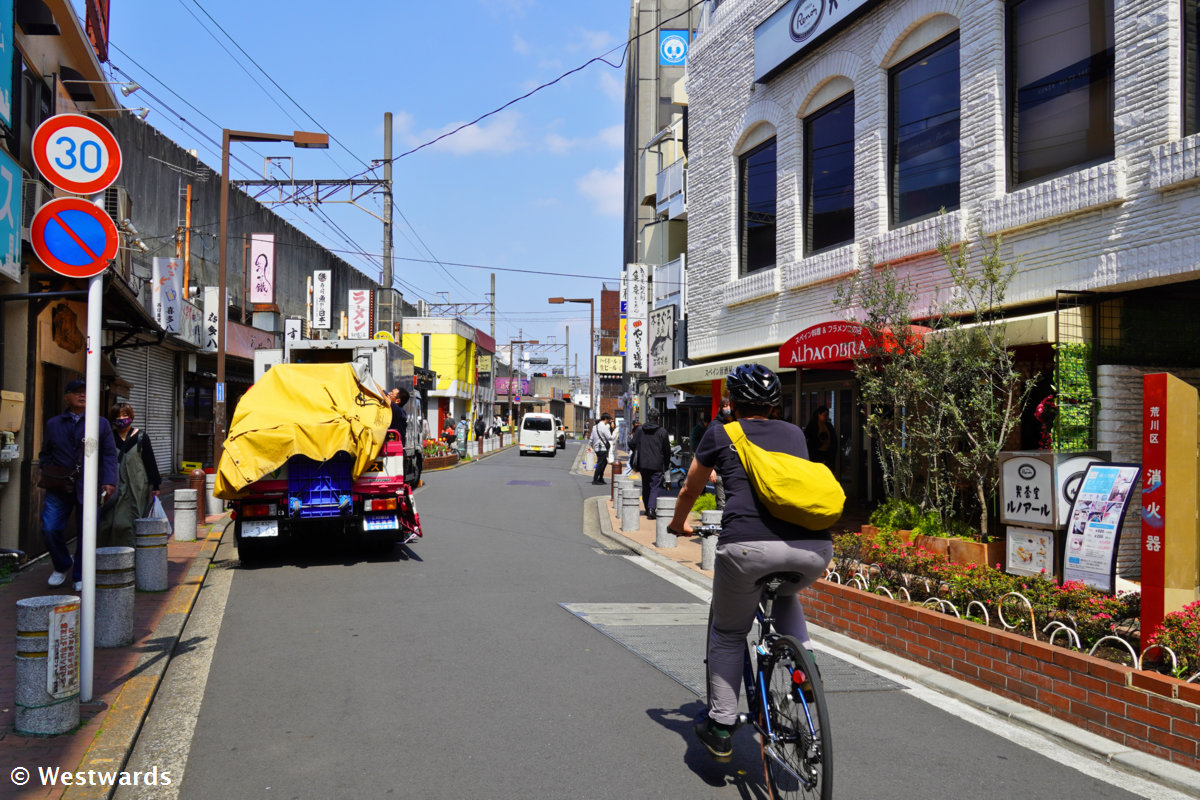
Yes! We found it much more enjoyable than we had expected!
First, it is always a surprise to cycle in Tokyo between stations that you normally only know from public transport. Places that felt far away, or frustrating to reach by subway often turn out to be easily accessible by bicycle – or even walkable. We’ve had the same kind of spatial revelation cycling the Berlin Wall Cycling Trail. Or even more so, the Route of Industrial Culture in the huge and wide-spread Ruhr Area in Germany: Cities like Bochum, Unna, or Duisburg are actually not that far apart!
And second, the Yamanote Line plays such an important role in a Tokyoite’s life that it is nice to see how the city connects. In this way, city cycling reminds us of our year-long overland trip westwards from Japan to the Mediterranean and Europe. By the time we landed in Naples after a year of travelling, we had a far better understanding of what the Silk Road had meant to the travellers of old.
Cycling the Yamanote Line is not just about seeing the stations – it’s about rediscovering Tokyo! And about seeing the city from a perspective that even locals rarely experience, making the familiar feel fresh and full of small, unexpected discoveries.
How to plan a cycling trip along the Yamanote Line
A bicycle in Tokyo is an old-fashioned affair called a mama-chari. You sit on it like on a sofa. The only way to go reasonably fast is “high-school student style”, bent forward and with the knees sticking out to the sides while pedalling. It’s quite exhausting. That’s why we rented proper bicycles with larger frames and several gears from Cycle Trip Base Akihabara.
Most of the time, roads run along the railway tracks, but we checked the map beforehand to figure out where we might get stuck. We foresaw ending up in cul-de-sacs or on the wrong side of a major road that would be tricky to cross.
We decided to cycle counterclockwise for two reasons: First, we expected the northern part to be greener and nicer to cycle (as it was indeed). And second, we anticipated that we might not make the full loop in a single day due to traffic and frequent stops. In that case, the pointy southern detour to Osaki Station would have offered an opportunity for a shortcut. In the end, we didn’t need to take any shortcuts and completed the full loop, savouring every part of the ride.
Have you ever toyed with the idea of cycling the Yamanote Line? Or have you done it? How was your experience? Let us know your thoughts in the comments.
NB. We were not sponsored in any way to write this blog post. We paid the full day fee for renting the bicycles and the shop was not informed that we will write a post about our trip.
Never miss a new post! Get notifications about new posts straight into your inbox!
Take a note of this post and pin it on Pinterest:
