

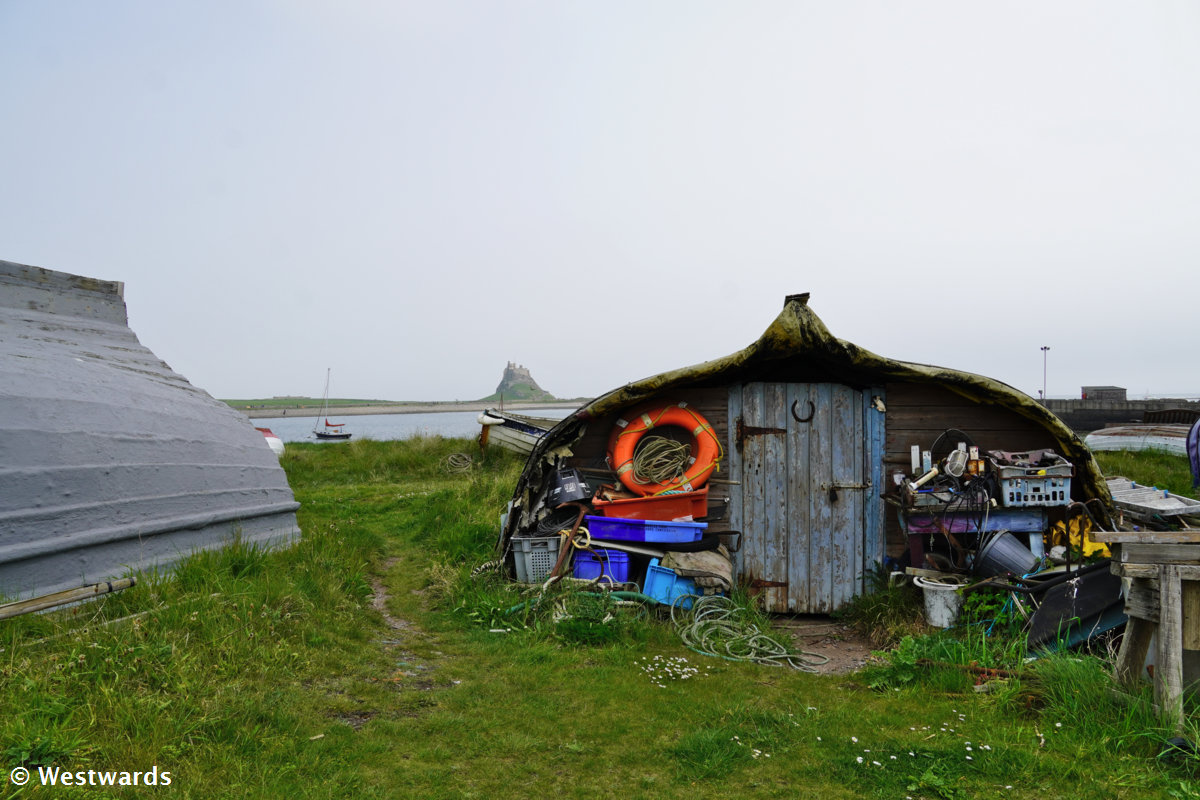
A daytrip to Lindisfarne is not like planning an ordinary day out: There are times when you simply can’t go to the island. Or can’t get away from it. The reason for this is the causeway linking the tiny island to the Northumbria coast. You’d think that a causeway improves access – but this one is so low that it is only passable at low tide. At high tide, the water gets high enough to wash cars away into the sea …
We visited the Holy Island of Lindisfarne as a day trip – without our own transport. In this blog post we will share with you how we organized the trip. We will also give you some ideas what to expect and see on the island of Lindisfarne.
Reaching the Gateway to Lindisfarne
When we spotted Lindisfarne Holy Island on the map, it looked like the perfect stop on our way from the ferry port at Newcastle to the Scottish Highlands at Speyside, where we were headed for a whisky tasting adventure. But even reaching the village of Beal, the gateway to Lindisfarne opposite the Holy Island, was a micro-adventure in itself. Buses in Northumberland are quite slow, and the online timetables never seemed to agree – each one had its own version of departure and arrival times. On the other hand, this way our connection from Newcastle to Beal provided us with some leisure time in Alnwick, a charming market town with a lovely castle. We made the most of it by stocking up on food in a big supermarket, before continuing to the campsite at Beal on the coast of the English Mainland just opposite of the island of Lindisfarne.
A crossing at Dawn
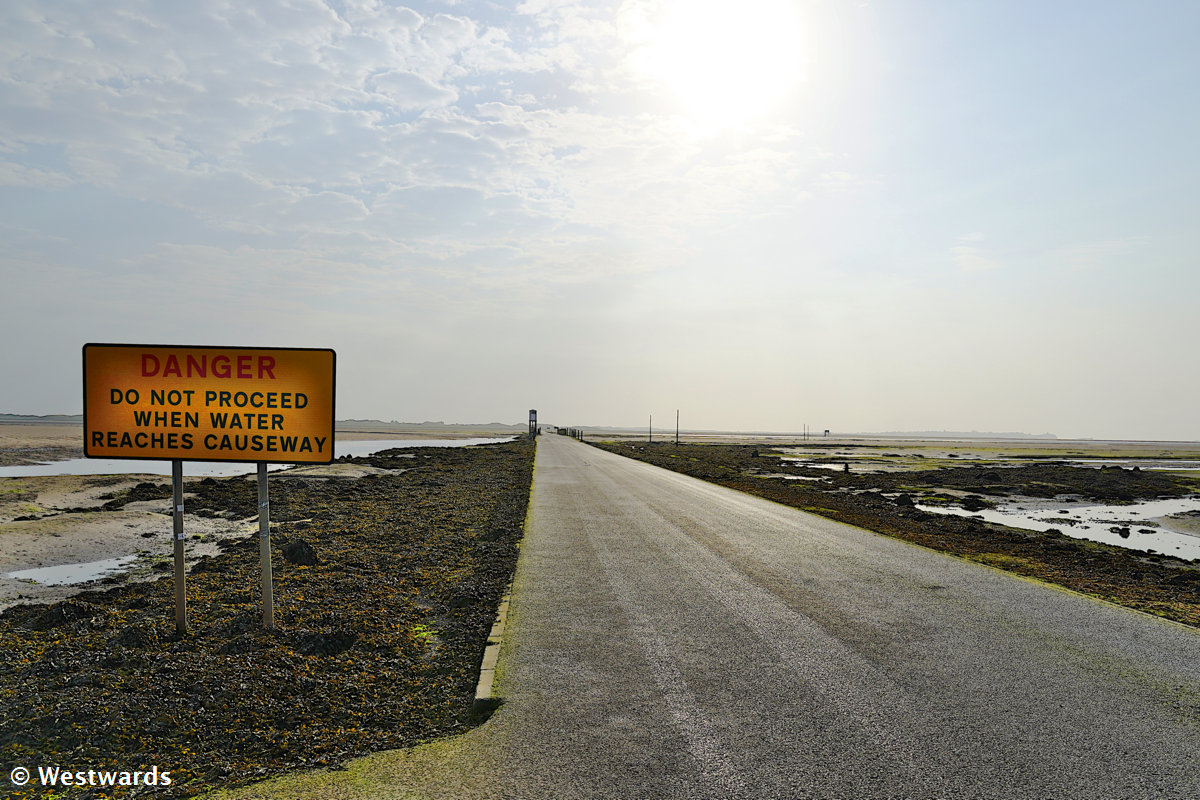
Visiting the holy island of Lindisfarne takes a bit of planning – because you can only cross the causeway at low tide. So we have chosen this date carefully: The safe crossing windows are in the morning and in the evening. Just right for a daytrip to Lindisfarne Holy Island. The catch? It means an early start. By 9.30, the causeway will become too dangerous to cross.
When the land drops away and the road stretches across the mudflat, a warning road sign announces the beginning of the causeway:
Danger! Do not proceed when water reaches causeway!
There’s no sea far and wide, but we have seen videos of whole cars being swept away. And we have once experienced a flash flood ourselves in Egypt – so we know how fast water can rise and how much force it carries.
The Pilgrims’ Way across the sea
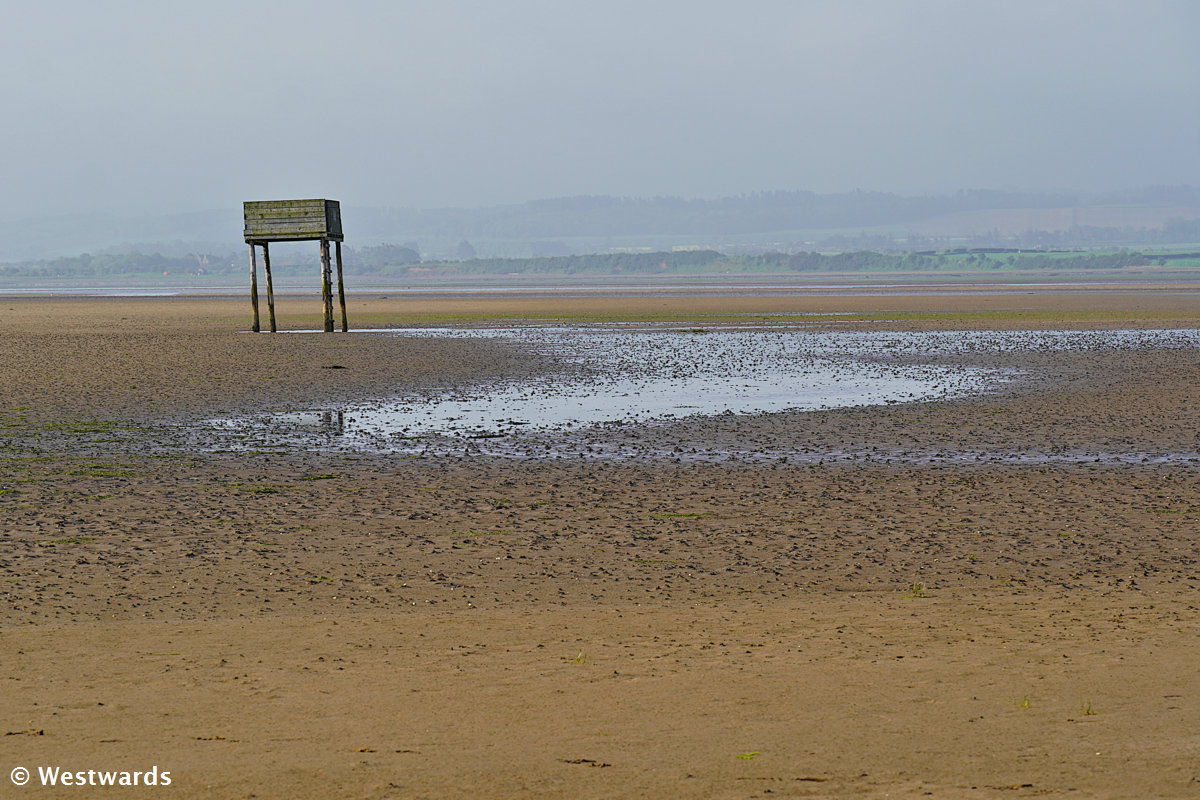
In the distance, the island of Lindisfarne is already visible. Scattered across the mudflats we also see some wooden markers and high rescue shelters for anyone caught by the tide. In addition to the newer causeway, there is also a historic pilgrims’ way passing the tidal flat directly from the shore of the mainland to the Lindisfarne Priory. For pilgrims and hikers, this is a shorter route overall. But it also involves a longer – and potentially risky – stretch across the mudflats. Today, on our daytrip to Lindisfarne, we decide against the route over the mudflats because the tide will be coming in soon.
Instead, we walk the longer route along the causeway and the winding island road. Not even halfway through, we are lucky enough to catch a ride with a local straight into the village. And it’s just about time to get a decent English breakfast at the Post Office café! Spoiler: It was quite expensive, but at least the vegetarian version was not very good. And even worse: the coffee was only lukewarm and tasteless.
The Story of St. Cuthbert
St. Cuthbert is the reason we are here. Long before Lindisfarne became famous for causeway accidents, it was a pilgrimage destination. People wanted to visit the grave and priory of St. Cuthbert, a remarkably influential and apparently stubbornly incorruptible saint.
The church on the island goes back to the 7th century, when the newly baptised king of Northumbria invited an Irish monk to establish a monastery. Cuthbert arrived later as his successor, prompted by a religious vision, and quickly became the spiritual star of Lindisfarne. Under his influence the Lindisfarne Priory flourished. Eventually Cuthbert retreated from it all and spent his final years as a hermit on an even smaller nearby island.
When the monks discovered after his death that Cuthbert’s body did not decompose, pilgrims began flocking to Lindisfarne. The priory became a centre of Christian learning until the Vikings raided the island in 793! The few surviving monks eventually returned to rescue the shrine with Cuthbert’s body. After years of wandering (with the dead Cuthbert!) they settled in Durham where they built the famous cathedral. Meanwhile Lindisfarne Priory was rebuilt on a grand scale from the 11th century on, and remained active until the 16th century.
The Lindisfarne Gospels
Lindisfarne is also famous as the origin of the Lindisfarne Gospels, a handwritten manuscript created around 700 AD by monks at the Lindisfarne Priory. This illuminated manuscript contains the four Gospels, decorated with intricate Celtic knotwork, vivid colours, and stunning calligraphy. Besides the reliquaries of Cuthbert himself the gospels were among the precious items rescued during the Viking raid of 793. Today, the British Library in London keeps this masterpiece safe in its collection.
Exploring the monastery ruins and the museum
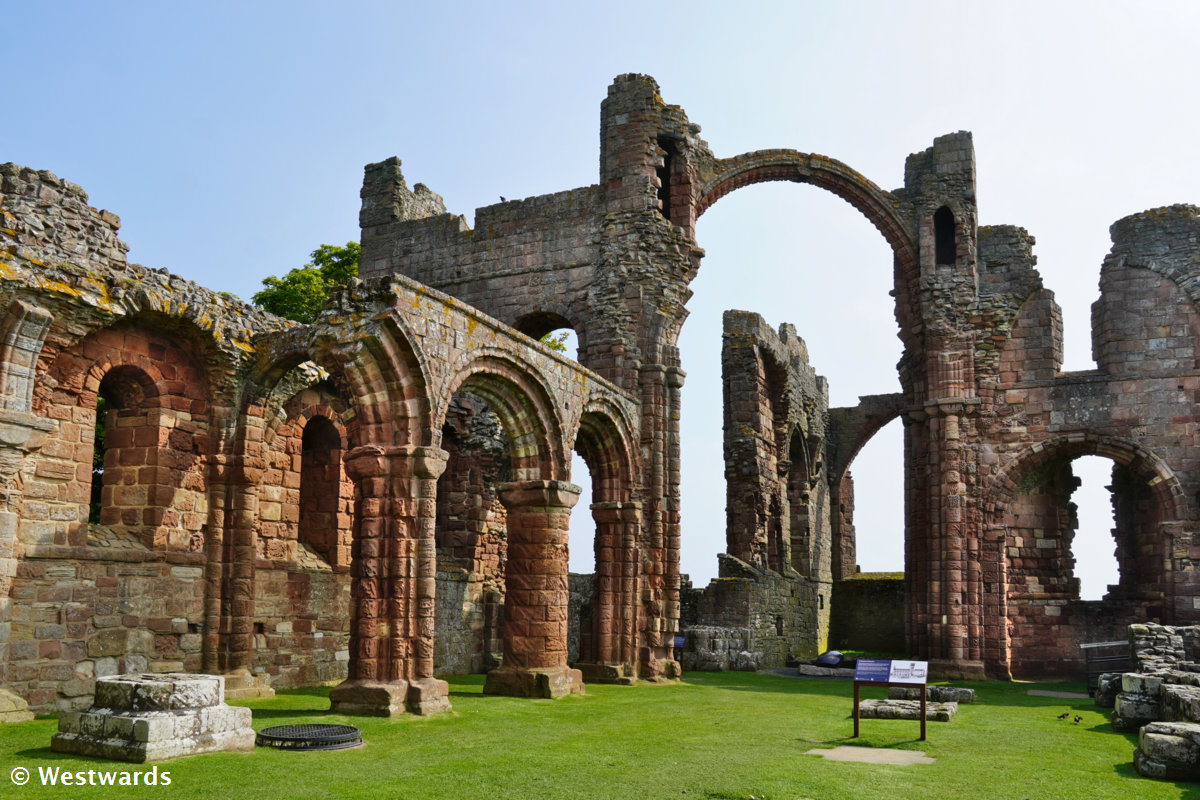
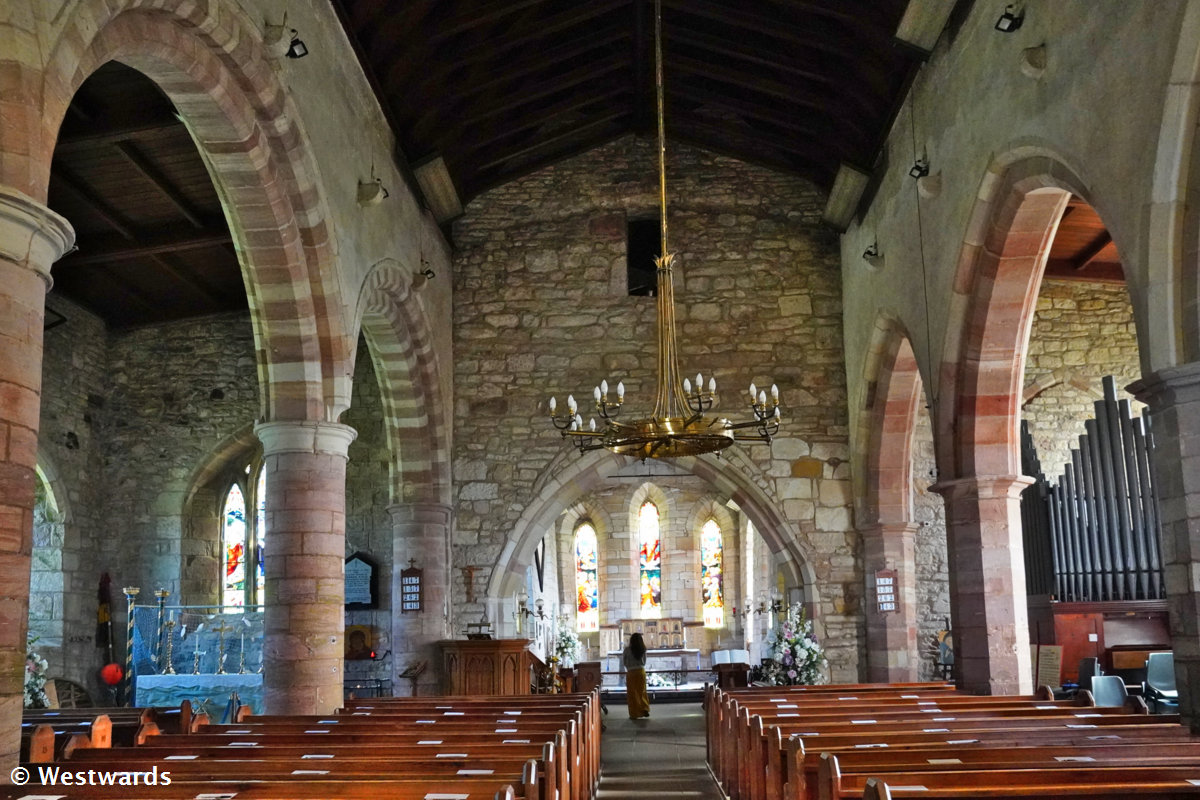
The highlight of our daytrip to Lindisfarne Holy Island is undoubtedly the atmospheric archaeological complex of the Lindisfarne Priory. Although much of the old monastery fell into ruin after being abandoned during the dissolution of the monasteries in the 16th century, the adjacent parish church of St Mary is still very much in use. Built in the 12th and 13th century, St Mary’s Church is the oldest building on the island.
Still, the ruined Norman cathedral captures our imagination far more. Its remaining walls and sweeping arches hint at centuries of devotion. Wandering through the former monks’ quarters, it’s easy to imagine the rhythms of life led by St. Cuthbert’s community.
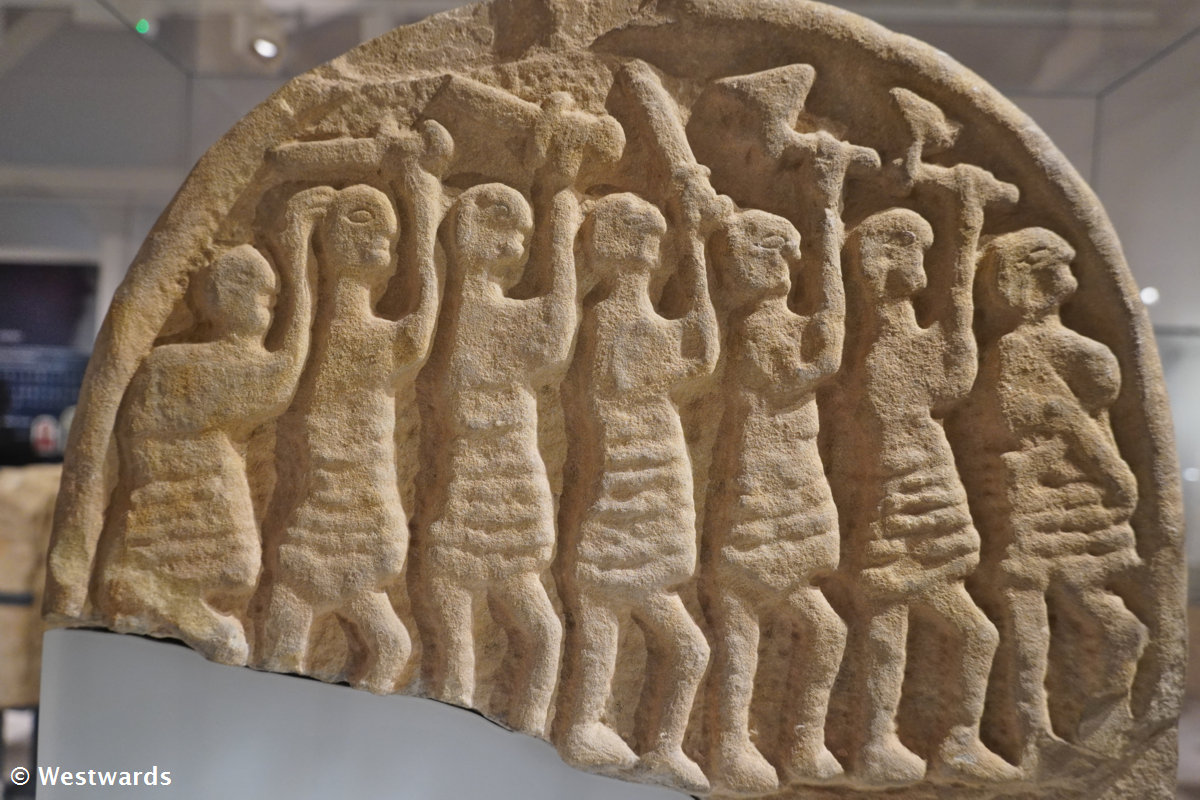
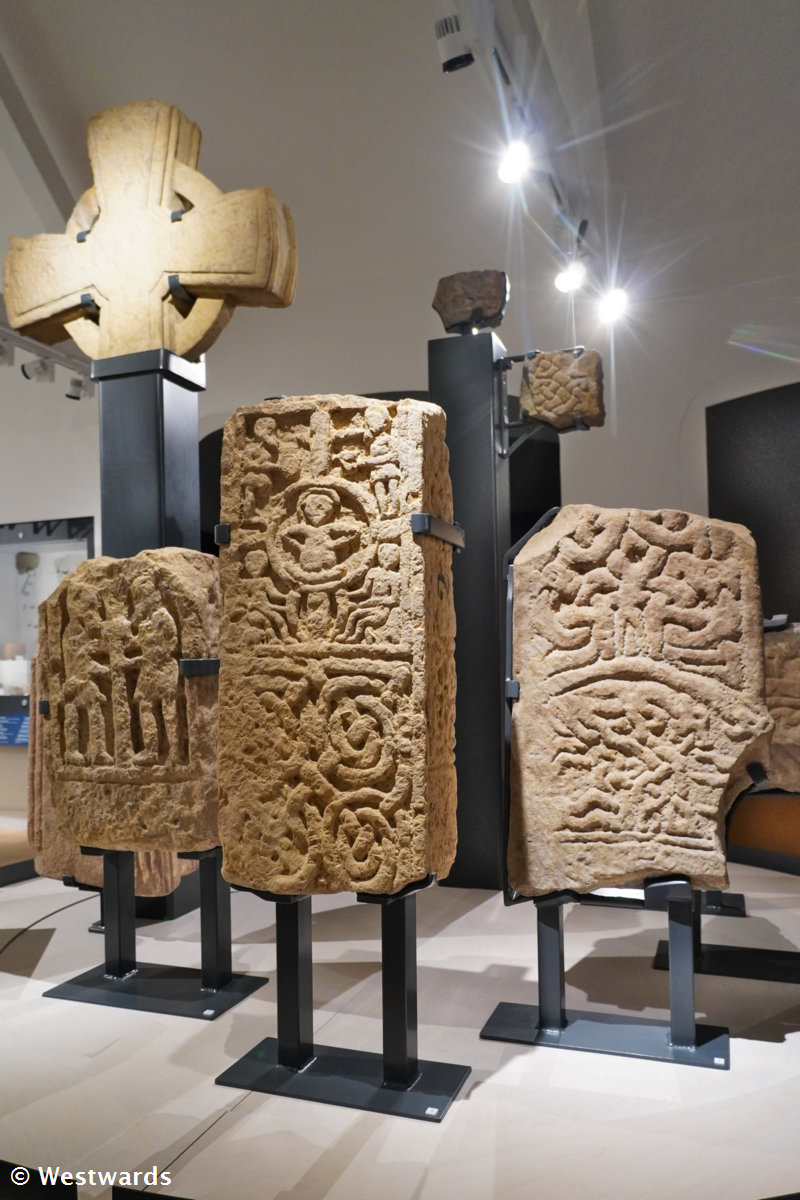
The on-site museum brings this history vividly to life. We marvel at intricately carved early Christian tombstones and fascinating artefacts, including a game piece from the ancient tafl board game. The 1200-year old so-called Doomsday Stone shows on one side a conga line of Vikings brandishing battle axes and swords. We love the depiction of the Viking woman leading in the front. Hilarious!
Time for a coffee break!
Just below the Lindisfarne Priory ruins, a short walk leads us down to the beach, where we get a good look towards St Cuthbert’s Island. This tiny island was the refuge where the saint retreated later in life. By now, the high tide has come in and there is a small stretch of sea between us and Cuthbert’s Island. But we wonder whether good old Cuthbert could actually walk over to his hermit’s sanctuary from Lindisfarne at low tide.
We also come across a small but moving exhibition dedicated to the numerous rescue missions carried out by the islanders. Not a few of the island’s lifeboats were named after Grace Darling, a young woman from the vicinity who famously saved people from a shipwreck in the midst of a storm.
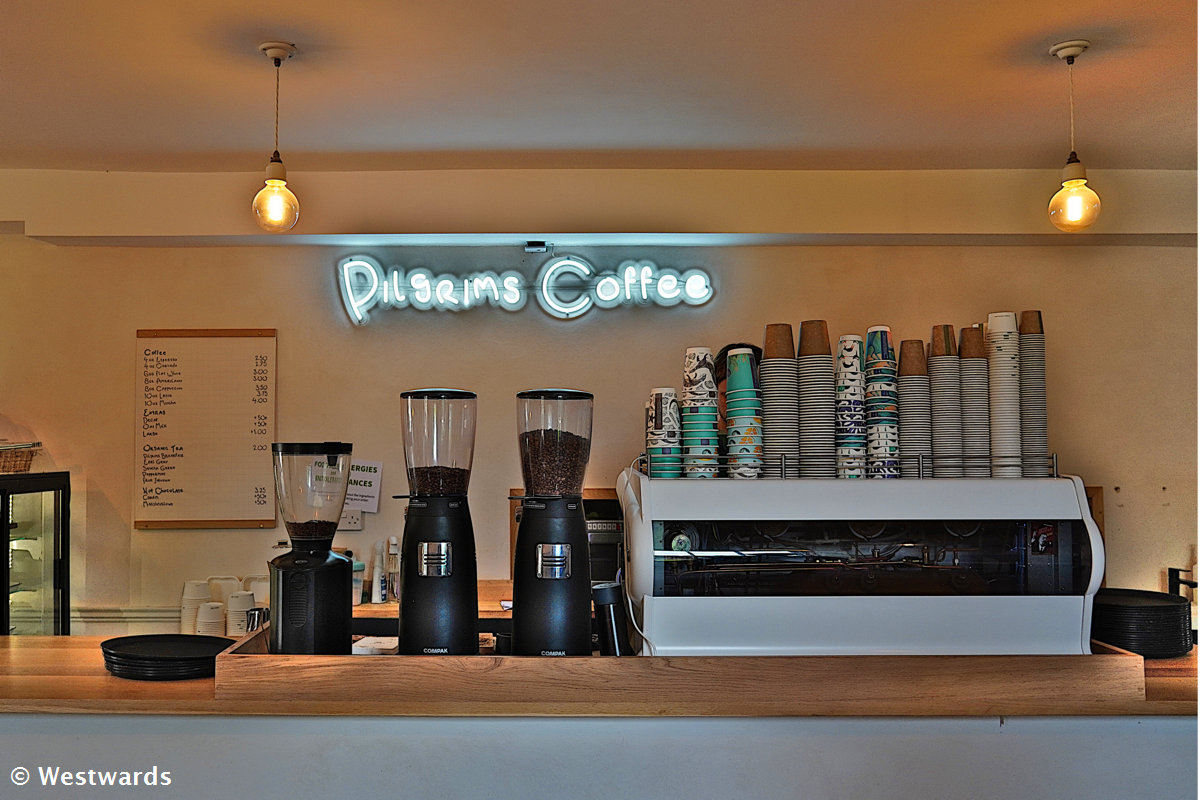
By now, after hours of exploring, we are more than ready for a break and some good coffee. And since our hitchhiking acquaintance in the morning worked at a café cum roastery named Pilgrims Coffee, there is no debate about our next stop. For a much-needed caffeine boost during a daytrip to Lindisfarne Holy Island there is no better place.
Lindisfarne Castle: From Fortress to Holiday Home
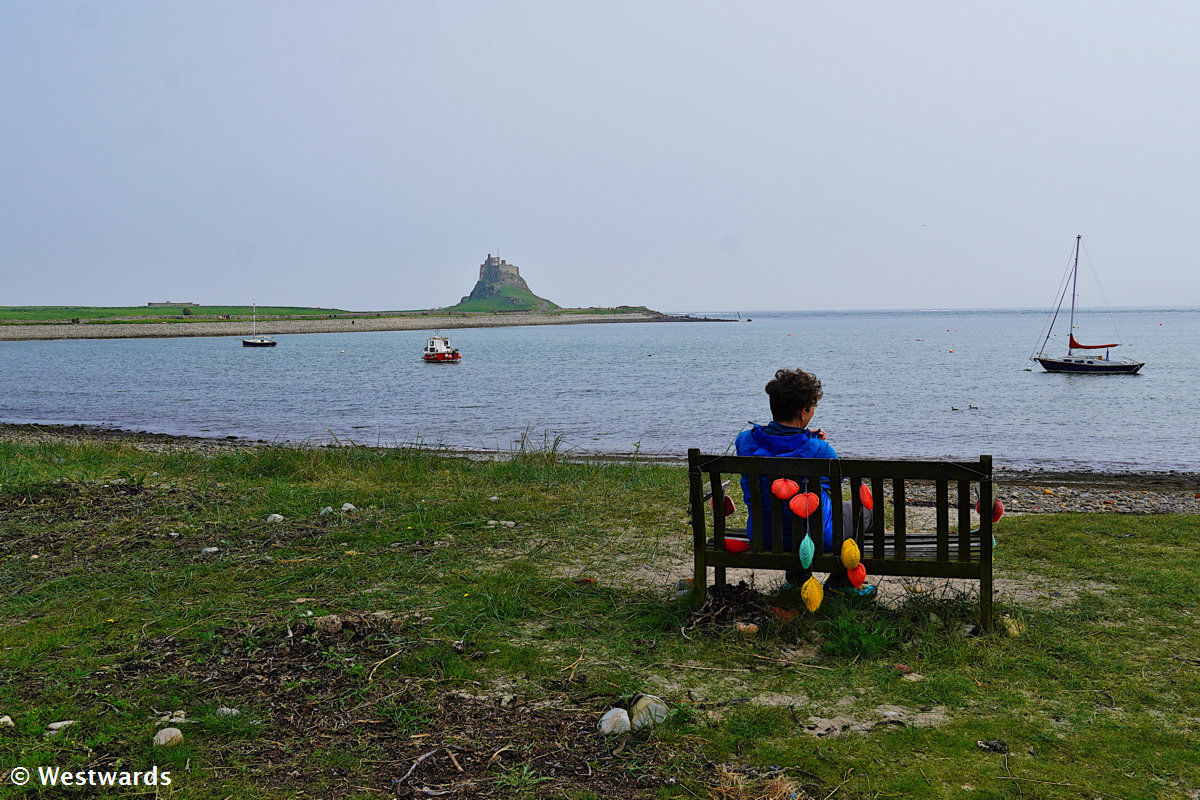
Re-energised, we continue our daytrip to Lindisfarne with the island’s other major attraction: Lindisfarne Castle. Perched on a singular, steep and pointed hill, the castle is impossible not to notice.
Its story begins in the 16th century, when Henry VIII had his local vassal erect fortifications on the coast as a protection against Scotland. Just before that, the king had taken control of all the monasteries in England. Therefore, the newly abandoned Lindisfarne Priory could conveniently supply building stones for the castle’s construction.
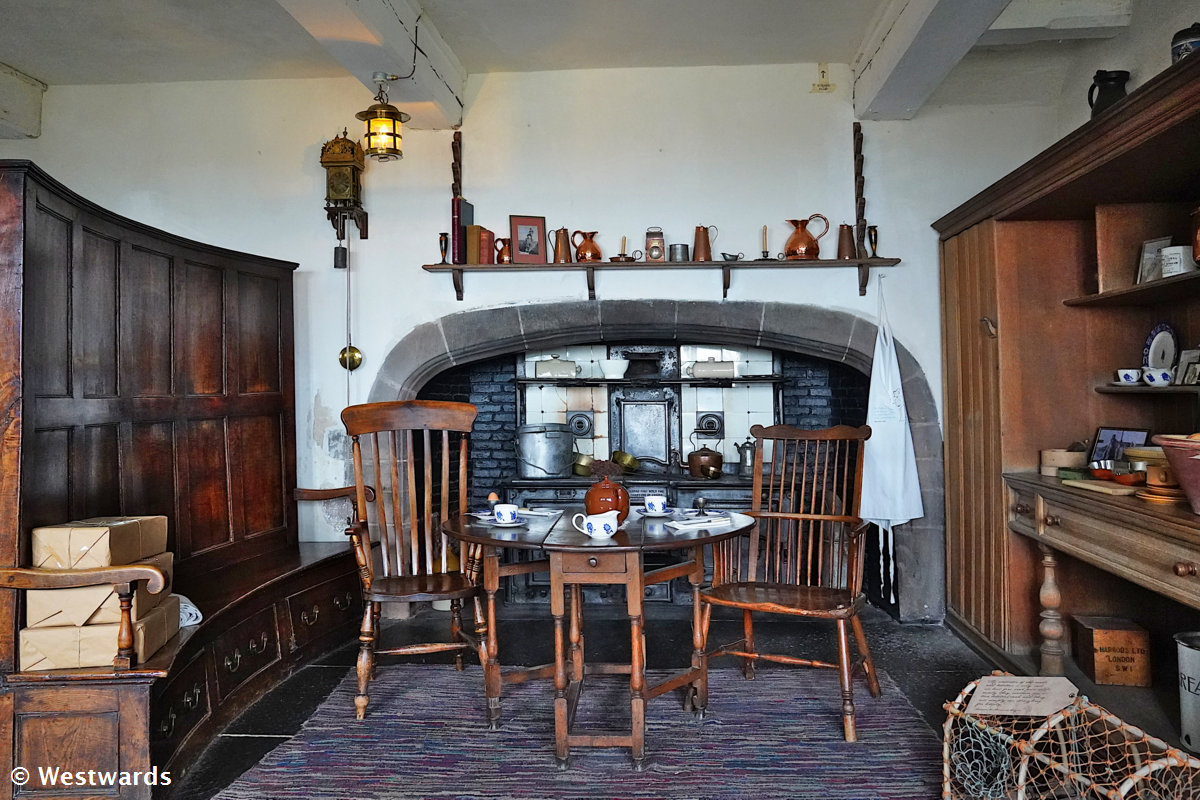
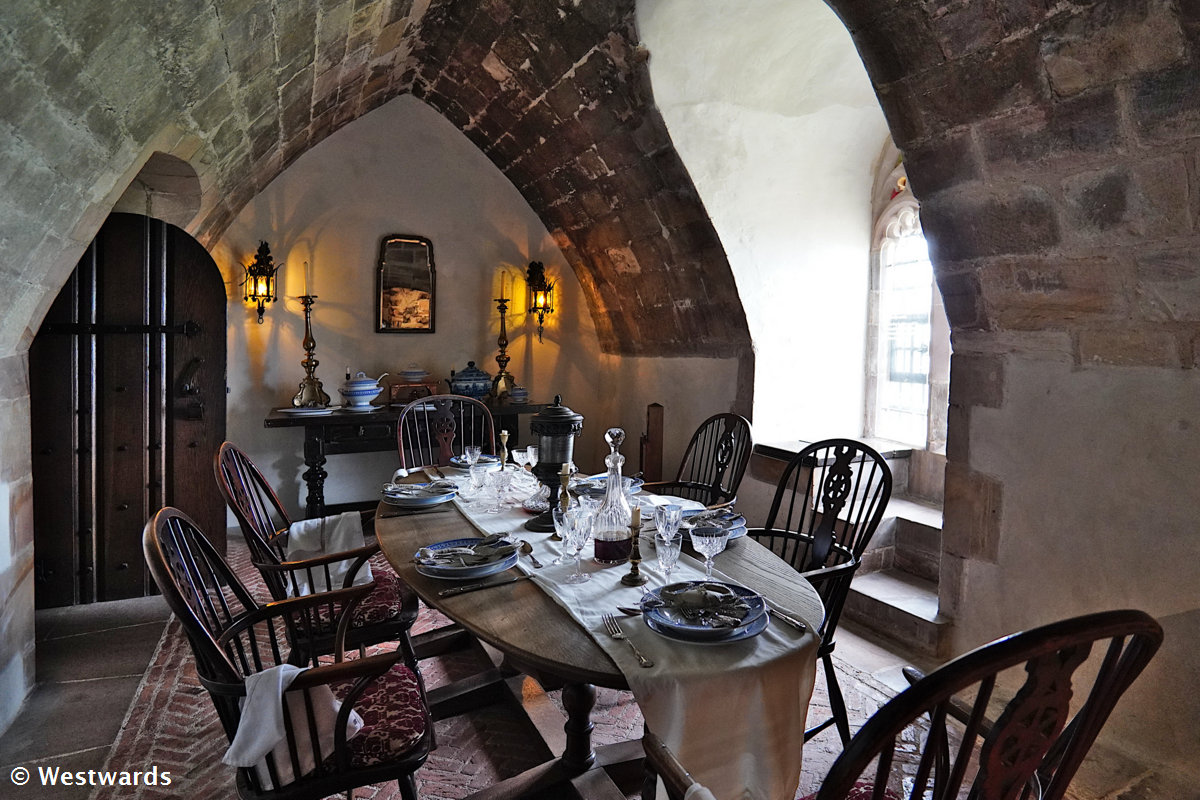
But despite its strategic position, the castle never saw action as a defence stronghold against the Scots. Its heyday arrived much later, around 1900. It was then that it was purchased by Edward Hudson. Hudson was editor of the then fashionable magazine, Country Life. He commissioned the architect Edwin Lutyens to transform the stark castle into a stylish country home. Soon the place became a social hub for Hudson’s illustrious circle of friends, which included his fiancé, renowned cellist Guilhermina Suggia, Bloomsbury poet Lytton Strachey, and a number of architects and interior designers.
We enjoyed walking around the restored castle, admiring the authentic Arts and Crafts interiors. But the real fun came from the little stories and gossip on display about Edward Hudson and his more or less famous guests.
A lonely walk along the Coast
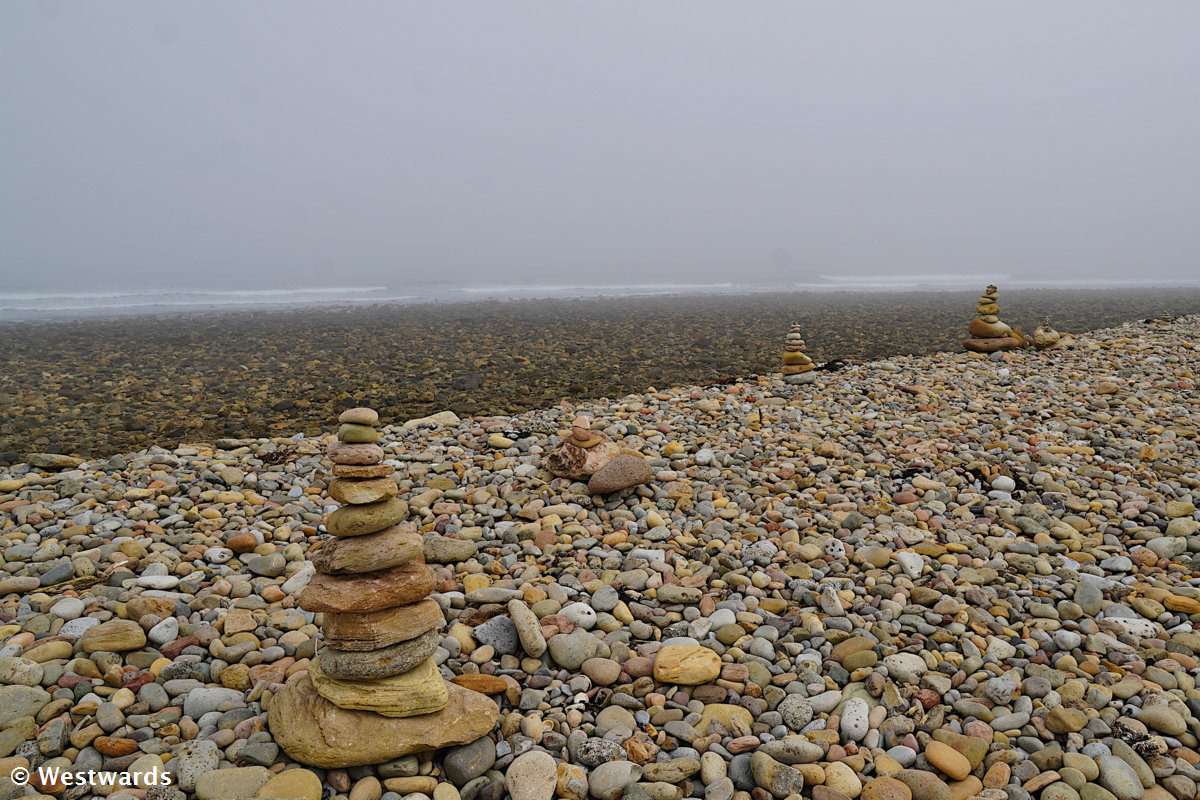
By the time we finish exploring Lindisfarne Castle, the tide is high. And after all the effort it took to reach the holy island of Lindisfarne, it feels only right to spend some more time here. So, we set off to explore the lonely north shore of the island.
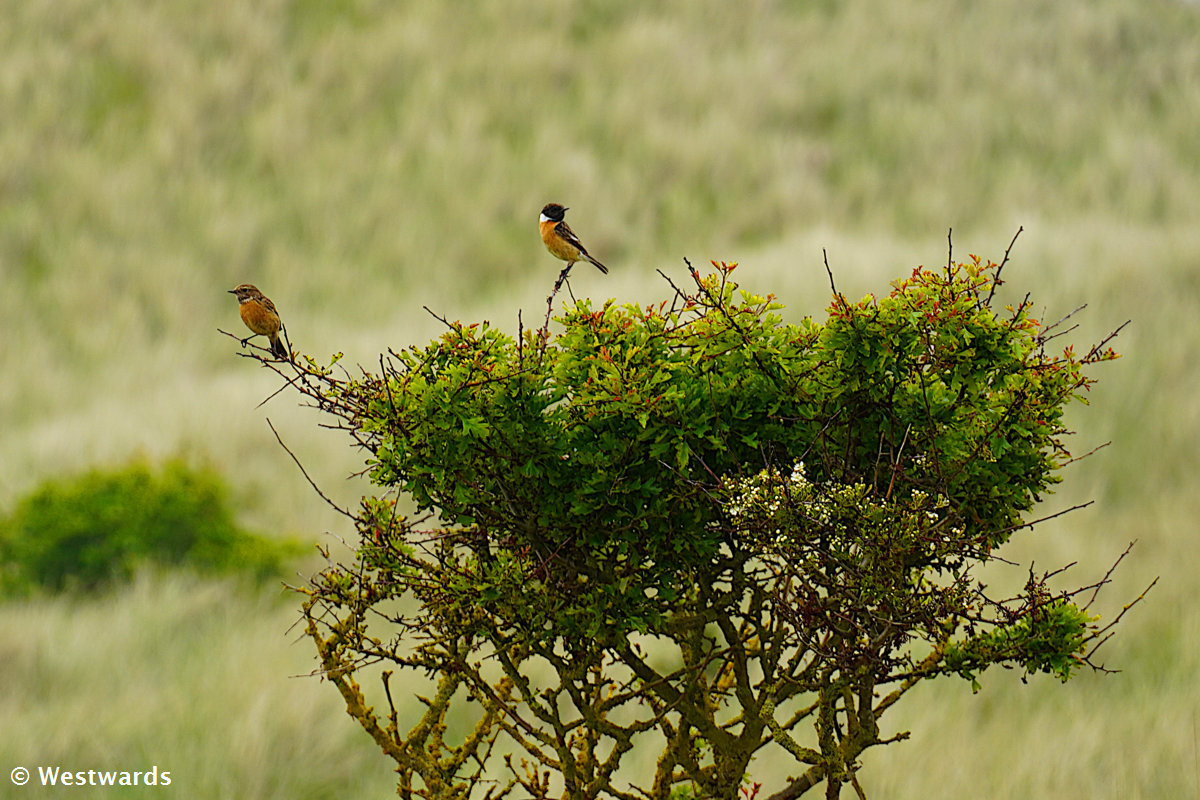
The contrast couldn’t be greater. While in the southeastern part of the island there had been houses, pilgrims, visitors, and even a full film crew – with “28 years later” being shot on the island – we are now alone on the beaches facing the sea. In the North England fog we walk over dunes, and meadows. The cool May weather is not inviting enough for a longer break, but we stop now and then at birdwatching hides and other spots convenient for wildlife sightings. Among others, we encounter a huge short-eared owl and a deer that had probably mistakenly crossed over from the mainland.
Back to Beal campsite
On the way back to the causeway, we are again successful in hitching a ride over to our campsite. More than on the windy island, we find the Northumberland coast full of odours. Wherever we walk, there’s a smell of woodruff. Or of wild garlic. Or of manure – whatever it is, it is always very intense. For dinner, we have the spoils from our raid of the tiny island shop: sweet canned tomato soup and soft buns. And to go with it, reflections on the day, while trying to discern the holy island in the fog across the water.
How to organise a daytrip to Lindisfarne Holy Island on public transport
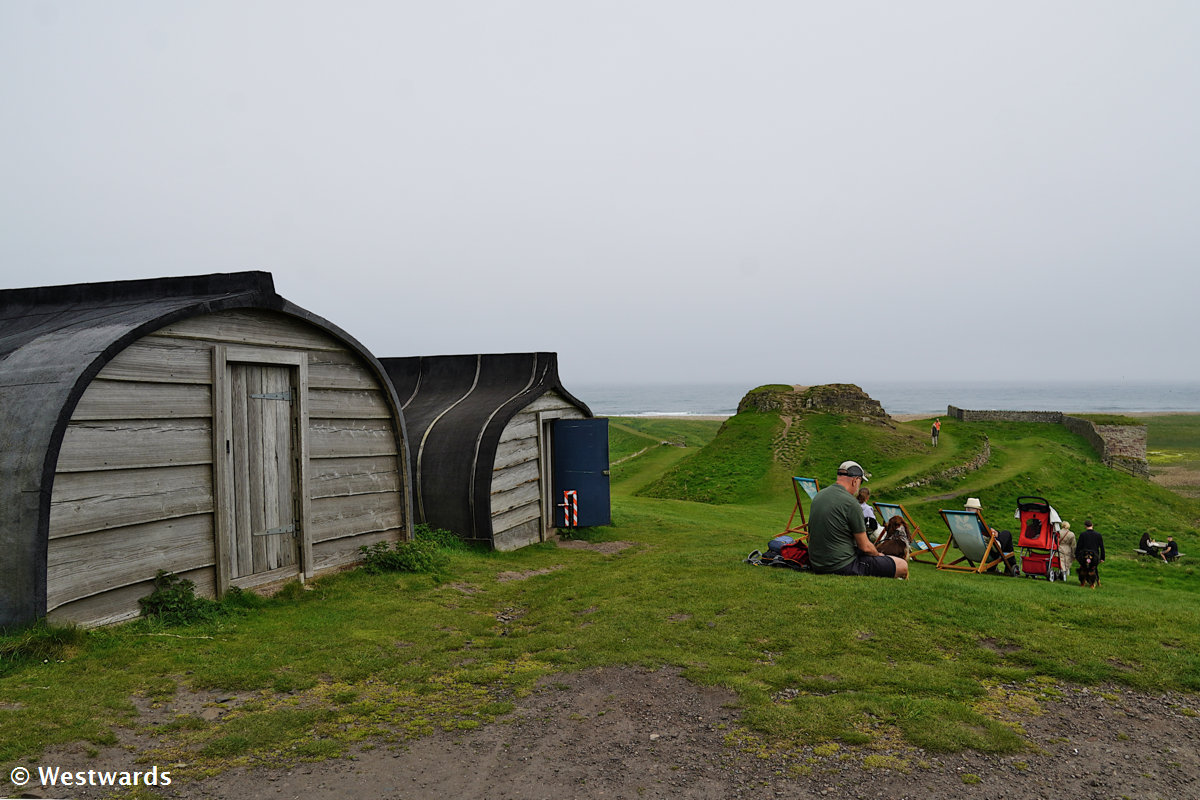
We stayed in Beal on the campsite for 2 nights and used one whole day for our daytrip to Lindisfarne. This only works if the high tide is during the day, and morning and evening offer the safe crossing windows. On days with only one slot of low tide during daylight hours, you would need a car for a very brief visit, or you would need to stay overnight on Lindisfarne Island.
For our itinerary, sturdy shoes and rain-proof clothing turned out to be the perfect choice. We did quite a bit of walking, but not through the mudflats. One thing to keep in mind: once the tide comes in, there is no going back. So even if the weather turns nasty, you’ll just have to wait it out.
Food options on Lindisfarne Island and at Beal are limited. There is a restaurant at the campsite, but we found it quite expensive. We brought some food and stocked up at the only shop on Lindisfarne Island. The best we could find was a pack of sweet white buns and a can of also – sweetish – Heinz tomato soup.
Why you should visit Lindisfarne Holy Island
St. Cuthbert was well-known for his closeness to wild animals such as sea otters and geese, and after his death the saint worked several miracles. But apart from the spiritual side of a pilgrimage to one of England’s oldest saints, Lindisfarne Island makes for a beautiful daytrip. The coastal landscape is just spectacular, with the waves and stormy sea on one side and the mudflats on the other. The island sustains wild birds and other animals. Last but not least, like other island pilgrimage sites such as Miyajima in Japan, there is a lot of history to discover on Lindisfarne Island. For this perfect blend of history, landscape, and spirituality, Lindisfarne Holy Island is a top destination.
NB: We were not sponsored in any way to write this blog post and we paid all expenses by ourselves.
Never miss a new post! Get notifications about new posts straight into your inbox!
Take a note of this post for later! Use this image for Pinterest:
