

Salt doesn’t have the best reputation these days. But long before there was electricity, and refrigerators, salt was an utterly essential natural resource. It preserved food, drove trade and shaped economies. There were salt trade routes, government-imposed salt taxes, and state-owned salt mines.
The Royal Salt Works of Arc-et-Senans in France are one such government project of the 18th century, when salt was considered a resource of highest importance. During a short trip to the Jura region we went to see this extraordinary UNESCO World Heritage Site. Rather than a traditional salt mine, Arc-et-Senans was a modern production facility built to the highest standards of its time. It combined pre-industrial efficiency with grand architecture and an ambitious social vision for its workers.
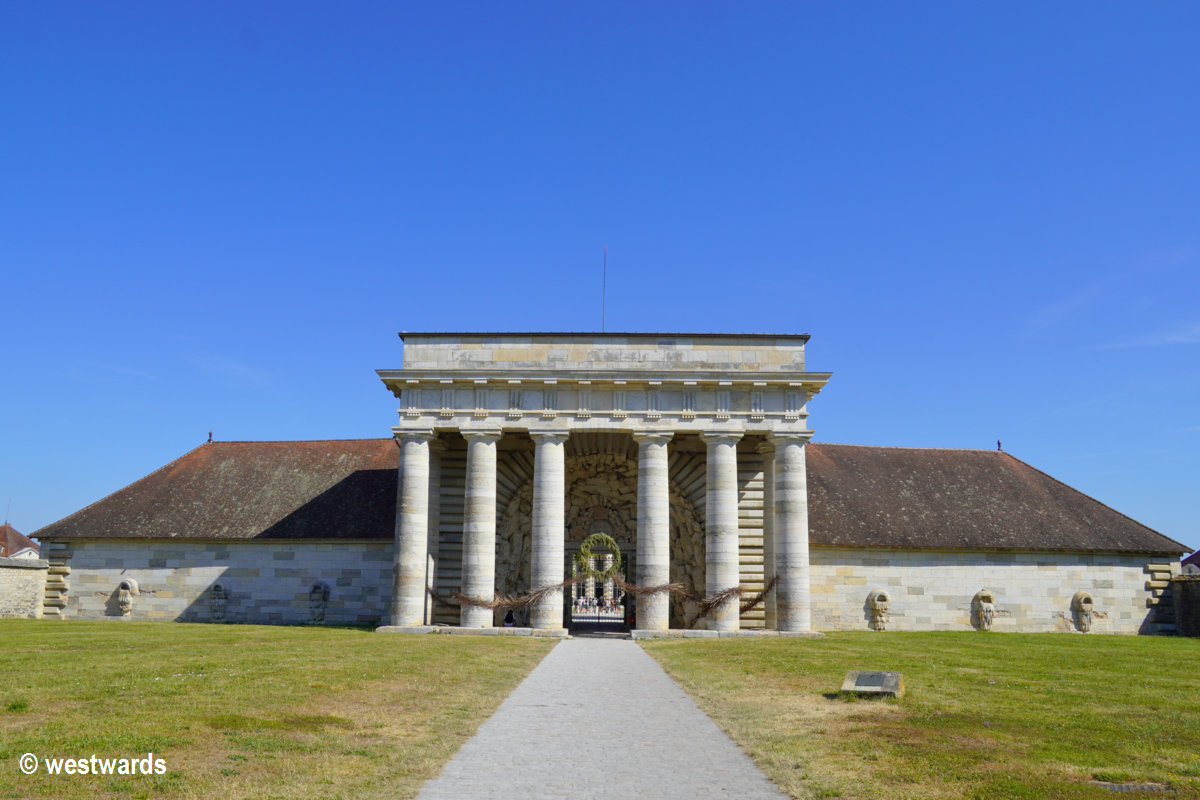
Read on and join us on our visit to Arc-et-Senans, one of the most remarkable heritage sites in France. Discover the outstanding architecture and learn about the visionary architect behind it.
What led us to visit the Jura region in France
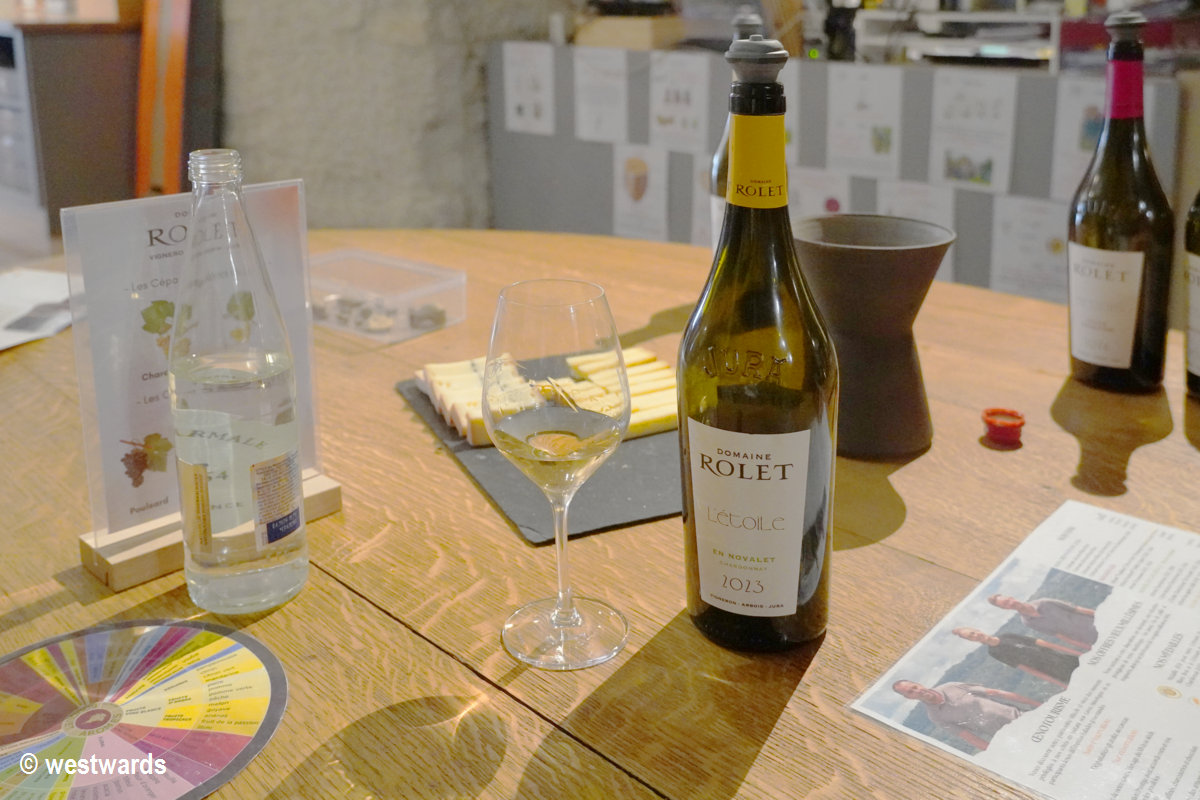
Before we decided to vist the Jura region in France, we had never heard of the Royal Salt Works of Arc-et-Senans. To be honest, we had never even considered to visit the Jura in the first place. That changed thanks to a wine tasting in Berlin. There we tried a strange and unusual white wine that we liked very much. It came from the French Jura – a region we were not familiar with. After conducting some research, we set it aside for a while, but we remembered it again later.
Gradually the idea of exploring this little-known corner of France took hold. In the end, we spent nearly two weeks in the mountainous Jura area that straddles France and Switzerland. Besides sampling the excellent wines and cheeses, we did what we always do when we travel: explore the area’s sights and history. One place we definitely didn’t want to miss was the Royal Salt Works of Arc-et-Senans not far from the charming wine town of Arbois, where we stayed for a few days.
We have explored and enjoyed the history of salt production for a while. Last year we visited a Swiss salt mine in Bex in nearby Vaude, and we have also been to the salt towns of Hall in Tirol and of Lüneburg and Hamm in Germany. We had a look at the traditional salt production facilities in the Camargue in France, on Gozo Island and on the Noto peninsula in Japan. And the salt markets in Mali are a highlight of our travels.
Read our post about the remote Noto peninsula in Japan.
Salt and the state: food security
While salt may appear like one of many condiments today, and one that you should only use in pinches, or better not at all – it used to be essential to keep food from rotting. Without refrigeration, the best way to preserve most foods was to cure and pickle it with salt, allowing them to be stored for months instead of days.
Because of this, salt was vital to the survival of both communities and entire states. A reliable supply of salt meant food security, while shortages could have serious consequences.
Away from the sea, where salt can be produced by evaporating seawater, salt deposits and salt mines were strategically important. From prehistoric times onwards, extensive trade networks developed, to transport salt from the mining regions to areas without any salt deposits.
Separating the salt works from the salt mines
One thing that surprised us about Arc-et-Senans is that there is actually no salt deposit there! The salt mines are situated in Salins-les-Bains higher up in the mountains. The salt – in the form of brine, or strong saltwater – was transported through a pipeline more than 20 km long to the Royal Salt works of Arc-et-Senans.
At first, this sounds like a rather inefficient solution. Why build such a long pipeline instead of producing the salt where it was found?
The answer is that this innovative approach to salt processing made it possible to produce salt on a much larger scale. Because the actual salt production required a lot of firewood to extract the salt from the brine, and there simply wasn’t enough wood near the salt mine itself. Arc-et-Senans, by contrast, is located near one of the largest forests in the area. Therefore, it was much easier and cheaper to transport the brine to the forest than to haul vast quantities of firewood into the mountains.
The Royal Salt Works of Arc-et-Senans – a UNESCO World Heritage site
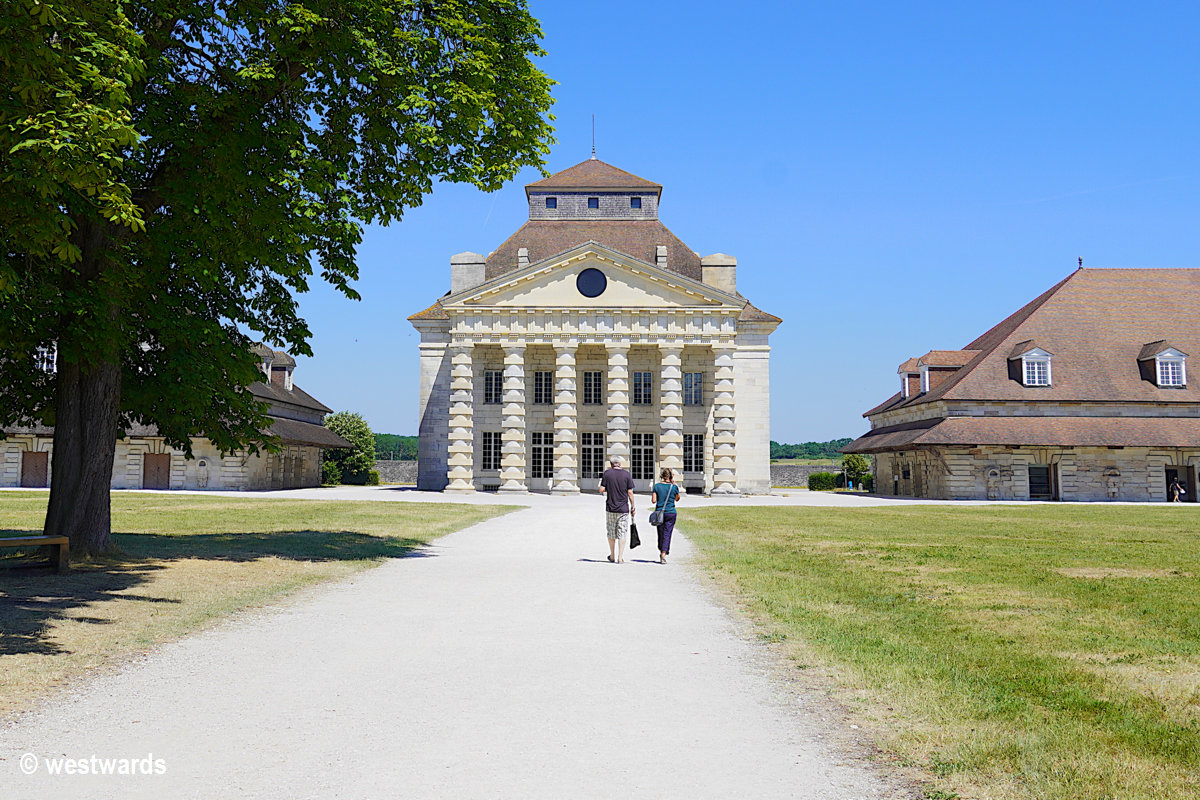
The Royal Salt Works of Arc-et-Senans have been a UNESCO World Heritage site since 1982. The designation recognizes the complex as one of the earliest examples of enlightenment ideas implemented in an industrial facility.
The salt works were built in the late 18th century. Until then, mines and similar industrial facilities were typically dark and dirty places synonymous with hard labour and dangerous working conditions. Nobody cared about the workers’ well-being and living conditions, or even about efficiency in their daily lives.
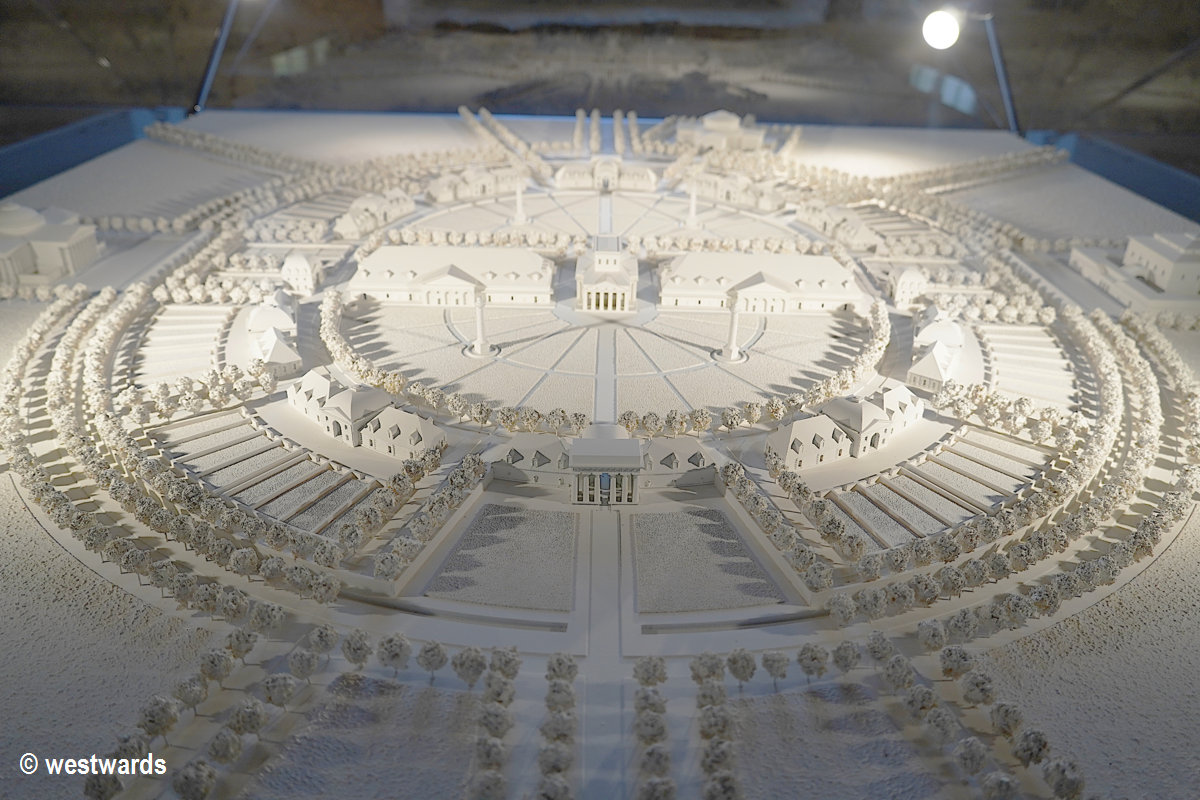
It was Claude-Nicolas Ledoux, the commissioner responsible for the region’s salt works, who came up with a radically new design. Having visited many existing facilities, he drew an ambitious plan. Instead of simply building a factory, he planned an entire community around it. In a quite baroque, centralised lay-out, the salt works were intended to become the centre of an ideal industrial town.
For this project Ledoux employed a monumental architectural style heretofore reserved for palaces and churches. His vision was to highlight the importance of the seemingly mundane occupation of salt production, and to keep the needs of the working staff in mind. At the time, this was a very progressive and innovative approach.
What became of the grand plans?
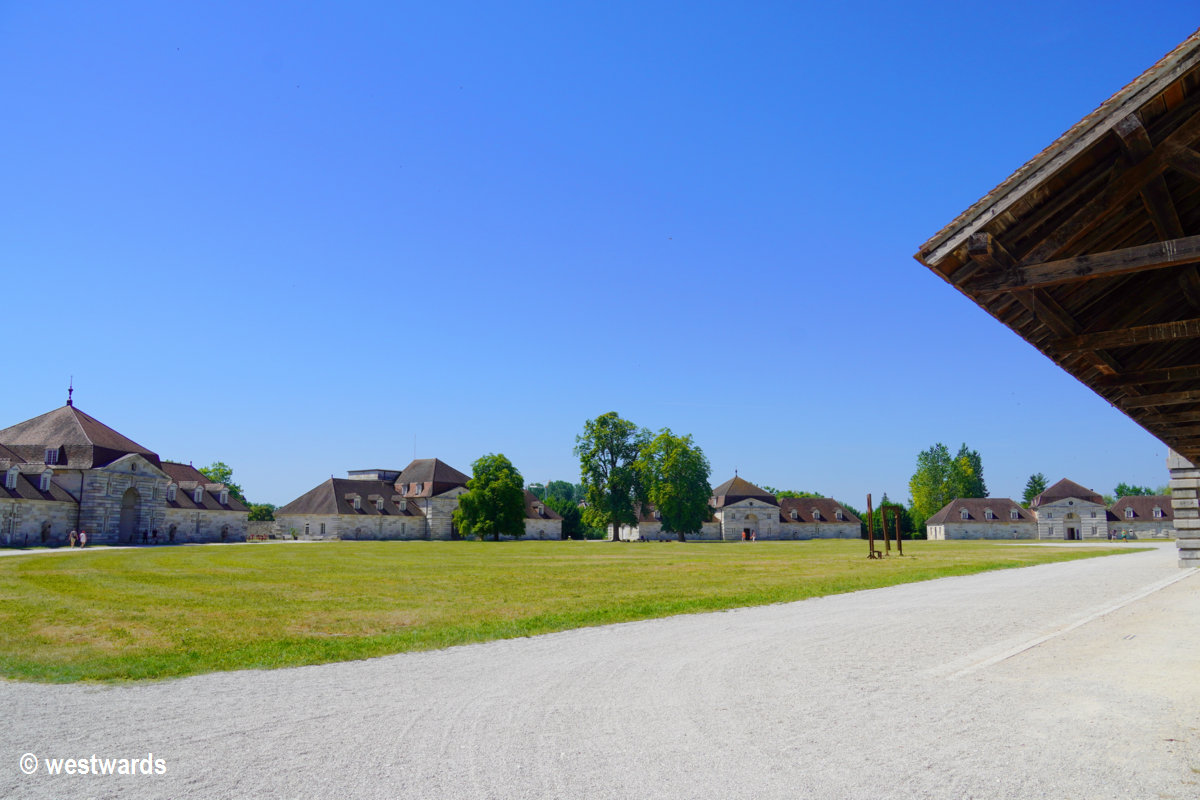
In the end, the Salt Works of Arc-et-Senans were never as profitable as Ledoux and the planners had envisioned. And the ambitious new city they dreamed of building around it never came into existence. Even so, the completed part of the complex remains a fascinating example of early industrial architecture.
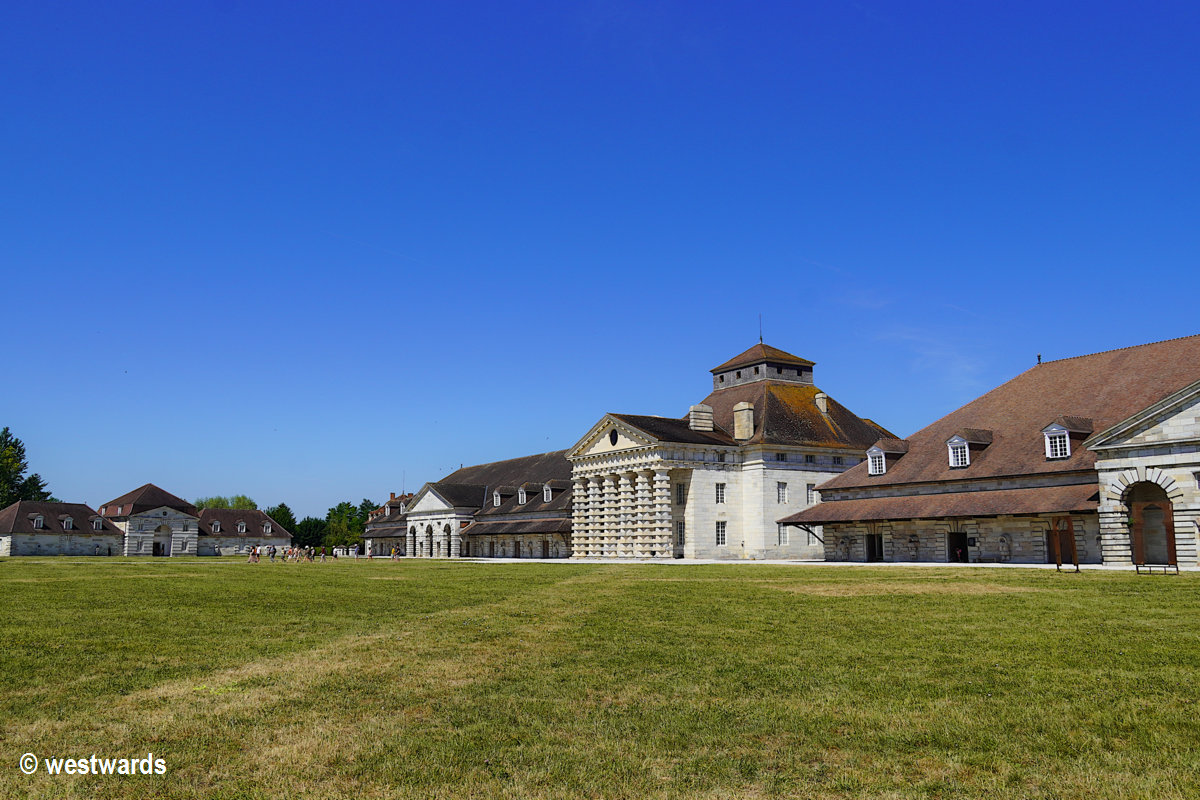
Ledoux grouped all of the buildings in a semi-circle around the large and quite pompous director’s house, which also served as the administrative centre. On either side stood the heart of the operation: the actual salt works, with their heating pans for evaporating the brine and the drying ovens where the salt was finished. Nearby were also quarters for the guards and for the tax officials, a reminder how valuable salt was at this time.
In the smaller buildings along the semi-circle, Ledoux housed the supporting trades that kept the works running. There were the coopers making and repairing barrels, and the forge, where blacksmiths maintained the salt pans and the wooden pipes that brought the brine from Salins-les-Bains.
Some of the workers also lived above the workshops. Behind the buildings lay small gardens where they could relax and grow a little food for themselves.
The original vision extended far beyond what was eventually built. A second semi-circle was planned behind the existing complex, with additional housing for the salt-workers and their families together with a subsistence farming plot and garden for each house. In reality, however, there was little need for company housing. Most of the salt workers came from the nearby village and continued to live there, tending their own fields and returning home after work.
Salt exhibitions in Arc-et-Senans
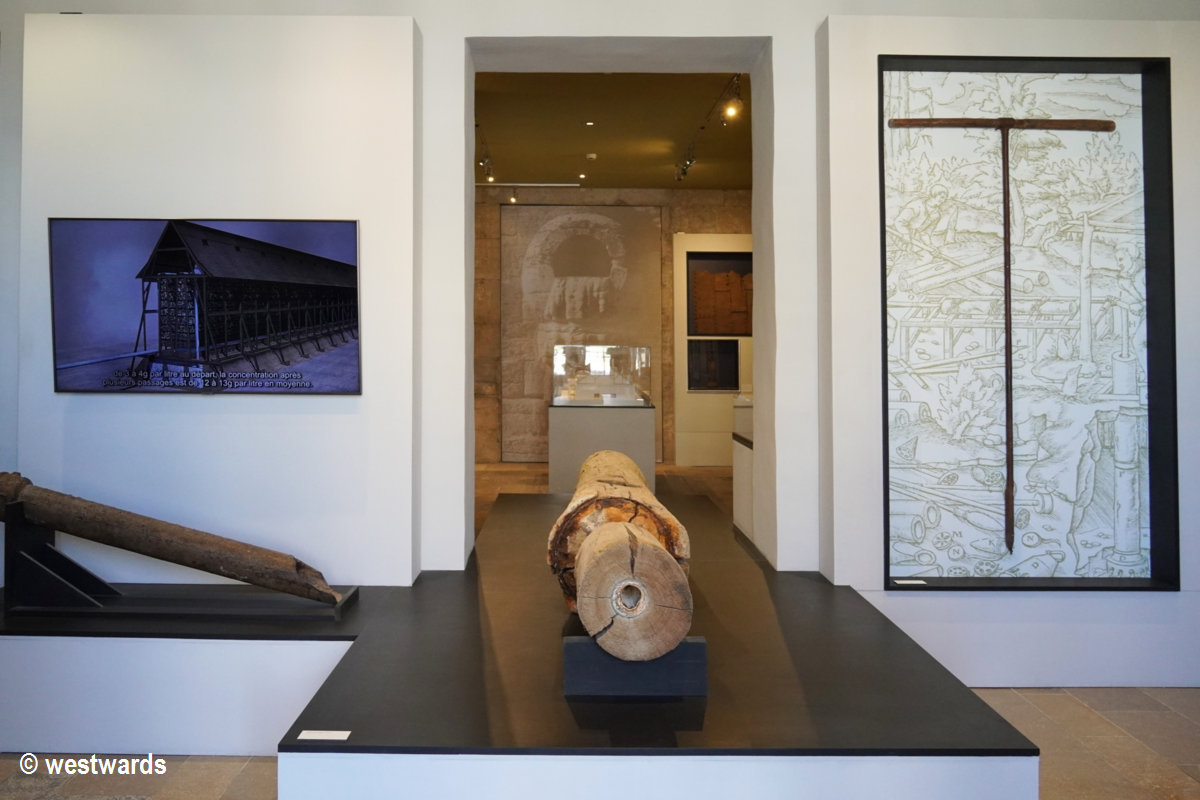
The beautifully restored director’s building of the Royal Salt Works now houses an extensive exhibition about the history of salt. Besides explaining the actual production of salt in Arc-et-Senans, it also explores the relevance of salt in everyday life and for the French state.
The accounts of the salt tax officers working at Arc-et-Senans reveal just how valuable salt was: Even the wooden brine pipes carrying the salt water down from the salt mine required special protection. Small huts built over inspection pools, where workers checked the condition of the pipes and the salt content of the brine, were kept locked and made as theft-proof as possible!
That’s because people were desperate for salt, and the high salt taxes were deeply unpopular. Since the taxes varied between different regions of France, salt smuggle was also rife. Did you know that many countries (including Germany and Japan) had salt taxes and salt monopolies as late as the 1990s? The exhibition also follows the story of the Royal Salt Works after the closure of the facility in 1895. After becoming a national monument in the 1920s, the complex came under the care of the regional Department, which took over and started restoration work. Over the following decades, the premises served a variety of purposes, including as a refugee camp and a military base. Eventually it reopened as a tourist attraction and cultural facility. The unusual architecture has also occasionally served as a movie location.
The vast director’s building also hosted several other exhibitions. We decided to skip those because they seemed to target local visitors who had already explored the permanent exhibition on the history of salt.
The salt workers’ gardens then and now
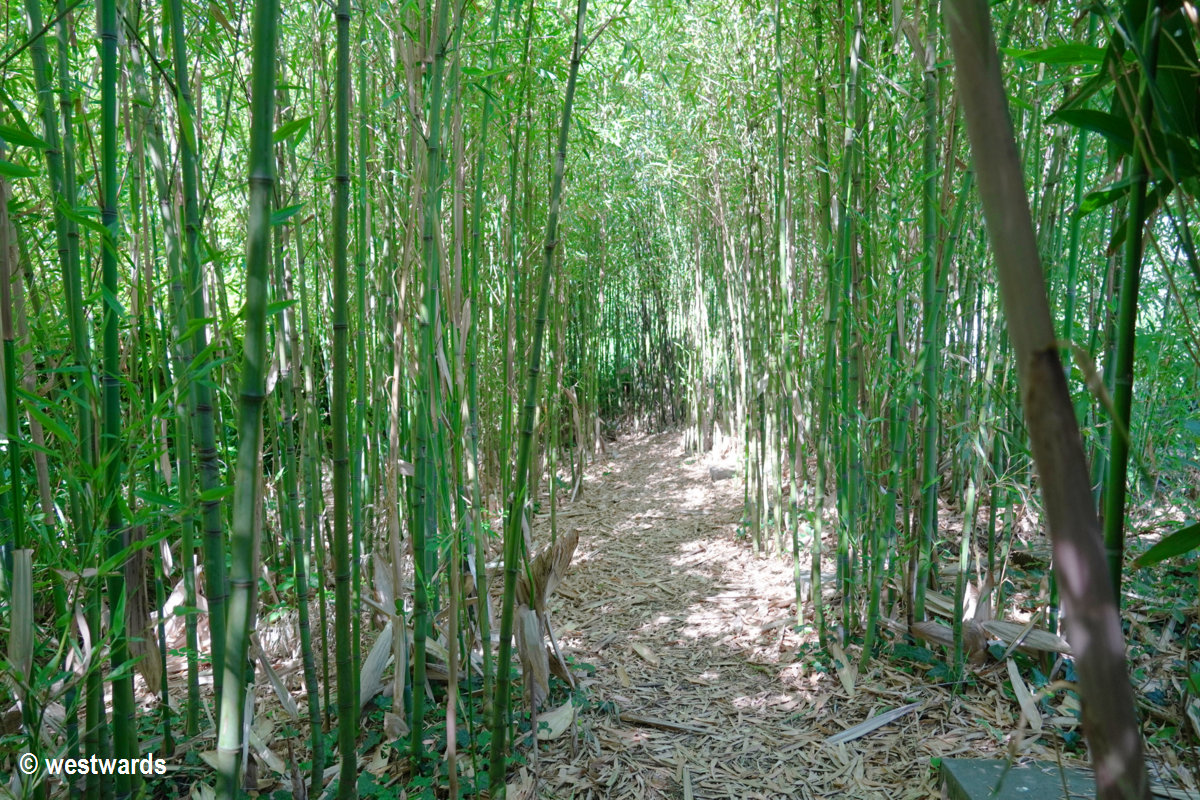
Behind the buildings in the outer part of the circle, where the gardens for the workers used to be, gardens have returned once again. Since the 2020s, they are part of a gardening project and regular garden festivals developed in cooperation with a horticultural college.
A number of very different thematic gardens showcases a variety of landscapes, natural spaces, and gardening concepts, while others simply provide peaceful places to sit and relax.
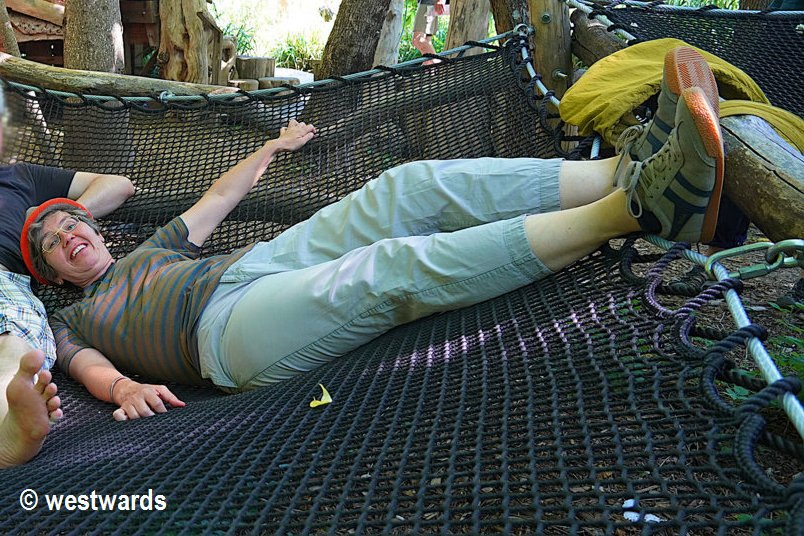
Wandering through the gardens, we came across a small bamboo grove, hiding hammock-like nets in a green oasis. Getting into one of the nets was easy enough. Getting back out again, however, proved to be more challenging, especially during a heatwave approaching 40°C! Today, visitors can explore the gardens free of charge, even though they must pay an admission fee to enter the buildings of the Royal Salt Works.
Claude-Nicolas Ledoux, the visionary architect of the Salt Works of Arc-et-Senans


In one of the former workshop buildings, we stroll through the exhibition dedicated to Claude-Nicolas Ledoux. The architect and promoter of the Royal Salt Works of Arc-et-Senans was quite a character, it seems. He had made a name for himself by designing private palaces and country homes before taking on some public assignments. Most of them were inspired by Palladian and classical architecture.
The Royal Salt Works became one of his most important public projects, but he also designed the theatre in Besançon in a then very modern style. It was the first theatre with an orchestra pit, while the traditional feudal-style boxes were largely abandoned. Instead of cheap standing places in front of the stage, now the best seats were placed in the parterre section. Later, Ledoux also designed several tax booths built along Paris’ last city wall.
In addition to these very practical public works, Ledoux also created numerous utopian architectural designs. The plans included globes and pyramids for cemeteries, public halls, and administrative buildings. The exhibition in Arc-et-Senans shows several of these designs as scale models. We enjoyed exploring these extraordinary plans and models. They hardly look like 18th-century architecture at all!
Is it worthwhile to visit the Royal Salt Works of Arc-et-Senans?
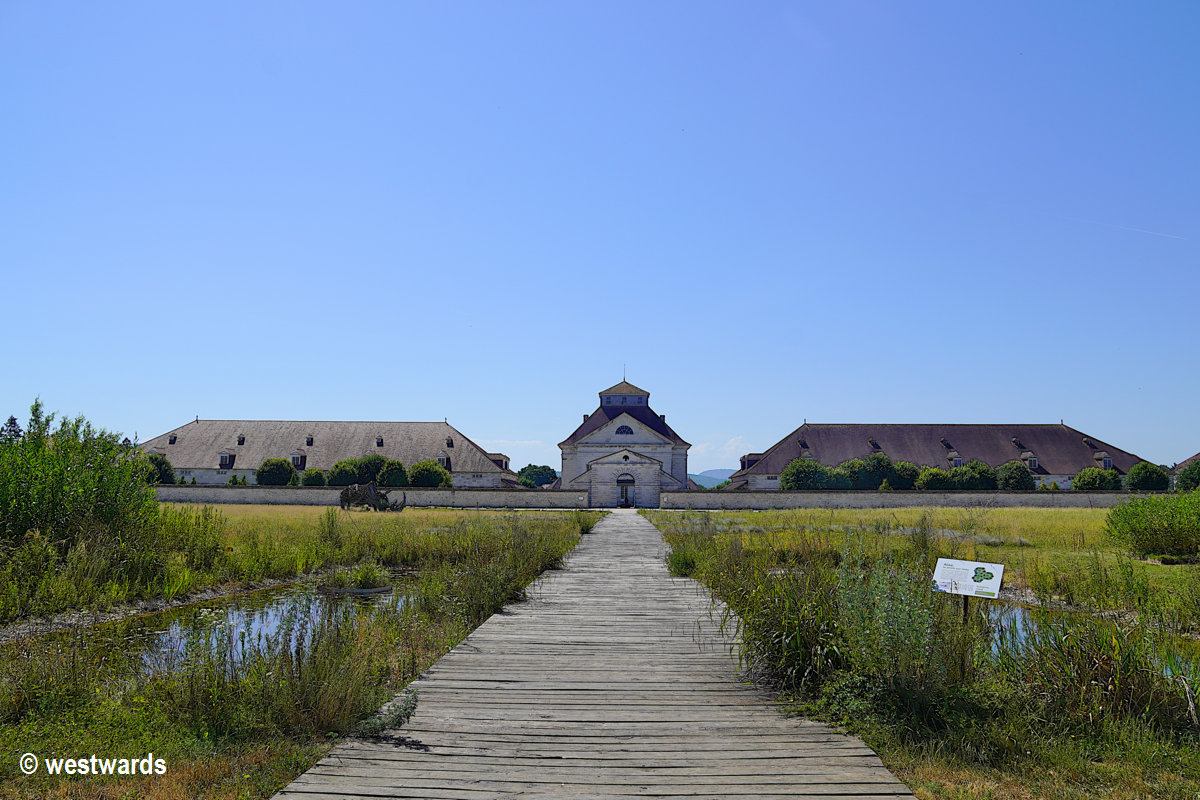
As always, that depends. Public transport in the Jura is quite cumbersome, so getting to Arc-et-Senans takes some planning. That said, there is plenty to see in Arc-et-Senans, once you arrive. The exhibitions appeal to history buffs as well as gardeners and those interested in architecture, while those simply looking for a place to wander can enjoy the impressive buildings and themed gardens, and spacious grounds at their own pace. Included in the entrance fee is a tablet with information and a quiz, which we found only remotely useful. You will find all the relevant information on panels on site as well.
So, if you don’t mind the extra effort of getting there, or if you are travelling by car anyway: We would definitely recommend a visit!
How to Get to the Royal Salt Works of Arc-et-Senans by Public Transport
The easiest way to reach Arc-et-Senans is by train. The village has its own station on the regional TER line between Besançon and Mouchard.
From Arbois, where we lived, we simply took the TER train to Arc-et-Senans. The journey took around 15 minutes and from the Arc-et-Senans station it is an easy 10 minute walk to the entrance of the Royal Salt Works. From Besançon you would need around 40 minutes. Both are good bases for a longer stay that we would recommend for visitors on public transport.
The route is straightforward, but train services are not especially frequent, so check the timetable in advance and plan your return journey accordingly.
If you enjoyed reading, we’d love to have you along for the journey. Subscribe for free email notifications whenever we publish a new post. This article was not sponsored in any way – we paid all travel, accommodation, admission, and other expenses ourselves. Our blog is completely ad-free, and you’ll never receive spam, just our latest stories delivered straight to your inbox.
