

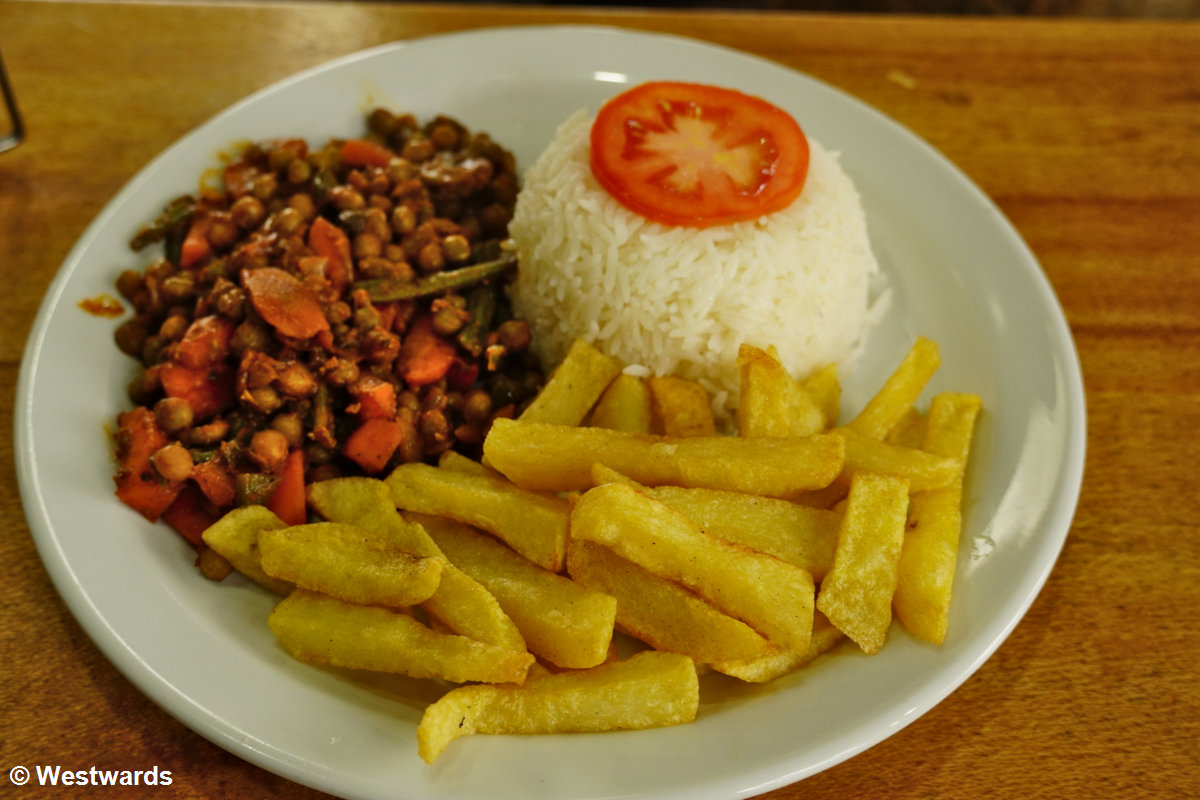
During our three-week adventure in Rwanda, we explored the country not only through its stunning landscapes and warm hospitality. We also delved deeply into its cuisine – as vegetarians. While vegetarian food in Rwanda is fairly easy to obtain, we found it to lean heavily on starchy staples like overcooked potatoes.
But still our culinary journey was full of surprises. Street food, traditional vegetarian dishes and global flavours in international restaurants in Kigali. The highlights? A bounty of fresh tropical fruits and an unforgettable cooking class in Kinigi, where we learned to prepare Isombe. Isombe is a hearty vegetarian stew made from cassava leaves.
Traditional Rwandan dishes suitable for vegetarian travellers
Finding vegetarian food in Rwanda often involves navigating menus dominated by meat and fish. Vegetarian options are not always clearly marked or prioritized. But on the other hand, several traditional Rwandan dishes rely entirely on plant-based ingredients. And we happily discovered how easy it is to prepare others without meat, fish, or eggs. During our travels in Rwanda we tried the following traditional dishes.
Agatogo: a Rwandan stew
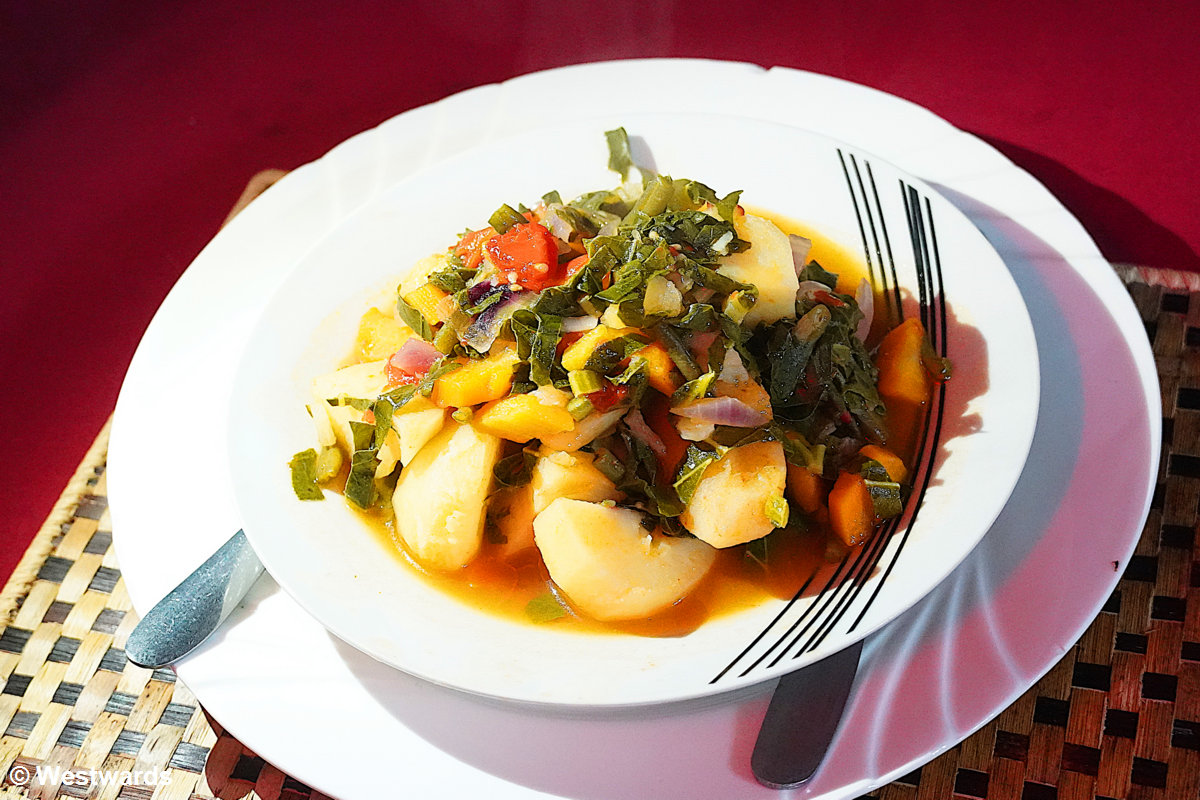
Agatogo is a traditional stew containing mostly potatoes and plantains. Depending on the recipe (and availability), the cook will also use other vegetables such as collard greens, beans, bell peppers, or carrots. While some versions may include meat or fish, these are usually optional, making vegetarian or even vegan Agatogo quite common.
We had an opportunity to eat a vegetarian Agatogo in Kinigi. It was filling and seemed like a healthy choice, though we found the flavour a bit too bland.
Ibihaza: Beans and Pumpkin
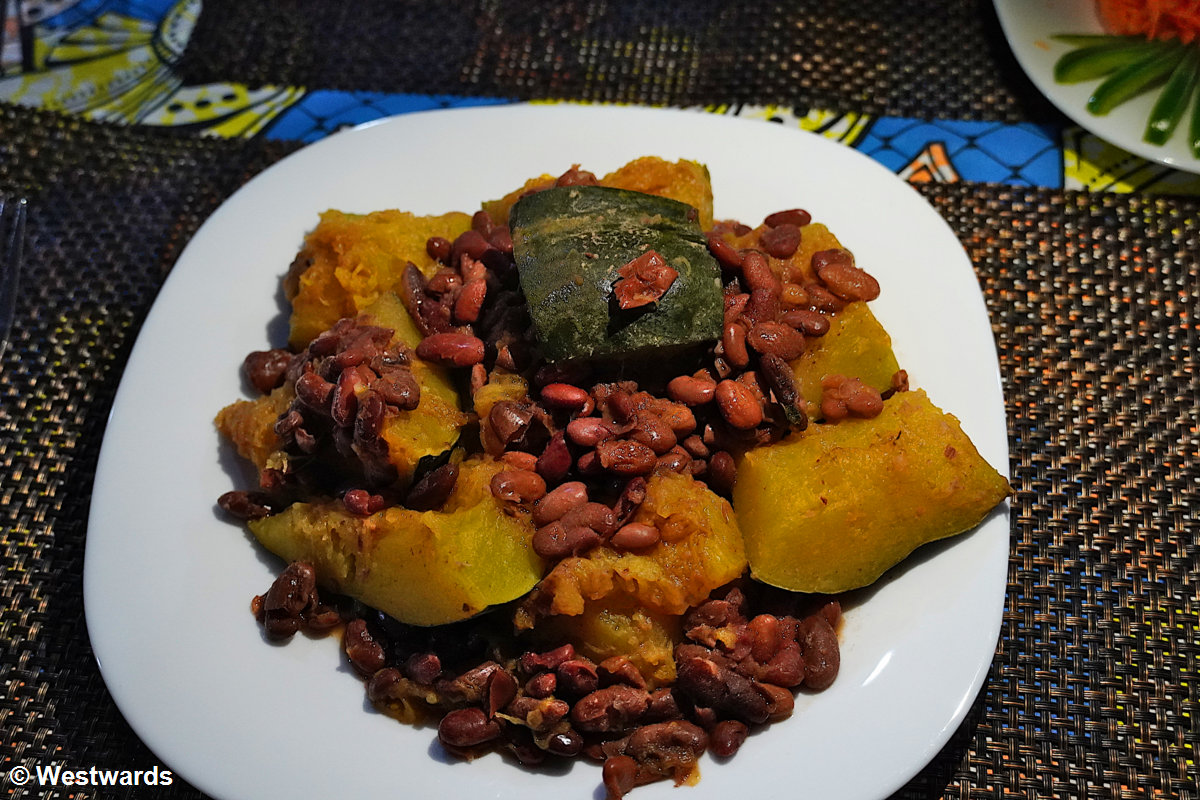
While staying at a remote coffee farm in Kinunu near Lake Kivu, we asked for a vegetarian dinner option at the on-site restaurant. Apart from salad, the staff recommended Ibihaza, a local staple. Ibihaza is a kind of stew made from pre-soaked read beans and pumpkin. Though it seemed overcooked to us, that may be part of the traditional preparation. And it made a filling dinner for us.
Isombe: an intense green soup
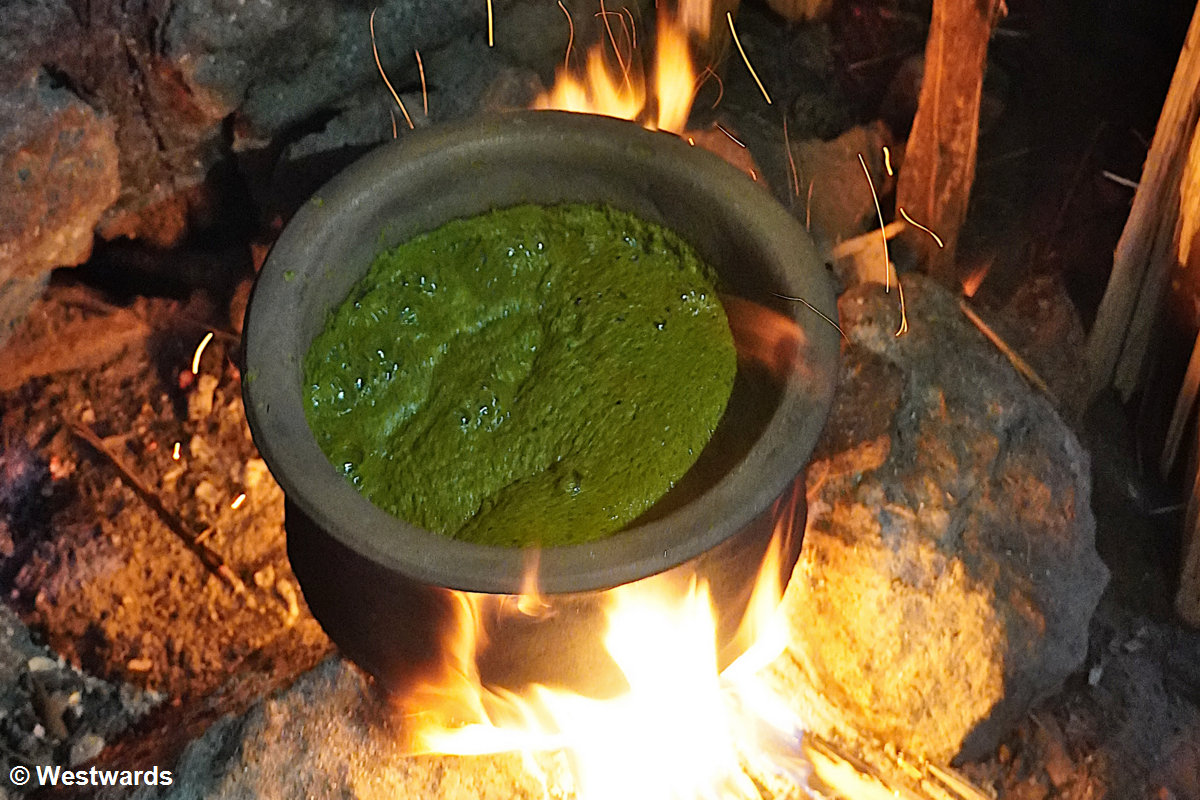
Our favourite of all the local vegetarian food in Rwanda was Isombe. Again, a slow-cooked stew containing various vegetables. The main ingredient is cassava leaves – a new vegetable for us. Previously we had only been familiar with the cassava root, or manioc, as a starchy staple in many countries in Africa. Or even in African (specifically Sudanese) restaurants in Berlin we tried in the run-up to our African travels…. But the green leaves of the plant are also edible, we learned. For Isombe, the pounded leaves are cooked with ground peanuts and served with rice or pasta.
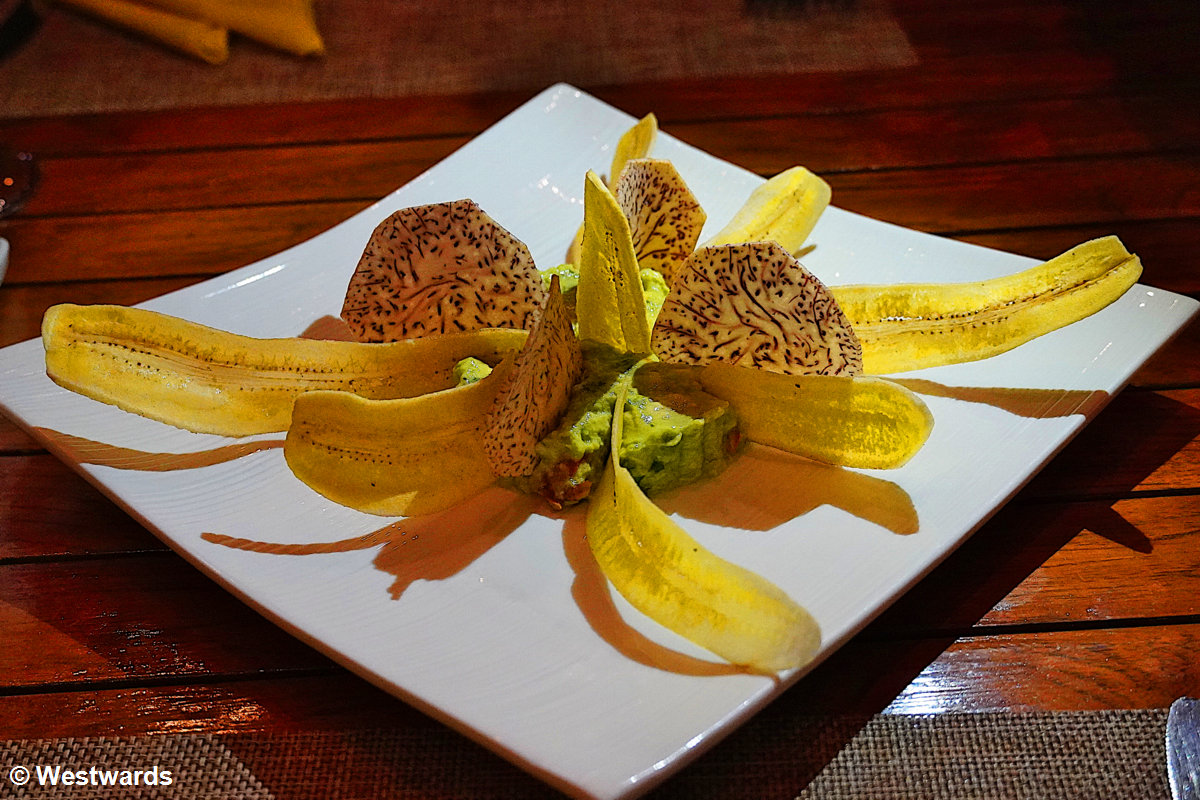
We first tried Isombe at the Heaven restaurant in in the capital, Kigali, soon after arriving in Rwanda, and liked both the taste and the fantastic green colour of this vegetarian dish.
A cooking class in Kinigi


Therefore, we wanted to learn how to cook Isombe. In Kinigi, we managed to arrange a cooking class with Diane, a young local woman who welcomed us into her home. Arriving in her garden, we first had to change into traditional Rwandan garments (great fun). Diane’s mother had already spent an hour or so pounding the cassava leaves – a labour-intensive step we thankfully skipped! Since the leaves take a long time to cook, the next step is to put them on the fire. Literally: Diane’s family has a kitchen shed with an open wood fire and a few tripods for the pots. Her siblings take turns gathering wood from the nearby forests and also harvesting the vegetables from their own fields.
While the cassava leaves are slowly boiling, we prepare a simple pasta dish with fried onions, garlic, tomatoes, and bell peppers. Half-way through the cooking process, Diane adds a lot of salt, and later a bag of ground peanuts to the Isombe leaves, which eventually turn into a rich, hearty mash that pairs perfectly with the vegetable pasta. And then we enjoyed an outdoor dinner of home-cooked Isombe with pasta, shared with the whole family.
Vegetarian street food in Rwanda
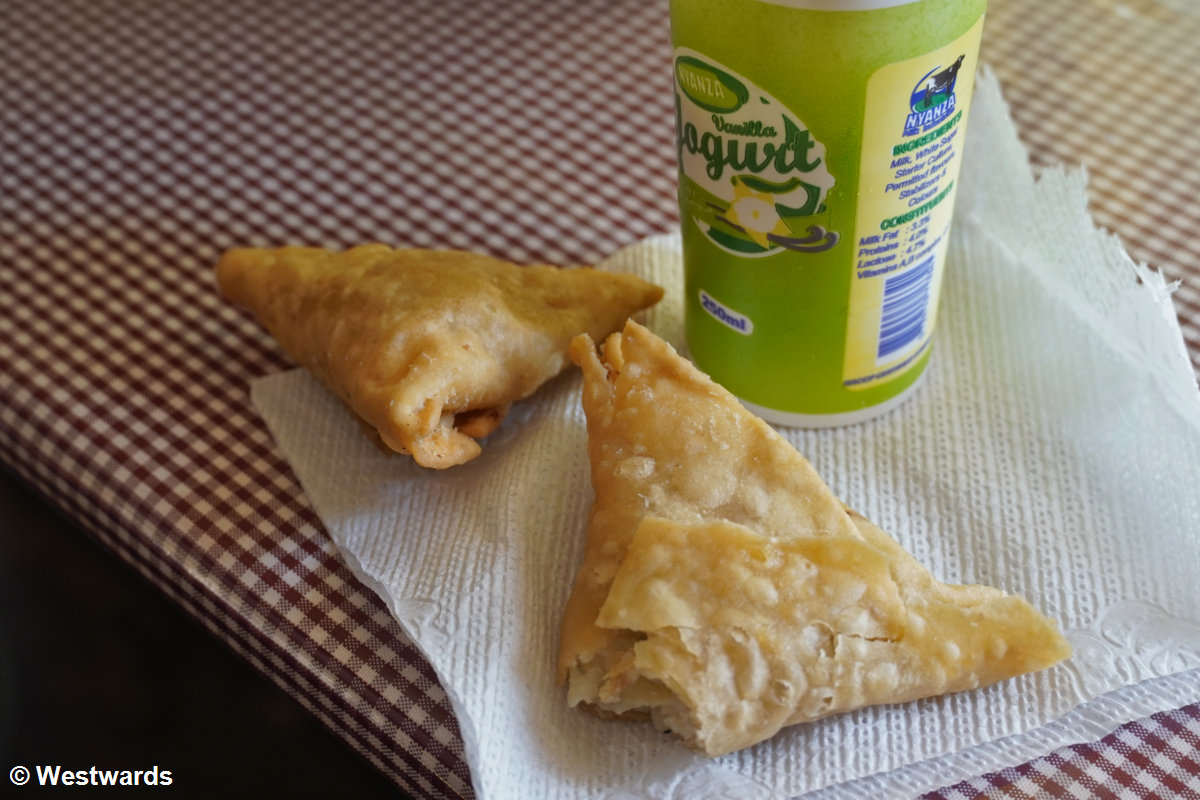
While on the move, sambusa quickly became our go-to street snack. At every bus station, hawkers swarmed around the departing busses offering light snacks, cookies and bottled drinks. The most popular snack is Sambusa, a deep-fried samosa filled with either meat or potatoes. We quickly learned to ask for “ibirayi”: “Potatoes?” to get the vegetarian version. It was always cheap, filling and satisfying.
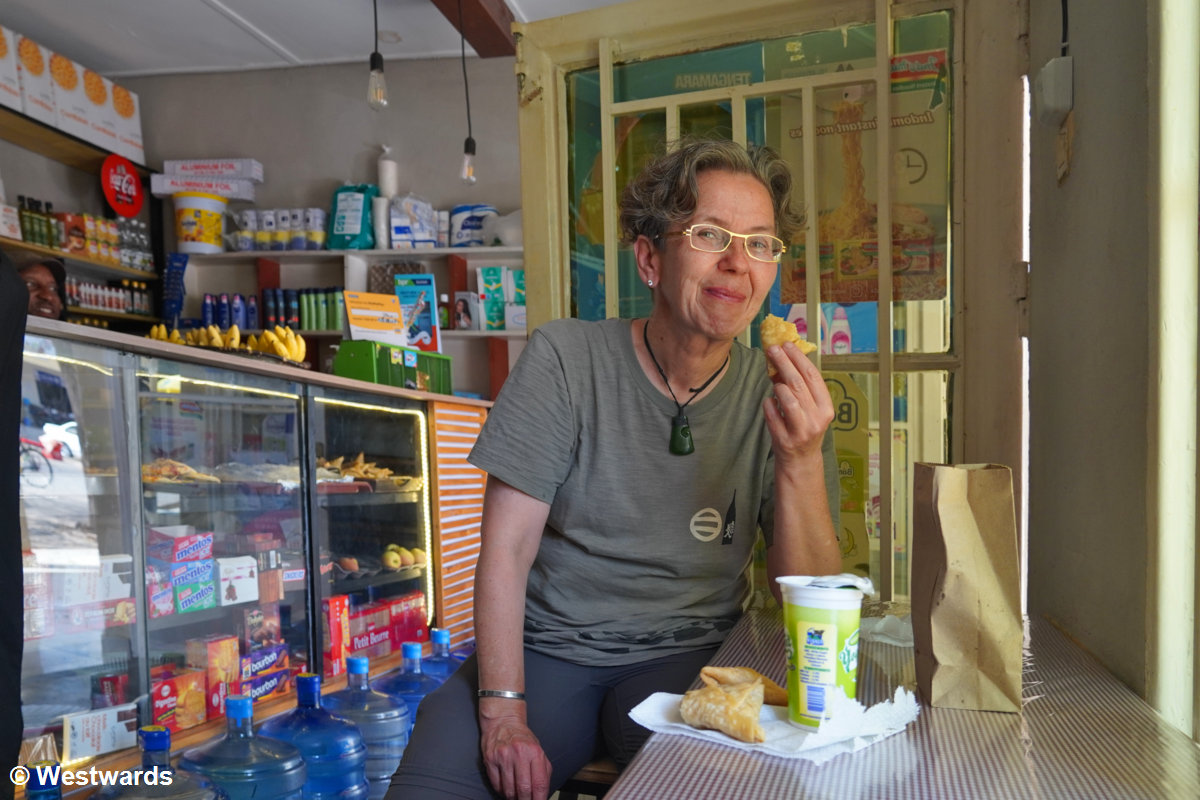
We also found them in small shops, some of which had a tiny counter or a table to sit and eat. Other typical snacks sold at bus stations were boiled potatoes in salt, or boiled eggs with salt and a fiery chilli sauce.
Many shops sold Chapati too, the pan-baked flatbread, but we became a bit weary of these after discovering some were baked in animal fat.
Western vegetarian dishes we encountered in Rwanda
Another option for vegetarian food in Rwanda were more Western-style dishes, which we often found in small eateries and cafés.
Sandwiches and burritos


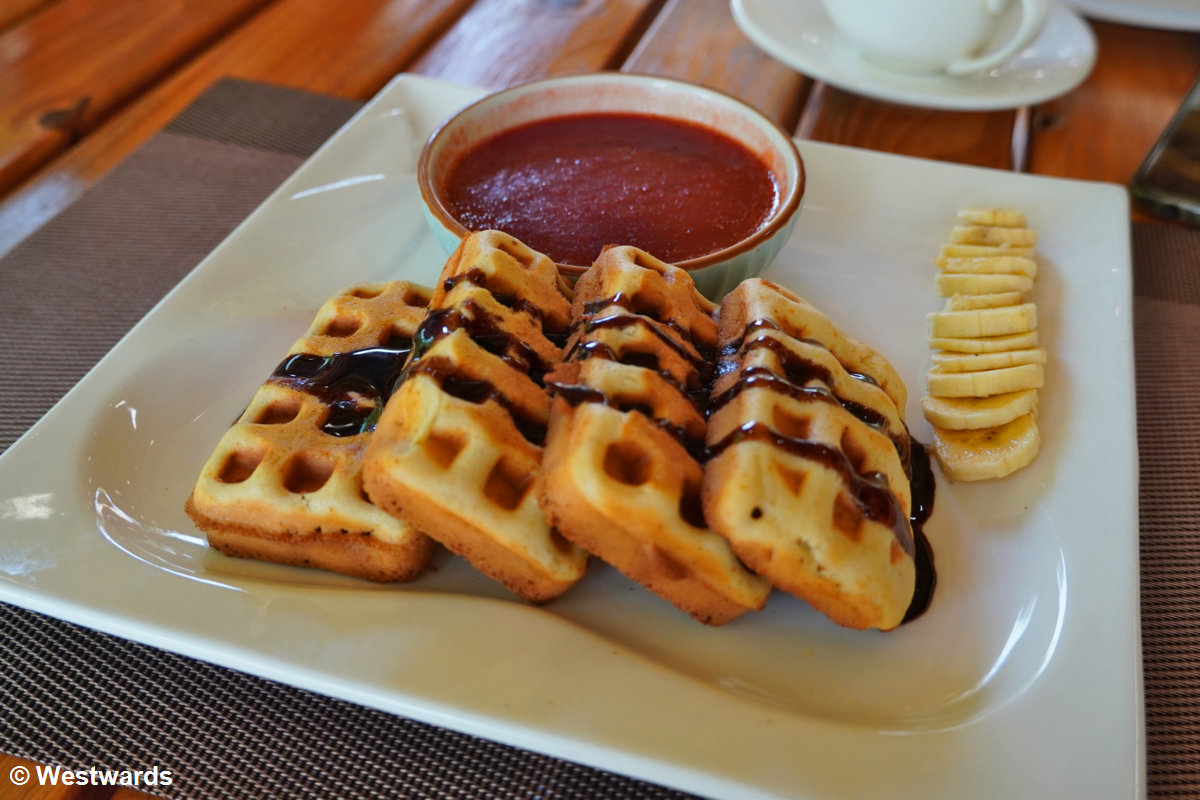
While the menus in these places were usually limited, they could often dish up simple sandwiches – or occasionally burritos – with fresh tomatoes and ripe avocados. Cheese on the other hand was rarely available and generally quite expensive. Many cafés also served sweet cakes and freshly baked waffles, both sweet and savoury.
Pizza
Pizza too is a popular choice in Rwanda, and the ubiquitous Pizza Margherita (sometimes listed as Maligarita or similar) is an obvious vegetarian option. The most interesting pizza we tried was a vegetable pizza topped with green beans and carrots, and no cheese at all.
Indian and Chinese food
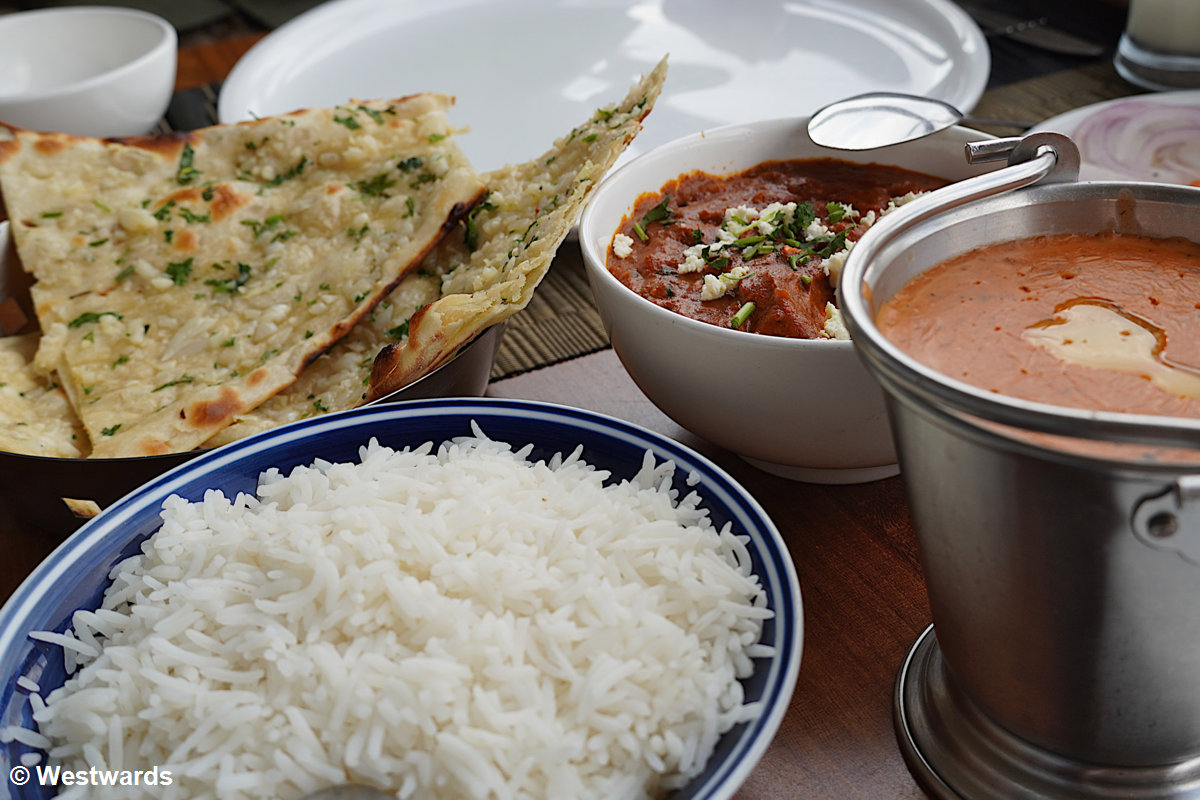
Indian cuisine also has a strong presence in Rwanda. And apart from the sambusas we could nearly always rely on Indian restaurants for tasty vegetarian food. One place in Kigali, Indian Curry at the 5th floor of the Towncenter Building, enthralled us so much that we returned a few days later for another one of their excellent dhals.
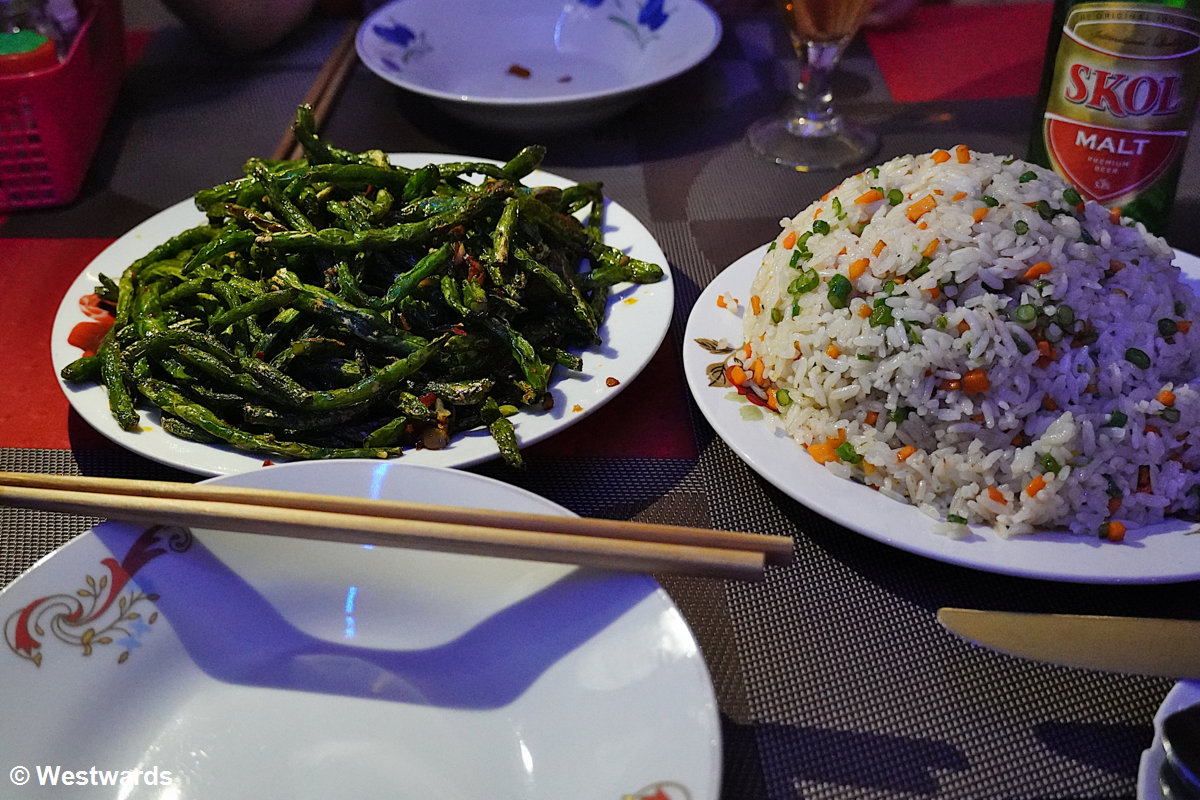
And in Butare we went several times to the Chinese restaurant Good to back, where they served some decent tofu dishes.
Vegetarian breakfast in Rwanda
Vegetarian breakfast in Rwanda didn’t offer much variation but was always quite filling. And at least full of vitamins, thanks to the generous servings of fresh fruit.


We had read about Rolex, a Ugandan dish consisting of chapati flatbread rolled with eggs, but although we often had eggs for breakfast, we never actually had the Rolex. In hotels that included breakfast, we typically got a choice of eggs, a platter of fresh fruits and some freshly brewed local coffee. The fruits were sometimes so abundant and varied that we didn’t even manage to eat them all!
Often pancakes with honey and sweet cakes or breads were also available, sometimes with peanut butter, jam, or Nutella. But there was never any cheese on the breakfast menu. At more upscale hotels, breakfast occasionally included warm vegetarian dishes such as mushroom soup, potatoes with vegetables, or curry and rice. A less common breakfast item we tried was a rather thin, watery porridge.
Drinks in Rwanda
Coffee


Alongside exploring vegetarian food in Rwanda, discovering the local drinks was an experience in itself. We drank a lot of coffee – always Rwandan single-origin speciality coffee, usually the Red Bourbon variety. While coffee is a major cash crop, many Rwandans traditionally prefer tea. However, recently more cafés and roasteries have begun to attract local coffee lovers, especially in Kigali. Exploring the Rwandan coffee scene was a highlight of the trip.
Beer and soft drinks


Beer is widely available in Rwanda, with several local brands. Natascha tries them all and likes the “Virunga Mist” most. At the palace of the former Rwandan king in Nyanza, the guide shows us a reconstructed hut reserved for the “royal beer taster”. This job was usually held by a teenage boy, who was responsible not only for checking the correct flavour of the alcoholic drink but also had to ensure that the royal beer was not poisoned. The Royal beer was drunk with straws from a large communal pot.
In restaurants and bars, we are sometimes surprised when the staff ask us whether we want the beer or soft drink “warm or cold”. This actually means “from the fridge” or not, as many places still lack refrigeration. By and by, we learn that some people actually prefer their drinks warm, a habit shaped by limited access to electricity or just the lack of a refrigerator. In many households a television is the first electrical appliance people would opt for!
Isa also samples Urugwagwa, a strong (14%) yet sweet banana beer with a slight alcopop feel. But she usually goes for the local lemonade Panaché, or for drinkable yoghurt. This is available in a very artificial strawberry, or a more pleasant vanilla flavour.
Is Rwanda an easy travel destination for vegetarians?


While the food choices for vegetarians are not abundant, it was easier to find vegetarian food than we had anticipated. Beyond the ubiquitous potatoes and plantains, the country offers vivid flavours and genuine hospitality.
Whether sipping Red Bourbon coffee in a fancy café in Kigali or drinking a bottle of beer (warm or cold!) with locals, every meal felt like a window into Rwanda’s creative food culture. Vegetarian travellers may need a little flexibility, but they’ll be rewarded with unexpected tastes, warm smiles, and memories that last well beyond the last bite.
NB: We had no sponsoring to write this blog post and ate and paid it all by ourselves.
Thinking about a trip to Africa as a vegetarian? You also might be interested in our other posts about Vegetarian food in Africa
Never miss a new post! Get notifications about new posts straight into your inbox!
Use this image to pin the post:
